Safe Online Pokies in Australia: Bitcoin Basics
 Available in AU

A guide to game credits, offshore-site context, payment differences, privacy trade-offs and checks that can affect withdrawals.
Table of Contents
- What Bitcoin Pokies Are—and What the Credits Mean
- The Australian Legal Context for Offshore Sites
- PayID Queries, Bitcoin Facts: Know Which Payment You’re Using
- What “Best” Can Mean Without a Recommended List
- Bitcoin’s Privacy and Fee Trade-Offs
- Security Has Limits: Check Every Address
- Verification Before a Withdrawal
- Why a Withdrawal Can Stall
- Free Play and Real-Money Play Are Different
- Common Deposit and Bonus Disputes
What Bitcoin Pokies Are—and What the Credits Mean
A Bitcoin pokie is a digital slot-machine game that accepts Bitcoin as a payment method. The Bitcoin is the payment unit; the game may display play in its own credits. Those are two different things, and it is easy to read them as if they were interchangeable.
A credit shown on a game screen is an in-game unit, not necessarily a fixed fraction of a Bitcoin. The relationship can vary from one game to another, and the Bitcoin value associated with the credits can also change with the current BTC price. A specialist review has described this game-by-game difference. Treat it as a detail to check for the particular game, not as a universal conversion rule.
That distinction matters when you see a balance in credits. The displayed figure tells you how many of that game’s units are available; by itself, it does not tell you the Bitcoin value. Nor does the name of a credit unit establish its value. If a game’s information does not make the relationship clear, the credit total alone cannot fill in the gap.
Think of the process as involving two layers. Bitcoin is the payment form, while credits are the game’s way of representing play. A Bitcoin figure and a credit figure may both appear in the same setting, but they answer different questions. One concerns the payment asset; the other concerns the units used inside a particular game.
It is also worth separating the game itself from the label attached to its balance. Seeing “credits” does not mean that every game uses the same scale, or that a credit has a stable Bitcoin value across different games. A number that looks familiar can still refer to a different unit. The screen is showing a game balance, not a universal Bitcoin calculator.
When comparing information about a game, look for an explanation that connects its displayed credits with Bitcoin, rather than assuming the connection from the balance alone. The stated value is sensitive to the game and to BTC price, so a figure seen at one point may not describe the value at another. Keep the game’s own units in their lane.
Same-Day Casino Payouts in Australia: What to Know
The wording “Bitcoin pokies” can make the payment method sound like the defining feature of the game. In practical terms, it identifies a digital slot-machine format that accepts Bitcoin; it does not mean the game’s internal credits are denominated directly in Bitcoin. Payment and play units should be read separately.
And the word “safe” needs the same care. A Bitcoin payment option, a credit balance, or a clear-looking game display does not, on its own, establish that an operator is safe. Those details describe the format and its units; they do not settle questions about an operator or its handling of customers. The credit display is not a safety signal.
For anyone under eighteen, this is not an invitation to play for money. The distinction here is simply between a cryptocurrency used as payment and a game-specific balance used during play. Understanding that distinction can prevent a basic misreading, but it should not be mistaken for an endorsement.
This page is affiliate material and may include sponsored links. Nothing in this explanation recommends an operator or promotes play. It defines the terms so that a Bitcoin amount and a game-credit amount are not casually treated as the same thing.
The Australian Legal Context for Offshore Sites
The legal position is easy to blur when a website describes itself as licensed. In Australia, the key distinction is not simply between licensed and unlicensed casinos. Australian law does not allow locally licensed online casinos to provide real-money pokies to people in Australia. The offshore operators discussed in this context hold licences from overseas authorities, primarily Curacao eGaming or the Anjouan Gaming Authority. Those licences are not Australian authorisations.
That difference matters. An overseas licence may describe the operator’s regulatory status where that licence was issued, but it does not change the Australian rules or make the operator locally licensed. The word “licensed” on a site is therefore not enough to establish that it is authorised to offer real-money casino games to Australian residents. Nor does an offshore licence bring the operator within Australian consumer protection law.
Attention: An overseas licence from authorities like Curacao eGaming or the Anjouan Gaming Authority is not an Australian authorisation and does not bring the operator under Australian consumer protection law.
The Interactive Gambling Act 2001 sets the central boundary: operators must not provide real-money online casino games to people physically located in Australia. That includes pokies as well as casino-style card and table games. The restriction is directed at the service providers. It does not mean that a player is personally fined or prosecuted simply for playing at an offshore site; the legal framework described here places the prohibition on operators.
What an offshore licence does—and does not—tell you
The overseas regulator named on a site is a fact about that operator’s claimed licensing arrangement. It is not proof that Australian regulators supervise the business, that Australian rules apply to its conduct, or that you can rely on Australian consumer protections if something goes wrong. In particular, Australian consumer protection laws do not apply to the offshore operators discussed here.
That leaves a meaningful gap between the protections a person might expect from a local service and the position with an offshore operator. If there is a disagreement, the operator is not brought under Australian consumer law merely because it accepts customers from Australia or displays an overseas licence. A familiar-looking licence badge is not a local remedy.
I would keep those questions separate: where the operator says it is licensed, whether it is authorised under Australian law to provide the service, and what protections apply to a customer. They are not interchangeable. An overseas licence answers only the first question, and even then it is a claim about the operator’s status that should not be mistaken for Australian oversight.
Aristocrat Online Pokies in Australia: What to Know
Reading “safe” with the legal setting in mind
People often use “safe” to mean several different things: whether a site is lawful for them to use, whether a payment will arrive, whether personal details are handled well, or whether a dispute can be resolved. A licence from Curacao eGaming or the Anjouan Gaming Authority does not, by itself, settle all those matters for someone in Australia. Most importantly here, it does not turn an offshore casino into a locally licensed Australian provider.
So treat “safe Australian pokies” language cautiously when it is attached to an offshore casino. It may describe the site’s own presentation, but it does not alter the legal distinction. People must be at least eighteen to gamble with real money; meeting an age requirement does not change the legal status of the service.
This page is affiliate material and may include sponsored links. That commercial disclosure is separate from the legal explanation and should not be read as an endorsement. A link, if present elsewhere on the page, would not establish that an operator is authorised in Australia or covered by Australian consumer protection laws.
For me, the practical takeaway is plain: an offshore licence is not an Australian licence, and it does not provide Australian consumer-law coverage. The legal restriction concerns operators offering these services to people in Australia; the protections attached to local consumer law should not be assumed to follow a customer across that boundary. No badge changes that.
Legal Context
- Offshore licences are not Australian licences.
- Australian consumer protection laws do not apply to offshore operators.
- The legal prohibition on providing real-money online casino games applies to the operators, not the players.
PayID Queries, Bitcoin Facts: Know Which Payment You’re Using
PayID and Bitcoin are different payment methods, so it is worth checking which one a payment instruction actually describes. A reference to Bitcoin tells you nothing about whether PayID is offered or safe to use for gambling. Treat the two as separate: do not follow Bitcoin wallet instructions if you intend to pay by PayID, or assume that a PayID option works like a crypto transfer.
For a deposit, the casino provides an account address. You copy that address, open your own Bitcoin wallet, and send Bitcoin to it. The transfer is initiated from your wallet; it is not a PayID payment and should not be entered as though it were one.
That distinction matters because a wallet address is the destination for a cryptocurrency transfer, not a PayID identifier. If a payment page names Bitcoin, look for the Bitcoin address and the instructions attached to it. If it names PayID, those Bitcoin steps do not explain how that payment is handled. Similar-looking payment buttons do not make the underlying systems interchangeable.
For a Bitcoin withdrawal, the direction is reversed. You copy your own wallet address and paste it into the casino’s withdrawal form as the destination. Read the field carefully before submitting: it is asking where the Bitcoin should go, not for a PayID contact. The payment method named on the form should match the address you provide.
Dragon Link Online Pokies in Australia: What to Know
There is a cost to account for as well. Bitcoin transfers incur miner’s fees, and those fees vary over time. A specialist review characterises them as usually minuscule, but that description is not a fixed price or a promise about the fee on a particular transfer. Check the amount shown by your wallet before you authorise anything; the fee can change, and a general description cannot tell you what the current charge will be.
For someone comparing payment options, the useful question is not whether one label sounds familiar. It is whether the payment instructions clearly identify the method you mean to use. A Bitcoin deposit involves copying an address supplied for the deposit and sending Bitcoin from your wallet. A Bitcoin withdrawal involves entering your wallet address in the withdrawal form. Neither action is PayID guidance.
Keep the payment details in front of you while you work through the form. If the page asks for a wallet address, use the relevant Bitcoin wallet address rather than trying to substitute a PayID detail. If the payment method shown is unclear, pause instead of guessing. That is a simple distinction, but it is an easy place to misread a screen.
A deposit and a withdrawal also have different address fields. For a deposit, the destination address is supplied by the casino and the sending wallet is yours. For a withdrawal, your wallet address is supplied as the destination in the form. Mixing up which side provides the address can turn a straightforward instruction into the wrong payment action.
Do
- Use the Bitcoin address supplied by the casino for deposits.
- Enter your own wallet address in the withdrawal form.
- Verify the payment method named on the form matches the address provided.
Don’t
- Follow Bitcoin wallet instructions if you intend to pay by PayID.
- Substitute a PayID detail where a wallet address is requested.
- Send more money to try and unlock a stalled withdrawal.
I would not treat the word “safe” as a property of a payment label alone. PayID and Bitcoin are not interchangeable, and these Bitcoin steps cannot establish whether PayID is safe or available for a particular gambling service. They only describe the Bitcoin route. Before moving money, make sure the method you intend to use is the one the instructions actually name.
This is an informational guide, not an invitation to gamble. Real-money gambling is for adults aged eighteen or over, and readers should understand the Australian legal setting before considering any gambling service. The payment mechanics do not change that context. A transfer method can explain how money is sent; it cannot make a service lawful or provide protection that the payment method itself does not supply.
The site may receive affiliate revenue, and some links may be sponsored. That disclosure does not change the difference between PayID and Bitcoin, or turn one method’s instructions into advice about the other. Keep the method, the address field and the stated payment instructions aligned.
What “Best” Can Mean Without a Recommended List
For safer online play, check an operator’s licensing information and the payment details that matter to you before depositing. These notes summarize only the available facts and are not a guarantee of safety.
1. GoldenCrown
License: Curacao Gaming Control Board OGL/2023/176/0095 (Hollycorn N.V.) GoldenCrown lists a Curaçao Gaming Control Board licence, OGL/2023/176/0095, held by Hollycorn N.V.
2. Neospin
License: Curacao Gaming Control Board OGL/2023/176/0095 (Hollycorn N.V.) Neospin lists a Curaçao Gaming Control Board licence, OGL/2023/176/0095, held by Hollycorn N.V.
3. Wild Tokyo
License: Curacao · Payout speed: crypto 30-60 minutes, fiat 1-5 days · Min. deposit: A$10 Wild Tokyo lists a Curaçao licence. Its stated minimum deposit is A$10; crypto payouts are listed at 30–60 minutes and fiat payouts at 1–5 days.
4. Ricky Casino
Payout speed: crypto under 1 hour, PayID 1-3 business days · Min. deposit: A$20 (A$30 to qualify for the bonus) Ricky Casino lists a minimum deposit of A$20, or A$30 to qualify for the bonus. Its stated payout times are under an hour for crypto and 1–3 business days for PayID.
5. DragonSlots Casino
License: Curacao Gaming Authority (Jumpman Gaming Ltd) DragonSlots Casino lists a Curaçao Gaming Authority licence held by Jumpman Gaming Ltd.
6. Vegaz Casino
License: Curacao OGL/2024/1335/0780 · Min. deposit: EUR 20 Vegaz Casino lists Curaçao licence OGL/2024/1335/0780 and a minimum deposit of EUR 20.
7. WinSpirit Casino
License: Curacao eGaming OGL/2024/923/0383 (Antillephone N.V.) · Min. deposit: A$30 WinSpirit Casino lists Curaçao eGaming licence OGL/2024/923/0383, associated with Antillephone N.V. Its stated minimum deposit is A$30.
8. House of Pokies
License: international iGaming licence – jurisdiction not named in the source · Payout speed: PayID 1-24 hours · Min. deposit: A$30 (PayID from A$10) House of Pokies lists an international iGaming licence, but the jurisdiction is not named in the source. Its stated PayID payout time is 1–24 hours; the minimum deposit is A$30, or A$10 with PayID.
9. Lucky Dreams
License: Curacao · Min. deposit: A$20 (POLi) Lucky Dreams lists a Curaçao licence and a minimum deposit of A$20 via POLi.
10. JustCasino
License: Curacao Gaming Control Board JustCasino lists a Curaçao Gaming Control Board licence.
“Best” can sound like a promise: that someone has checked every option and found a safe choice for you. It is better treated as a claim to examine, not a verdict to borrow. A polished ranking can still leave out what matters, and a favourable review does not remove the risks of dealing with an offshore operator.
A specialist review recommends weighing three things: player reviews, licensing and the range of pokies on offer. Each can tell you something, but none settles the question on its own. Reviews may describe a particular person’s experience; they are not a guarantee of how an operator will handle yours. Read for concrete details and recurring complaints rather than relying on a star score or a confident headline. A string of praise with little explanation is thin evidence.
Licensing needs careful interpretation, too. The operators discussed in this market hold offshore licences, primarily from Curacao eGaming or the Anjouan Gaming Authority. Those credentials are not Australian authorisation, and Australian consumer protection laws do not apply to these offshore operators. A licence label, on its own, should not be read as proof that you have the protections you might expect from a locally regulated service. The distinction matters more than the badge.
A varied game catalogue is another comparison point, but it answers a narrow question: whether the available selection suits your preferences. It does not establish that the operator is safe, that a game will be fair in every circumstance, or that a payout will be handled as you expect. I would keep those claims separate. A broad menu is a feature, not a safety test.
Best New Australian Online Pokies: Rules and Checks
When a page calls something among the safest or best pokies in Australia, check what the label is actually based on. Does it explain its criteria? Does it separate user feedback from promotional language? Are licensing details clear, and is the game selection described rather than simply praised? If the reasoning is hidden, the ranking gives you little to assess.
There is also a commercial context to keep in view: this content is affiliate material and may include sponsored links. That does not automatically make every statement false, but it is a reason to read recommendations as commercial claims, not neutral guarantees. I would be especially cautious when a page moves from describing an operator to urging you to sign up.
For anyone considering real-money gambling, you must be at least 18. No checklist can turn an offshore service into a risk-free choice, and the word “safe” should not be treated as a promise. Reviews, licence information and game variety can help you understand what a page is claiming; they cannot, by themselves, prove that an operator is right for you.
A label is not evidence.
Bitcoin’s Privacy and Fee Trade-Offs
Bitcoin is sometimes described as offering more anonymity than conventional payment methods. A specialist review makes that comparison, but it should not be read as a promise that Bitcoin use is untraceable or that your identity will remain private in every situation. “More anonymous” is a relative claim, not a cloak.
The distinction matters because a payment method and the service receiving a payment are separate things. Bitcoin may limit the personal details attached to a transaction compared with some familiar payment options, but an operator can still ask for account or identity information. The privacy characteristics of the currency do not settle what information a particular service collects or how it handles that information.
There is also a trade-off in how the transaction is recorded: Bitcoin payments are recorded on a public blockchain. That record does not automatically display a person’s name, but it is not the same as having no transaction trail. So I would treat the anonymity claim as a limited comparison, not as a reason to assume that activity cannot be associated with you.
Fees are another point often raised in Bitcoin comparisons. A specialist review characterises Bitcoin transaction costs as lower than those associated with credit cards and other conventional payment options. That is a general comparison, not a guaranteed saving on every payment. The amount charged can depend on the transaction and conditions at the time, and a service may have its own costs or rules. A lower network fee does not mean that every part of using a service is free.
These points are worth keeping separate: a relative privacy advantage does not make a payment invisible, and a claim of lower transaction fees does not tell you the total cost of dealing with an operator. Neither characteristic establishes that an offshore service is safe. Bitcoin’s features describe the payment system; they do not provide consumer protection or guarantee how a service will treat its customers. That distinction is easy to miss.
This is affiliate material and may include sponsored links. No link or payment method should be treated as an endorsement. Real-money gambling is for adults aged 18 and over; do not send additional funds to try to unlock a stalled withdrawal.
Security Has Limits: Check Every Address
Blockchain technology is designed to secure Bitcoin transactions, but that security does not act like a safety net for a mistaken transfer. Once a transaction is confirmed on the network, it cannot generally be reversed. If you send Bitcoin to the wrong address, recovering it is unlikely.
Irreversible Transactions
Once a Bitcoin transaction is confirmed on the network, it cannot be reversed. Sending funds to the wrong address likely means the money is unrecoverable.
That distinction matters when you are judging whether online pokies are safe. A secure payment network can protect the transaction process without guaranteeing that every transfer reaches the person or service you intended. The address is the destination; the blockchain does not check that it belongs to the right recipient or correct a typo for you.
Before sending Bitcoin, compare the address shown by the recipient with the one entered in your wallet. Take care when copying and pasting, and check the beginning and end of the address rather than assuming the clipboard has captured the right one. If anything differs, stop and verify it before authorising the transfer. A moment spent checking is worth more than a transaction you cannot undo.
This is not a warning that blockchain technology is inherently unreliable. It is the opposite: its records are built to be difficult to alter. That feature helps make transactions secure, but it also means an error can be permanent. There is no ordinary card-payment-style reversal waiting in the background.
Keep the payment question separate from the broader question of whether a gambling service is safe. A successful Bitcoin transfer says only that the funds moved to the address you approved. It does not, by itself, establish that a recipient is trustworthy or that you will have recourse if something goes wrong.
If you are considering real-money gambling, you must be at least eighteen. Australian consumer protection laws do not apply to offshore operators discussed on this page, so do not treat blockchain security as protection from operator conduct. Check the destination carefully—and do not send funds you cannot afford to lose. No undo button.
This page is affiliate material and may include sponsored links.
Verification Before a Withdrawal
A withdrawal request can be the point when an operator asks for more than the details collected during registration. Stage-two checks may be triggered at a first withdrawal or once your cumulative deposits reach a threshold somewhere between AUD 2,000 and AUD 5,000. The trigger depends on the operator, so don’t assume that passing registration checks means the account is fully verified.
For Bitcoin users, the operator may also ask you to show that you control the wallet used to deposit. A specialist review describes two possible forms of evidence: signing a message from the deposit address, or supplying a wallet screenshot that shows the sending transaction. These are examples of crypto-specific checks, not steps every operator is known to require.
Keep the request distinct from an ordinary wait for a withdrawal to be processed. If the operator asks for identity, address or wallet evidence, the hold is about verification; a queue or processing schedule is a separate matter. Read the request carefully and provide only the material it asks for through the operator’s stated account process. If the requested evidence is unclear, ask what it needs to establish before sending anything.
Signing a message is not the same as sharing your wallet’s recovery phrase or private keys. Do not disclose those credentials. A screenshot should show the relevant transaction without exposing unrelated account details where you can avoid it.
Attention: Never disclose your wallet’s recovery phrase or private keys during the verification process; these credentials should remain private.
These checks can be inconvenient, especially when they arrive at cash-out, but they are not proof that a site is safe or that a payout is guaranteed. I’d treat the operator’s explanation and handling of the request as matters to assess separately from the fact that it has asked for documents. Keep copies of what you submit and of the messages about the request.
This article is affiliate material and may include sponsored links. It is informational, not a recommendation to use an online casino. Real-money gambling is for adults aged 18 and over.
Why a Withdrawal Can Stall
A withdrawal can sit untouched because the operator has not approved it yet. Requests may enter an internal queue, and staff have to review them before they are released. That means the time shown in an account is not necessarily the time the operator begins handling the request. A pending label can simply mean it is waiting for attention.
Incomplete KYC is another common hold-up. If an account check is still outstanding, the operator may pause a payout until it is resolved. That is different from a request waiting in an approval queue: the queue is about when staff get to it; incomplete KYC means there is still an account requirement to clear. Check the account messages and any explanation attached to the withdrawal status rather than guessing which one applies.
Some operators also process payments in batches during business hours. A request made outside those hours may wait for the next processing window, even if nothing is wrong with the account. This is operator handling, not a sign that the request is moving continuously in the background. A delay on its own does not tell you which explanation is right.
There is a less reassuring possibility after a significant win. Some operators may put a withdrawal through a security review, particularly when the account is new or the payout is the first large one. A review can be legitimate, but it can also be used to stall a withdrawal. The distinction is hard to judge from a generic “under review” message. Ask what is being reviewed and what action, if any, is required from you. Keep the reply and the status changes.
I would not treat silence as proof of misconduct, but I would not mistake vague wording for a clear explanation either. If support gives no specific reason, ask for one in writing and keep the exchange. Most importantly, do not send more money to unlock a stuck withdrawal. That is not a sensible way to resolve an operator-side delay. A payout should not depend on you depositing again.
When you are weighing whether an online gambling service is safe, remember that a smooth account screen cannot guarantee prompt handling when a withdrawal is pending. Queueing, account checks and business-hours processing can all leave you waiting; a security review can make the reason less transparent. Keep your expectations grounded.
Free Play and Real-Money Play Are Different
Online pokies may have a free-play mode or a real-money mode. The screen can look much the same, but the stakes are not: free play uses no money wager, while real-money play involves funds. That difference matters more than the familiar sounds, graphics or controls.
Free play can let you see how a game behaves without making a financial wager. But it does not tell you whether an operator is trustworthy, whether a game is fair, or how an operator will handle an account. A free-play option is a feature, not a safety check. I would not treat a polished demo as proof of anything beyond the fact that a demo is available.
The reverse is true too: moving from a free mode to a real-money mode changes the consequences, not necessarily the game itself. Before considering any such play, be clear about which mode is active and whether the screen indicates that a wager is being made. If you are under 18, do not play for money.
For Australians, there is an important legal boundary: operators are prohibited from providing real-money online casino games to people in Australia. This explanation is not an invitation to use an offshore service or a claim that a free-play option makes one appropriate. Free play and real-money play describe different modes; they do not settle the separate questions of legality or operator conduct.
If your interest is simply trying a game without wagering, keep that distinction firm. Do not assume that a free mode guarantees the same experience as paid play, or that choosing it establishes anything about what happens if money is later involved. The mode tells you whether funds are at stake in that session. Nothing more.
This page is affiliate material and may include sponsored links. That disclosure does not turn a description of play modes into an endorsement. In Australia, real-money online casino services remain prohibited for operators to provide, and local consumer protections do not apply to offshore operators. Free play is not a workaround for those concerns.
Common Deposit and Bonus Disputes
A deposit that does not appear in an account can have several causes. Reusing an address may make it harder for the operator to match a payment to your account. The amount sent may also be below the amount expected, or the operator may not have detected the deposit yet. These situations can look similar on screen, but they are not the same problem.
Keep the payment record and compare its destination address and amount with the details shown for that deposit. If the address was reused, the payment was short, or the account has not updated, contact the operator with the transaction information rather than sending another payment to try to fix the first one. Never send more money to unlock a stuck withdrawal. A transfer to an incorrect address is generally irreversible and unrecoverable.
Bonus disputes often start with terms that do not make clear how different games count toward wagering requirements. Contributions can vary by game: table games may count at 0%, while pokies may count at 100%. Some high-return pokies may be capped at 50%. If you assume every game contributes equally, your progress may be lower than you expect.
Maximum-bet rules create a separate risk. An operator may void bonus play if a bet exceeds the stated limit. Before accepting or using a bonus, read the contribution rules and bet conditions carefully, and save a copy of the terms that apply. If a dispute arises, describe the specific payment or play at issue and keep the relevant account records. Clear records do not guarantee an outcome, but they help establish what happened.
This is affiliate material and may include sponsored links; that disclosure is not a safety endorsement. Real-money online casinos cannot lawfully offer pokies to people in Australia, and Australian consumer protection laws do not apply to the offshore operators discussed. You must be at least 18 to play for real money. I would not treat a bonus, or a site’s claims about being safe, as proof that a payment or play dispute will be resolved fairly.
Can Australians use Bitcoin at online casinos for entertainment?
You can use Bitcoin as a payment method at offshore casinos, but Australian law prohibits operators from offering real-money online pokies to people in Australia. An offshore licence does not make the operator Australian-authorised or bring it under Australian consumer protection laws.
Is verification required?
You may be asked to complete further verification, particularly at your first withdrawal or after cumulative deposits of AUD 2,000–5,000; the trigger varies by operator. Crypto checks may include signing a message from your deposit address or showing a wallet screenshot of the transaction.
Are Bitcoin casinos legit?
An offshore licence, such as one from Curacao eGaming or the Anjouan Gaming Authority, is not Australian authorisation. Australian consumer protection laws do not apply to the offshore operators discussed, so a licence badge does not guarantee an Australian remedy if something goes wrong.
Wild Fortune payment methods and money-movement rules
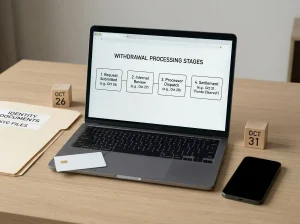
Wild Fortune withdrawal limits and processing stages
Wild Fortune Notes Wild Fortune applies an AU fiat withdrawal minimum, daily, weekly and monthly...

Anonymous Crypto Casinos in Australia: Legal Guide
Australian rules apply to offshore casino services even when they accept cryptocurrency, while user liability...

Aristocrat Online Pokies in Australia: What to Know
The Aristocrat name alone does not identify a game, confirm its features, or show where...

Aussie Crypto Casinos: Payments, Rules and Checks
A practical guide to offshore payment flows, Australian considerations, verification limits, bonus terms and crypto...

Best New Australian Online Pokies: Rules and Checks
This guide explains Australia's restrictions and the limits of available information on offshore sites, payments,...

Online Casino Payment Methods for Australians
Deposits and withdrawals can follow different rules, while Australian payment options do not change the...

Best-Paying Online Pokies in Australia: Payouts & Rules
Understand how payout claims, bonus conditions, Bitcoin payments and Australian rules shape the risks of...

Bitcoin Pokies in Australia: Payments and Rules
Bitcoin is a payment option, not a game mode; the guide explains how real-money play,...

Casino Sites That Accept Amex in Australia
A casino may list Amex, but the card issuer can still block a gambling-related payment,...

Casino Sites That Accept BPAY in Australia
A BPAY search alone does not confirm casino support, and the payment methods available can...

Casino Sites That Accept Credit Cards in Australia
Card acceptance can depend on the casino and issuer, while payment limits, fees, verification and...

EcoPayz casino sites in Australia: what is verified
The article separates payment-provider support from Australian legality and explains why deposits, withdrawals and game...

Casino sites that accept Osko in Australia: what to check
The page separates payment claims, deposit and withdrawal routes, and the legal context for offshore...

Paysafecard Casino Sites in Australia: What to Check
The guide separates operator restrictions under the Interactive Gambling Act 2001 from player status and...

Casino Sites and Skrill in Australia: What to Know
Australia’s rules apply to real-money online casino games offered to people in the country, while...

Trustly Casinos in Australia: What Can Be Confirmed
Trustly availability for Australian customers needs clear operator confirmation; payment claims do not verify games...

Casinos That Accept Apple Pay in Australia
Apple Pay’s everyday use in Australia does not confirm casino cashier support, and deposit access...

Casinos That Accept Bitcoin in Australia: How Payments Work
See how wallet transfers, blockchain confirmations, cashier checks and bonus terms affect Bitcoin casino deposits...

Bitcoin Cash Casinos in Australia: Rules and Checks
Australian law assesses the casino service and its operator; BCH funding, bonus terms, verification and...

Casinos That Accept CashtoCode in Australia
Learn what can be confirmed about CashtoCode support, payout rules and Australian restrictions on real-money...

Casinos That Accept Ethereum in Australia: Payments
Ethereum is a digital currency, while each casino independently determines whether it offers the option...

Casinos That Accept Google Pay in Australia
Google Pay availability does not establish that an online casino may legally serve Australians or...

Casinos That Accept Litecoin in Australia: Claims
A Litecoin payment claim may not establish availability for Australian customers or explain which account...

Casinos That Accept Mastercard in Australia
Australian card payments may be commonplace, but online casino acceptance depends on the specific payment...

Casinos That Accept MiFinity in Australia: What to Check
Casino games and payment methods are separate questions, and a general MiFinity mention may not...

Casinos That Accept Neosurf in Australia: What to Check
Australian card and mobile-wallet habits offer context, but only an operator’s own payment arrangements can...

Casinos That Accept Neteller in Australia
A Neteller mention alone does not confirm Australian access, supported games, deposit options or withdrawal...

Casinos That Accept PayID in Australia: What to Know
A PayID option does not establish that an online casino may legally offer real-money games...

Casinos That Accept PayPal in Australia: What to Check
PayPal availability, deposit conditions and withdrawal options can differ, so a payment label alone does...

Casinos That Accept POLi in Australia: Key Checks
Payment availability, permission to offer online pokies, and withdrawal support are separate questions, so one...

Casinos That Accept Tether USDT in Australia
USDT mentions alone do not confirm payment support; acceptance, deposit and withdrawal terms need separate...

Casinos That Accept Visa in Australia: What to Know
A Visa label does not confirm an operator is authorised, that a card will work,...

Dragon Link Online Pokies in Australia: What to Know
A cautious guide to online format, free-play limits, Australian legal context and the claims a...

Easy Withdrawal Casinos in Australia: Payout Guide
A withdrawal can involve an operator review and payment processing, so a fast transfer does...

Fast Withdrawal Casinos in Australia: Payment Routes
Payment options, verification checks and the withdrawal process all affect how quickly funds may reach...

Instant Bank Transfers for Australian Casinos: What to Know
Bank-linked payment labels do not confirm legality, processing speed, withdrawal routes or how casino bonus...

PayID Casino Withdrawals in Australia: How They Work
PayID can move funds in real time after release, while operator checks and bonus wagering...

Instant PayID Withdrawals in Australia: What to Know
PayID can move funds in real time after release, but casino review, verification and account...

PayID Pokies in Australia: Payments and Checks
PayID directs transfers using an identifier, but it does not verify a pokies operator or...
No-Verification Casino Withdrawals in Australia
A closer look at identity checks, casino approval, payment timing and bonus terms helps put...

No KYC Casinos in Australia: Cash-Out Checks
The guide separates registration claims from withdrawal checks and compares crypto, PayID, bonuses and wagering...

Online Pokies Instant Withdrawals in Australia
Withdrawal timing depends on more than the payment rail: operator checks and receiving institutions can...

Online Pokies PayID Australia: Deposits and Withdrawals
PayID is an identifier-based way to send money through participating banks, but site availability and...

Pay by Phone Casinos in Australia: What It Means
Separate mobile play from phone-bill billing, and understand how PayID transfers and Australian gambling rules...

Quick Withdrawal Casinos in Australia: Cashout Times
E-wallet estimates describe only part of the process: casino approval, payment routing and account checks...
Real Cash Online Pokies in Australia: What to Know
The guide separates practice credits from real-money play and outlines checks for offers, deposits, Bitcoin...

Same-Day Casino Payouts in Australia: What to Know
A payout can pause during operator checks or while the payment moves through its route...

Solana Casino Comparison in Australia: Legal Guide
The guide separates SOL ownership from offshore casino use and covers funding, cashing out, platform...

PayID and under-one-hour casino withdrawals in Australia
PayID may speed the transfer after release, while operator checks and Australian restrictions remain separate...