Bitcoin Pokies in Australia: Payments and Rules
 Available in AU

Bitcoin is a payment option, not a game mode; the guide explains how real-money play, transfers, and changing credit values fit together.
Table of Contents
What Bitcoin Changes—and What It Doesn’t
“Bitcoin pokies” describes digital slot machines that accept Bitcoin as a form of payment. The phrase joins two separate ideas: the kind of game and the payment method associated with real-money play. Bitcoin does not turn a pokie into a different category of game; it describes how a player may pay when choosing to play for money.
That distinction matters because the same online pokie can be presented in different modes. Players can choose free play or real-money play. In free play, you use the game without staking real money. In real-money play, money is at stake, and Bitcoin is the payment form indicated by the label. The word “Bitcoin” alone does not tell you which mode is active.
I find it useful to separate the game from the way it is played. The game is the digital slot-machine experience: you use its interface to play rounds. The mode tells you whether those rounds are free or involve real money. The payment label tells you that Bitcoin is accepted for the money-based mode. Mixing those ideas can make a page or game description sound more specific than it is.
If you’re looking at bitcoin pokies in Australia in 2026, use this list as a starting point for checking each operator’s available details. The information below highlights only stated licensing, deposit and payout facts; it does not establish which payment methods support Bitcoin.
1. GoldenCrown
License: Curacao Gaming Control Board OGL/2023/176/0095 (Hollycorn N.V.) You can use the listed Curacao Gaming Control Board licence reference, OGL/2023/176/0095, to identify the stated licensing details for this operator.
2. Neospin
License: Curacao Gaming Control Board OGL/2023/176/0095 (Hollycorn N.V.) The stated Curacao Gaming Control Board licence reference is OGL/2023/176/0095, held by Hollycorn N.V.
3. Wild Tokyo
License: Curacao · Payout speed: crypto 30-60 minutes, fiat 1-5 days · Min. deposit: A$10 You’ll find a stated Curacao licence, a minimum deposit of A$10, and payout estimates of 30–60 minutes for crypto and 1–5 days for fiat.
4. Ricky Casino
Payout speed: crypto under 1 hour, PayID 1-3 business days · Min. deposit: A$20 (A$30 to qualify for the bonus) You’re given payout estimates of under one hour for crypto and 1–3 business days for PayID. The minimum deposit is A$20, or A$30 to qualify for the bonus.
5. DragonSlots Casino
License: Curacao Gaming Authority (Jumpman Gaming Ltd) The stated licensing detail is a Curacao Gaming Authority licence held by Jumpman Gaming Ltd.
6. Vegaz Casino
License: Curacao OGL/2024/1335/0780 · Min. deposit: EUR 20 You can note the stated Curacao licence reference, OGL/2024/1335/0780, and the minimum deposit of EUR 20.
7. WinSpirit Casino
License: Curacao eGaming OGL/2024/923/0383 (Antillephone N.V.) · Min. deposit: A$30 The listed licence is Curacao eGaming OGL/2024/923/0383, issued to Antillephone N.V.; the stated minimum deposit is A$30.
8. House of Pokies
License: international iGaming licence – jurisdiction not named in the source · Payout speed: PayID 1-24 hours · Min. deposit: A$30 (PayID from A$10) You’re given a PayID payout estimate of 1–24 hours and a minimum deposit of A$30, with PayID deposits available from A$10. The source describes the licence as international iGaming but does not name its jurisdiction.
9. Lucky Dreams
License: Curacao · Min. deposit: A$20 (POLi) The stated details are a Curacao licence and a minimum deposit of A$20 when using POLi.
10. JustCasino
License: Curacao Gaming Control Board The available licensing detail is a Curacao Gaming Control Board licence.
For instance, seeing Bitcoin mentioned beside a pokie does not, by itself, mean that every version of that game involves real money. A free-play option may also be available. Conversely, a game appearing in a free-play setting does not make every version free. The relevant detail is the mode selected, not simply the game’s name or the payment label nearby.
This is a plain distinction, but easy to miss when a page uses “Bitcoin pokies” as shorthand for everything at once. The phrase may refer to the games themselves, to real-money play using Bitcoin, or to a page discussing both. Read it as a description, then check what is actually being described: the game, the play mode, or the payment option. Those are related, but they are not interchangeable.
Free play is a way to use an online pokie without putting real money at stake. It is therefore different in kind from a real-money session, even if the screen and basic game presentation look similar. A familiar layout does not settle the question. Before treating a session as one or the other, look at whether the mode is explicitly free or involves real money.
Real-money play is the other side of the distinction. Here, the player is not merely using a free mode; money is involved, and Bitcoin is the stated payment method. That description does not tell you anything by itself about the particular game’s features, the value assigned to its credits, or how a payment is handled. Those are separate questions. Keep the definition narrow: a Bitcoin pokie is a digital slot machine that accepts Bitcoin, while real-money play means choosing to play with money at stake.
The label also does not mean that Bitcoin is part of the game’s theme or mechanics. A pokie may be described as a Bitcoin pokie because of its accepted payment form, not because the reels, symbols, or presentation are about cryptocurrency. The game and its payment method sit on different layers. One describes what you play; the other describes the form of payment connected with real-money play.
That’s the useful starting point. No more than that.
When you come across the term “online pokies with Bitcoin,” read it as shorthand for online slot machines associated with Bitcoin payment, rather than a promise about a particular game or a guarantee that the session is free. Check the mode separately. If the page or game offers free play, that is distinct from selecting real-money play. The wording should not blur those choices.
For real-money play, you must be at least 18 years old. This is a basic condition, not a feature of Bitcoin and not something that changes because a game is digital. If you are under that age, do not play for money.
Age Restriction
For real-money play, you must be at least 18 years old. If you are under that age, do not play for money.
One final point about how this page is presented: this content is affiliate material and may include sponsored links. That disclosure does not change the meaning of the terms above. It is still worth keeping the terms separate: Bitcoin describes an accepted payment form; “pokie” describes the digital slot-machine game; and free or real-money play describes the mode. Confusing those labels is where the wording stops being useful.
The Australian Rules Around Offshore Real-Money Pokies
The legal distinction is not between a casino that accepts Bitcoin and one that accepts another payment method. It is between services that may legally be offered to people in Australia and online casino services that may not. A site’s payment options, branding or overseas licence do not change that distinction.
Under the Interactive Gambling Act 2001, an operator cannot provide real-money online casino games to people physically in Australia. That includes pokies as well as online poker and table games. So there is no Australian-licensed online casino authorised to offer residents real-money pokies. A site may use familiar local language or appear designed for Australian players, but that does not turn it into a locally licensed service.
The offshore operators discussed in connection with Bitcoin pokies Australia hold licences from overseas regulators, mainly Curacao eGaming or the Anjouan Gaming Authority. Those are foreign licences, not Australian approvals. They do not give an operator permission to provide prohibited online casino services to people in Australia, and they do not place the operator under Australian casino regulation.
Online Pokies PayID Australia: Deposits and Withdrawals
That is the point worth keeping clear when a site displays a licence badge. The badge identifies a claimed regulatory relationship overseas; it is not proof that the service is lawful to offer here. Nor does it mean Australian agencies supervise the operator in the same way they oversee businesses operating under Australian law. A polished website can make these distinctions easy to miss. The legal position is less polished, and much simpler.
What the law means for players
The prohibition is directed at operators providing the service, not at an individual for taking part. The legal framework described here does not impose a fine or criminal prosecution on a player simply for accessing an offshore casino. The penalties in the Interactive Gambling Act are aimed at those who provide prohibited services: the stated maximum daily penalty is $360,000 for an individual provider and $1.8 million for a body corporate.
That does not make an offshore account an Australian-regulated account. Australian consumer protection laws do not apply to the offshore operators discussed. If a disagreement arises over an account or a payment, you cannot assume that the Australian protections and complaint routes available for a locally regulated service will apply to that operator. Its overseas licence does not fill that gap with Australian rights.
In practical terms, a dispute may leave you dealing with the operator and the regulatory arrangements in its licensing jurisdiction. That is a very different position from having a local regulator responsible for the service. It also means that a familiar Australian-facing website, Australian currency display or local wording should not be mistaken for local oversight. Appearance is not jurisdiction.
No Local Protection
Australian consumer protection laws do not apply to offshore operators. Disputes may leave you dealing with the operator and the regulatory arrangements in its licensing jurisdiction.
Access is not the same thing as permission, either. Offshore gambling sites may be actively blocked in Australia, with enforcement directed at prohibited services. A site being reachable at one moment does not establish that it is authorised to serve Australian residents. Equally, a block or a change in access does not create Australian consumer protections for an offshore operator.
I would read claims about “Australian” status carefully. In this context, the phrase can describe the intended audience or the way a site presents itself; it does not establish an Australian licence. The relevant distinction is whether the service is authorised under Australian law, and real-money online casino games are not available through a locally licensed online casino for residents.
Reading the licence claim
When an offshore site names Curacao eGaming or the Anjouan Gaming Authority, treat that as information about its overseas licensing position, not as an Australian endorsement. A foreign regulator’s name does not alter the restriction on providing real-money casino games to people in Australia. It also does not make Australian consumer laws apply to that business.
This matters because “licensed” can sound like a complete answer. It is not. A licence may be meaningful within the jurisdiction that issued it, while offering no assurance that the operator is permitted to target people elsewhere. For an Australian reader, those are separate questions: where the operator is licensed, and whether it may lawfully provide the service to someone physically in Australia. The overseas licence answers only the first.
The same distinction applies regardless of whether a site describes itself as a Bitcoin casino or uses another payment label. The Australian restriction concerns the real-money casino service, not the currency named on its payment page. Calling a game a pokies site, a crypto casino or an international platform does not change the legal category.
This page is affiliate material and may include sponsored links. That disclosure does not change the legal status of any service described here or make an offshore casino locally authorised. Anyone who is under 18 should not participate in real-money gambling. For adults, the useful takeaway is narrower than a recommendation: an overseas licence is not an Australian licence, and Australian consumer protection laws do not cover the offshore operators discussed.
Bitcoin’s Privacy and Fee Claims, in Context
Bitcoin is sometimes described as a more private way to pay than using a bank card. A specialist review makes that comparison, but “more private” should not be read as “anonymous”. Bitcoin can reduce the amount of conventional payment information involved in a transaction, yet the payment is recorded on a public blockchain. The distinction matters: privacy is a question of what information is exposed and to whom, not a promise that nobody can connect activity to you.
Casino Sites That Accept Amex in Australia
A payment made with Bitcoin is associated with wallet addresses rather than a card number entered at checkout. That can mean fewer of the details commonly used in card payments are shared as part of the payment itself. But a wallet address is not a disguise that makes a transaction disappear. Blockchain records can be examined, and an address may become linked to a person if it is connected with identifying information elsewhere. The level of privacy therefore depends on how the wallet and payment are used, as well as on what information a service asks for.
That is the useful way to read claims about privacy: Bitcoin changes the payment trail; it does not erase it. Nor does using Bitcoin mean that an online service will have no information about an account. Treating the two as the same thing is an easy mistake to make.
What blockchain security does—and does not—mean
Bitcoin transactions are secured through blockchain technology. In broad terms, the blockchain is a shared record of transactions maintained by a network, rather than a private ledger controlled by one payment company. Its design makes confirmed transactions difficult to alter. That is the basis for calling Bitcoin transactions highly secure.
Security here refers to the transaction system and its record. It does not automatically protect every part of a user’s experience. A secure blockchain cannot correct an error made while using a wallet, make an unreliable service trustworthy, or guarantee that a payment will be handled as expected by the party receiving it. Those are separate matters. A strong lock on one part of a process is not a guarantee about everything beyond the door.
Best-Paying Online Pokies in Australia: Payouts & Rules
It is also worth keeping “secure” separate from “private”. A blockchain can be robust and publicly inspectable at the same time. That combination is not a contradiction: the record can be difficult to tamper with while still allowing transactions to be viewed. Bitcoin’s security is a feature of its underlying network, not a blanket assurance about every website, account or device involved in using it.
The fee comparison needs a qualifier
Specialist reviews describe Bitcoin transactions as typically costing less than payments made through credit cards or other conventional methods. That is a comparison, not a fixed price promise. Bitcoin transaction fees can vary, and the amount attached to a particular transaction is not necessarily the same as the total cost of using a service. A service may apply its own terms, and the practical cost depends on the details of the payment.
So, if you see a claim that Bitcoin has lower fees, read it as a general statement about the payment method rather than a guarantee that every transaction will be cheaper. The fee is one part of the decision; privacy, security and the receiving service’s handling of the payment are separate considerations. There is no magic “free” button hiding in the blockchain.
Bitcoin transaction fees can vary, and the total cost depends on the details of the payment and the service’s own terms.
This distinction is especially important when a payment method is being presented alongside online gambling. A lower fee, if it applies, does not make a service safer or change the rules governing it. Australian law prohibits locally licensed online casinos from providing real-money pokies to people in Australia. Offshore operators discussed in this context do not come under Australian consumer protection laws. Payment technology does not alter either point.
This page is affiliate material and may include sponsored links. That disclosure does not turn a payment comparison into a recommendation. If you are considering any gambling service, you must be at least 18 to play for real money; that age requirement does not make an otherwise prohibited service lawful. The important distinction is between what Bitcoin may offer as a payment network and what a service using it is allowed to provide.
For a reader comparing Bitcoin with a card or another conventional payment method, the sensible takeaway is narrow. Bitcoin has blockchain-based transaction security; it can offer a degree of privacy compared with traditional payment methods; and specialist reviews describe its fees as typically lower. None of those claims should be stretched into a promise of anonymity, zero cost, or protection from the conduct of a service. Keep the claims in their lane.
Why the Bitcoin Value of Game Credits Can Change
A game credit is not a fixed Bitcoin amount that carries across every game. A specialist review describes credit value as depending on two things: the particular game and the current Bitcoin price. That means the credit label alone cannot tell you what a stake represents in Bitcoin.
The game matters because credits belong to the game they are used in. A credit in one game is not automatically equivalent to a credit in another. So comparing the number of credits shown on screen can be misleading: the same-looking balance does not establish the same Bitcoin value if the games define their credits differently.
Aristocrat Online Pokies in Australia: What to Know
The Bitcoin price matters too. A credit balance may be expressed in game units, while the associated Bitcoin value is affected by the price of BTC at the relevant time. If that price changes, the Bitcoin value attached to a given credit amount can change as well. The number of credits and their Bitcoin value are related, but they are not the same measure.
That distinction is easy to lose when you are focused on the game display. A balance can look unchanged while the Bitcoin value connected with it is different, or two games can show similar credit amounts without those amounts representing an equal Bitcoin value. The key point is not that one game’s credits are worth more than another’s in every case; it is that there is no single credit-to-Bitcoin value that can be assumed across games and across time.
When assessing a displayed credit amount, keep the two parts separate in your mind: the game-specific credit unit, and the Bitcoin value associated with it at the current BTC price. Without both, the credit figure on its own is incomplete information. It tells you how many units the game displays, not a universal Bitcoin amount.
Wild Fortune payment methods and money-movement rules
This is also why a credit balance should not be treated as a stable measure of value simply because the game keeps showing the same number. The credit count belongs to the game; the Bitcoin value depends on the current BTC price. Those are distinct parts of the picture, and either one can make a comparison between displayed balances unreliable.
I would avoid treating a large-looking credit figure as a shortcut for judging value. A screen can present credits clearly without making them directly comparable with credits elsewhere. First establish what the credit unit means in that particular game, then consider the Bitcoin value linked to it. If either part is unclear, the displayed balance alone does not settle the question.
This explanation is about how game credits and Bitcoin value relate, not a recommendation to play or a claim that any particular game offers better value. Content on this page is affiliate material and may include sponsored links. Real-money gambling is for adults aged 18 or over; this information is not an invitation to use offshore gambling services.
Bitcoin Transfers: Sending, Cashing Out, and Common Snags
A Bitcoin deposit starts with an address, not a card form. The casino’s payment page displays a receiving address; you copy it, open your own wallet, and send Bitcoin to that address. The address is a long string of letters and numbers, so copying and pasting is safer than trying to type it. Before confirming a transfer, check that the pasted address matches the one shown on the payment page. A single wrong character can send the funds somewhere they cannot be retrieved.
PayID Pokies in Australia: Payments and Checks
That last point matters. Blockchain transfers are irreversible, and cryptocurrency sent to an incorrect address is generally unrecoverable. Bitcoin and Ethereum transfers have this same risk. There is no ordinary bank-style process for cancelling a completed transaction and asking for the money back. Take a moment to check the destination before sending; it is a small pause with a large job.
Once sent, a deposit may not appear in the account immediately. A payment can go unrecognised if an address has been reused, the amount received is lower than required, or the operator’s system has not detected the deposit yet. Those possibilities are different problems, so note the transaction details and check the payment instructions before taking another step. If the operator has not credited the deposit, sending additional funds without understanding the issue can make the record harder to untangle.
Miner’s fees are part of sending Bitcoin. They vary over time, and a specialist review describes them as generally very small. That is not a fixed price: the fee you see depends on the transaction conditions at the time. Check the wallet’s confirmation screen, where the fee should be shown before you approve the transfer. The amount sent and the fee are related, but they are not the same thing.
Bitcoin Deposit
Copy Address
Find the receiving address on the casino’s payment page and copy the long string of letters and numbers.
Verify and Send
Paste the address into your wallet and check that it matches the payment page exactly before confirming the transfer.
Monitor Transaction
Note the transaction details and wait for the operator’s system to detect the deposit.
Cash-outs reverse the address direction, but not the transaction flow. To request a withdrawal, copy your wallet’s receiving address and paste it into the casino’s withdrawal form. Check the address carefully before submitting. A withdrawal sent to the wrong address may be just as difficult to recover as a deposit sent to one. Keep a record of the address you supplied and the request confirmation, so you can compare them if something does not arrive as expected.
Timing has two parts: the operator’s handling of the request and the Bitcoin transfer itself. A specialist review reports that most Bitcoin withdrawals are completed within an hour, but that is a reported experience, not a promise for every request. An operator may need to approve a withdrawal before it is sent, and delays can occur in that process. The blockchain cannot make an operator review a request faster.
A pending withdrawal deserves careful attention, particularly if the explanation changes or the request remains unresolved. Some operators may use security reviews after a significant win as a stalling tactic, especially when the account is new or the withdrawal is the first large one. That possibility does not mean every review is improper; it does mean you should keep copies of messages, request details and any stated reasons for a delay. Do not deposit more money to unlock a stuck withdrawal. A demand for another deposit is not a payment-processing step you should treat as routine.
Dragon Link Online Pokies in Australia: What to Know
If a deposit is missing, start by checking the address you used against the one supplied for that deposit, then review the amount sent and the transaction record in your wallet. If those details appear correct, contact the operator through its stated support channel and give it the relevant transaction information. Avoid sending the same funds again while the first payment is unresolved. If a withdrawal is delayed, ask for a clear status and retain the reply; repeated vague assurances do not tell you whether the payment has actually been sent.
These are mechanics, not a guarantee of dependable service. Offshore operators are outside Australian consumer protection laws, so an unresolved payment dispute may not have the local protections you expect from a domestic financial provider. This material is affiliate content and may include sponsored links. It is for adults aged 18 or older and is not an invitation to use an offshore gambling service.
Verification Checks and Bonus Disputes
An account can pass its initial registration checks and still face further questions later. For offshore gambling accounts, the point that catches people out is often a withdrawal request: an operator may ask for identity and address documents then, rather than when the account is opened. Stage-two checks may also be triggered once cumulative deposits reach a threshold in the AUD 2,000–5,000 range, depending on the operator. That is a reported range, not a universal rule.
Do
- Ensure submitted documents are legible and consistent
- Complete verification within 24 hours of registration
Don’t
- Share your wallet password or recovery phrase
- Deposit more money to unlock a stuck withdrawal
The checks are meant to connect the account to a real person and confirm the details on file. Read the operator’s stated requirements carefully and make sure submitted documents are legible and consistent with the account information. A mismatch can turn a routine check into a back-and-forth. Even when you have supplied everything requested, approval queues and business-hours processing can still affect timing. Verification helps remove one possible hold-up; it does not control the operator’s queue.
Crypto accounts can prompt an additional question: whether the wallet used for a deposit belongs to you. A specialist review describes possible requests to sign a message using the deposit address or provide a wallet screenshot showing the sending transaction. These are examples of checks an operator might request, not a fixed procedure used everywhere. Keep access to the wallet and the relevant transaction record, but never share your wallet password or recovery phrase. A request to prove ownership should not require handing over control of your funds.
A specialist review also recommends completing the later verification steps before requesting a first withdrawal, ideally within 24 hours of registration, and says this can eliminate the most common source of payout delays. Treat that as a recommendation reported by that type of source, not a promise of prompt payment. An operator can still have an approval queue or process requests in batches during business hours. If a check is outstanding, ask what specific document or action is needed and keep a record of the reply.
Read bonus conditions before accepting them
Bonus terms can create a separate kind of dispute. A headline offer does not tell you how every game counts towards wagering requirements. The contribution percentage may differ between table games and pokies: the stated terms may assign no contribution to table games and full contribution to pokies, while some high-return pokies may count only partially. A player who assumes every game advances the requirement at the same rate can find that progress is slower than expected.
Safe Online Pokies in Australia: Bitcoin Basics
Check the contribution table in the terms, not just the general description of the offer. Confirm which games qualify, whether any are excluded, and whether the percentage changes by game category. If the wording is unclear, ask the operator to explain it in writing before playing. Save the terms that applied when you accepted the offer; a dated copy can help you compare the operator’s explanation with what was presented at the time.
Maximum-bet conditions deserve the same attention. Bonus play may be voided if a player exceeds the stated maximum bet. The rule can apply while wagering requirements are active, so a bet that seems ordinary outside bonus play could still breach the offer terms. Check the limit and any conditions around it before placing a bet. If the terms are vague, do not assume the operator will interpret them in your favour.
A dispute often starts with different expectations: you believe a game counted, the operator says it did not; you believe a bet was allowed, the operator says it exceeded the limit. Keep copies of the relevant terms and account messages, and ask for the precise clause behind any decision. Do not add funds just to try to clear a withdrawal hold. A demand for more money to unlock a stuck payout is a warning sign, not a verification step.
There is a larger point behind all these checks. Australian law prohibits locally licensed online casinos from offering real-money pokies to residents, and Australian consumer protection laws do not apply to offshore operators. Anyone engaging with real-money gambling must be at least 18, but meeting that age requirement does not make an offshore service locally protected. This page is affiliate material and may contain sponsored links; that disclosure is not an endorsement or a guarantee about an operator’s conduct.
Wild Fortune payment methods and money-movement rules
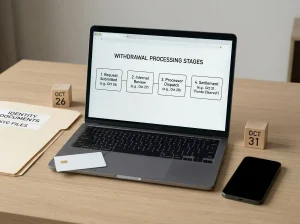
Wild Fortune withdrawal limits and processing stages
Wild Fortune Notes Wild Fortune applies an AU fiat withdrawal minimum, daily, weekly and monthly...

Anonymous Crypto Casinos in Australia: Legal Guide
Australian rules apply to offshore casino services even when they accept cryptocurrency, while user liability...

Aristocrat Online Pokies in Australia: What to Know
The Aristocrat name alone does not identify a game, confirm its features, or show where...

Aussie Crypto Casinos: Payments, Rules and Checks
A practical guide to offshore payment flows, Australian considerations, verification limits, bonus terms and crypto...

Best New Australian Online Pokies: Rules and Checks
This guide explains Australia's restrictions and the limits of available information on offshore sites, payments,...

Online Casino Payment Methods for Australians
Deposits and withdrawals can follow different rules, while Australian payment options do not change the...

Best-Paying Online Pokies in Australia: Payouts & Rules
Understand how payout claims, bonus conditions, Bitcoin payments and Australian rules shape the risks of...

Casino Sites That Accept Amex in Australia
A casino may list Amex, but the card issuer can still block a gambling-related payment,...

Casino Sites That Accept BPAY in Australia
A BPAY search alone does not confirm casino support, and the payment methods available can...

Casino Sites That Accept Credit Cards in Australia
Card acceptance can depend on the casino and issuer, while payment limits, fees, verification and...

EcoPayz casino sites in Australia: what is verified
The article separates payment-provider support from Australian legality and explains why deposits, withdrawals and game...

Casino sites that accept Osko in Australia: what to check
The page separates payment claims, deposit and withdrawal routes, and the legal context for offshore...

Paysafecard Casino Sites in Australia: What to Check
The guide separates operator restrictions under the Interactive Gambling Act 2001 from player status and...

Casino Sites and Skrill in Australia: What to Know
Australia’s rules apply to real-money online casino games offered to people in the country, while...

Trustly Casinos in Australia: What Can Be Confirmed
Trustly availability for Australian customers needs clear operator confirmation; payment claims do not verify games...

Casinos That Accept Apple Pay in Australia
Apple Pay’s everyday use in Australia does not confirm casino cashier support, and deposit access...

Casinos That Accept Bitcoin in Australia: How Payments Work
See how wallet transfers, blockchain confirmations, cashier checks and bonus terms affect Bitcoin casino deposits...

Bitcoin Cash Casinos in Australia: Rules and Checks
Australian law assesses the casino service and its operator; BCH funding, bonus terms, verification and...

Casinos That Accept CashtoCode in Australia
Learn what can be confirmed about CashtoCode support, payout rules and Australian restrictions on real-money...

Casinos That Accept Ethereum in Australia: Payments
Ethereum is a digital currency, while each casino independently determines whether it offers the option...

Casinos That Accept Google Pay in Australia
Google Pay availability does not establish that an online casino may legally serve Australians or...

Casinos That Accept Litecoin in Australia: Claims
A Litecoin payment claim may not establish availability for Australian customers or explain which account...

Casinos That Accept Mastercard in Australia
Australian card payments may be commonplace, but online casino acceptance depends on the specific payment...

Casinos That Accept MiFinity in Australia: What to Check
Casino games and payment methods are separate questions, and a general MiFinity mention may not...

Casinos That Accept Neosurf in Australia: What to Check
Australian card and mobile-wallet habits offer context, but only an operator’s own payment arrangements can...

Casinos That Accept Neteller in Australia
A Neteller mention alone does not confirm Australian access, supported games, deposit options or withdrawal...

Casinos That Accept PayID in Australia: What to Know
A PayID option does not establish that an online casino may legally offer real-money games...

Casinos That Accept PayPal in Australia: What to Check
PayPal availability, deposit conditions and withdrawal options can differ, so a payment label alone does...

Casinos That Accept POLi in Australia: Key Checks
Payment availability, permission to offer online pokies, and withdrawal support are separate questions, so one...

Casinos That Accept Tether USDT in Australia
USDT mentions alone do not confirm payment support; acceptance, deposit and withdrawal terms need separate...

Casinos That Accept Visa in Australia: What to Know
A Visa label does not confirm an operator is authorised, that a card will work,...

Dragon Link Online Pokies in Australia: What to Know
A cautious guide to online format, free-play limits, Australian legal context and the claims a...

Easy Withdrawal Casinos in Australia: Payout Guide
A withdrawal can involve an operator review and payment processing, so a fast transfer does...

Fast Withdrawal Casinos in Australia: Payment Routes
Payment options, verification checks and the withdrawal process all affect how quickly funds may reach...

Instant Bank Transfers for Australian Casinos: What to Know
Bank-linked payment labels do not confirm legality, processing speed, withdrawal routes or how casino bonus...

PayID Casino Withdrawals in Australia: How They Work
PayID can move funds in real time after release, while operator checks and bonus wagering...

Instant PayID Withdrawals in Australia: What to Know
PayID can move funds in real time after release, but casino review, verification and account...

PayID Pokies in Australia: Payments and Checks
PayID directs transfers using an identifier, but it does not verify a pokies operator or...
No-Verification Casino Withdrawals in Australia
A closer look at identity checks, casino approval, payment timing and bonus terms helps put...

No KYC Casinos in Australia: Cash-Out Checks
The guide separates registration claims from withdrawal checks and compares crypto, PayID, bonuses and wagering...

Online Pokies Instant Withdrawals in Australia
Withdrawal timing depends on more than the payment rail: operator checks and receiving institutions can...

Online Pokies PayID Australia: Deposits and Withdrawals
PayID is an identifier-based way to send money through participating banks, but site availability and...

Pay by Phone Casinos in Australia: What It Means
Separate mobile play from phone-bill billing, and understand how PayID transfers and Australian gambling rules...

Quick Withdrawal Casinos in Australia: Cashout Times
E-wallet estimates describe only part of the process: casino approval, payment routing and account checks...
Real Cash Online Pokies in Australia: What to Know
The guide separates practice credits from real-money play and outlines checks for offers, deposits, Bitcoin...

Safe Online Pokies in Australia: Bitcoin Basics
A guide to game credits, offshore-site context, payment differences, privacy trade-offs and checks that can...

Same-Day Casino Payouts in Australia: What to Know
A payout can pause during operator checks or while the payment moves through its route...
Solana Casino Comparison in Australia: Legal Guide
The guide separates SOL ownership from offshore casino use and covers funding, cashing out, platform...

PayID and under-one-hour casino withdrawals in Australia
PayID may speed the transfer after release, while operator checks and Australian restrictions remain separate...