Real-Money Casino Table Games in Australia
 Available in AU

A practical guide to the legal position, online play formats, odds, basic bets and the rules behind familiar card and roulette games.
Table of Contents
- The Australian rules behind online table games
- Online tables: live dealing or software-led play?
- What the odds question can—and can’t—tell you
- How the basic table-game bets work
- Searching for a table-game casino near you
- What counts as a casino table game?
- A tour of the main table-game formats
- Card tables: blackjack, baccarat-style bets and poker
- Roulette rules and the wheel versions you’ll see
- Poker at the table: the aim of the game
The Australian rules behind online table games
The starting point is the Interactive Gambling Act 2001, usually shortened to the IGA. Under Section 5, operators based in Australia are prohibited from offering residents real-money interactive casino games. That includes online table games. The rule is about the service being provided to people in Australia, not simply whether a game resembles one found in a physical casino.
That distinction matters when you see a site describing itself as an online casino or promoting table play for cash. A polished page, familiar game names or an Australian-facing design does not change the legal position for an operator based here. Local companies cannot lawfully offer real-money online casino services to Australian residents.
What the IGA restricts
The IGA is the central law governing this part of online gambling in Australia. It bars local companies from providing online casino services, including real-money table games. The restriction covers the online service itself; it is not a special rule about a particular card, wheel or betting format.
Choosing a real-money casino for table games means considering both the games and the practical details that can affect how you deposit or withdraw. Use these operator notes as a starting point, and check the terms that matter to you before playing.
1. GoldenCrown
License: Curacao Gaming Control Board OGL/2023/176/0095 (Hollycorn N.V.) GoldenCrown is listed with a Curaçao Gaming Control Board licence, OGL/2023/176/0095, held by Hollycorn N.V.
2. Neospin
License: Curacao Gaming Control Board OGL/2023/176/0095 (Hollycorn N.V.) Neospin is listed with a Curaçao Gaming Control Board licence, OGL/2023/176/0095, held by Hollycorn N.V.
3. Wild Tokyo
License: Curacao · Payout speed: crypto 30-60 minutes, fiat 1-5 days · Min. deposit: A$10 Wild Tokyo lists a A$10 minimum deposit and Curaçao licensing. Its stated payout times are 30–60 minutes for crypto and 1–5 days for fiat.
4. Ricky Casino
Payout speed: crypto under 1 hour, PayID 1-3 business days · Min. deposit: A$20 (A$30 to qualify for the bonus) Ricky Casino lists a A$20 minimum deposit, rising to A$30 to qualify for the bonus. Stated payout times are under an hour for crypto and 1–3 business days for PayID.
5. DragonSlots Casino
License: Curacao Gaming Authority (Jumpman Gaming Ltd) DragonSlots Casino is listed as licensed by the Curaçao Gaming Authority, with Jumpman Gaming Ltd named.
6. Vegaz Casino
License: Curacao OGL/2024/1335/0780 · Min. deposit: EUR 20 Vegaz Casino is listed with Curaçao licence OGL/2024/1335/0780. Its stated minimum deposit is EUR 20.
7. WinSpirit Casino
License: Curacao eGaming OGL/2024/923/0383 (Antillephone N.V.) · Min. deposit: A$30 WinSpirit Casino is listed with Curaçao eGaming licence OGL/2024/923/0383, with Antillephone N.V. named. Its stated minimum deposit is A$30.
8. House of Pokies
License: international iGaming licence – jurisdiction not named in the source · Payout speed: PayID 1-24 hours · Min. deposit: A$30 (PayID from A$10) House of Pokies lists PayID payouts in 1–24 hours and a A$30 minimum deposit, or A$10 when depositing via PayID. Its source describes the licence as an international iGaming licence but does not name the jurisdiction.
9. Lucky Dreams
License: Curacao · Min. deposit: A$20 (POLi) Lucky Dreams is listed with Curaçao licensing and a A$20 minimum deposit for POLi.
10. JustCasino
License: Curacao Gaming Control Board JustCasino is listed with a Curaçao Gaming Control Board licence.
So, when people talk about casino table games online, it helps to separate the game from the service. The rules are not determined by whether the table is presented as a live casino or as a digital game. The relevant point here is that an operator based in Australia must not offer residents an online casino game for real money.
Free-play wording does not turn a real-money casino service into something else if money is still involved in the play. Nor does calling a page a guide, a game lobby or a promotions page change the underlying restriction. The legal issue is the provision of the prohibited interactive gambling service, not the label used to make it sound more ordinary.
This is a narrow point, but an important one. A reader looking for the best online casino table games or a promotion tied to table play may encounter plenty of marketing language. That language should not be mistaken for a statement that an Australian-based operator is permitted to provide real-money online casino games. A promotion cannot override the law.
ACMA’s role
The Australian Communications and Media Authority, or ACMA, is responsible for enforcing compliance with the IGA. Its role includes blocking unlicensed domestic platforms. In practical terms, the restriction is not just a line in legislation that operators can ignore without consequence; it is backed by a regulator tasked with enforcement.
The distinction between an operator’s obligations and a player’s position is also worth keeping clear. The IGA’s prohibition described here is directed at operators providing the service. It does not mean that the reader should treat a site’s availability or advertising as proof that the service is lawful. Access, branding and legal permission are different things.
Wild Fortune games, providers and live casino
I would not read a search result, a welcome offer or a page calling itself a table-games casino as a substitute for the rules. That is where people can slip: the commercial presentation may look straightforward, while the legal question is about who is providing the service and to whom.
Offshore services and the Australian position
The fact that a site is based overseas does not create a local licence or make it an Australian-regulated online casino. The legal framework described here is not an endorsement of offshore services, and Australian residents should not read the existence of offshore websites as permission to use them. The market position is that online casino-style services are prohibited when offered to people physically located in Australia, while enforcement includes blocking unlicensed platforms.
This is why phrases such as “international casino” or “available to Australians” need careful reading. They are descriptions used by a service or its promoters; they do not establish that the service is authorised under Australian law. Nor does an overseas address turn an otherwise prohibited offer into a locally approved one. The law and the marketing copy are not the same document.
If you are trying to understand whether real-money online table play is permitted in Australia, the clean answer is that Australian-based operators cannot offer it to residents, and ACMA enforces the restriction. Offshore branding does not change that position. It is a less convenient answer than a list of sites, but it is the one that keeps the legal distinction in view.
Legal Prohibition
Australian-based operators are prohibited from offering real-money interactive casino games to residents under the Interactive Gambling Act 2001.
That is the ground rule for reading anything else about online table games in Australia: an online casino offer is not made lawful merely by being easy to find, and an overseas operator is not a domestic licensed provider. The format of play comes later; the legal setting comes first.
Online tables: live dealing or software-led play?
The clearest difference is where the result comes from. A live dealer table shows a real dealer using real casino equipment, with video streamed to players. In a software-led version, a Random Number Generator (RNG) determines the result, such as the cards dealt or where the roulette ball lands. Both can appear on a screen, but the screen is showing two different kinds of play.
What “live” means
With a live dealer game, you watch a stream of an actual table in operation. The dealer handles the equipment, and the video feed carries that action to viewers. The defining point is not simply that the game looks realistic or that it has a human voice: it is that a real dealer and real equipment are involved.
That can make the experience feel closer to watching a table in a casino. You see the physical action rather than an animated representation of it. Still, a video stream is not the same thing as sitting at the table. You are viewing the action remotely, through a screen.
A live feed also does not, by itself, tell you everything about how a service is run or whether it is suitable to use. The delivery format describes what is shown; it is not a guarantee about the wider service. Keep those questions separate.
Three-Reel Slots in Australia: Features and RTP
What software-led means
In an online software-led table game, the outcome is generated by software rather than shown as the result of a dealer’s physical action. An RNG determines which cards you receive or where the roulette ball lands in the online version. The visual presentation may resemble a table, but the result comes from the game’s software.
That distinction is easy to miss when both formats are presented on the same screen. A polished layout, felt-style background or animated dealer does not make a game live. Look for whether the description says a real dealer and equipment are being streamed, or whether the game is a software version. The appearance alone is not enough.
What the formats have in common
Both formats let you view table play online, but they deliver it differently. Live dealer play sends video of real equipment and a dealer; software-led play uses an RNG to produce the result. Neither label says which game is better, and neither should be treated as a shortcut to judging odds. Those are separate questions.
If you are comparing a Bitcoin-based table game with one presented in another way, the currency label does not change this distinction. What matters here is whether you are watching a live dealer or seeing an outcome generated by software. Payment method and game delivery are not the same thing.
One practical check is to read the game’s description before assuming what is happening behind the graphics. If it specifies a live stream and a real dealer, that identifies the live format. If it describes an online version in which software determines the result, that identifies the software-led format. When the wording is unclear, do not infer the format from a lifelike table image.
Do
- Read the game description to identify the format
- Look for mentions of a real dealer and streamed equipment for live games
- Check for RNG mentions to identify software-led games
Don’t
- Infer the format from lifelike table images alone
- Assume a polished layout or animated dealer makes a game live
- Mistake a digital table layout for a real streamed table
There is a further point for Australian readers: describing how these formats work is not an endorsement or an invitation to play. Australian law prohibits the provision of real-money online casino games to people in Australia, including table games. The technical difference remains useful to understand, but it does not change that legal position.
In short, focus on the source of the action, not the styling. A real table on a live video feed is one format; an RNG-generated result presented by software is another. Similar screen, different mechanism.
What the odds question can—and can’t—tell you
A table game’s odds can help you understand a particular bet, but they do not produce a reliable ranking by themselves. When people ask which casino table games offer the best odds, they may mean the chance of winning a hand, the amount paid when a bet wins, or the house’s long-run advantage. Those are different measures. Treating them as interchangeable makes a neat-looking comparison less useful than it appears.
The chance of winning is about how often an outcome occurs. A payout describes what the game returns for a winning wager. The house edge, where it is calculated for a specific game and bet, estimates the casino’s advantage over repeated play. A bet that wins often is not automatically generous: its payout and the other possible outcomes matter too. A rare win with a large payout is not directly comparable with a frequent win that pays less.
That is why a “best odds” label needs context. It should identify the exact game, the bet being assessed and the rules in force. Broad comparisons between blackjack, roulette, poker, dice games or bets on a hand or tie can blur important differences. Even within one game, different bets may have different probabilities and payouts. A general game name alone does not tell you what a particular wager is worth.
Mines Casino Game in Australia: What to Check
A house-edge chart can be a useful starting point only if its entries are defined consistently. Check whether it compares the same kind of measure, and whether the rules and bet are stated. If a chart gives one figure for a whole game without saying which wager or rule set it describes, the figure may not answer the question you actually have. A ranking without that detail is tidy, but thin.
RTP figures need similar care. RTP means the theoretical share of stakes returned over a very large number of plays; it is not a promise about what an individual session will return. A figure for one game cannot simply be carried over to another, and a table-game RTP should not be assumed from a figure published for a different product or game type. If you see a percentage, find out what game and conditions it belongs to before using it as a comparison.
I’d also separate a mathematical comparison from a playing preference. A player may prefer a game’s pace or the way its decisions feel, but that says nothing by itself about its house edge. Nor does a run of wins or losses establish that the underlying odds have changed. A result in one session is not a dependable measure of long-term value.
So, what casino table games have the best odds? There is no responsible single answer without comparable figures tied to specific bets and rules. The same applies to asking which has the worst odds: the label can conceal more than it explains. For a practical comparison, look for clearly defined probabilities, payouts and house-edge calculations for the wager you intend to assess, rather than relying on a game-wide ranking.
An RTP (Return to Player) figure is a theoretical share of stakes returned over a very large number of plays, not a guarantee of what an individual session will return.
The distinction is worth keeping in mind. Odds are about the wager, not just the name on the table.
How the basic table-game bets work
The easiest way to understand a table game is to separate two things: what you are trying to do, and what your bet is placed on. Those are not always the same. In blackjack, for instance, you compete against the dealer; in other formats, your wager can be on one of two hands or on a tie. A dice game instead asks you to stake a bet on the result of a roll.
In blackjack, your aim is to finish with a hand value closer to 21 than the dealer’s hand. You are not trying to beat the other players at the table. That distinction is useful when you are learning how the game is structured: the contest is between your hand and the dealer’s, and the value of each hand is what matters.
A simple way to follow a round is to keep your attention on those two hands and the target. The player’s decisions make sense in relation to the aim of getting closer to 21 than the dealer. I would start by understanding that objective before trying to remember any additional table instructions. Otherwise, the activity can look like a string of separate actions with no clear point. The point is the comparison.
Crash Casino Games in Australia: Rules and Risks
A bet on a hand works differently. Here, you are choosing which hand you think will prevail: your own hand, the Banker’s hand, or a tie. The wager is about the result between those hands, rather than about building a blackjack total against a dealer. Before taking part, make sure you can identify what each betting choice refers to. If you cannot tell which outcome your chip represents, pause and ask for the bet to be explained. That is a better starting point than guessing.
The tie option is a distinct outcome, not another name for backing either hand. Keeping those choices separate helps make the layout easier to read: one selection backs a hand, another backs the opposing hand, and a tie bet backs neither as the winner. The mechanics are straightforward to describe, but the exact table instructions still matter.
In a dice-based game, players roll a pair of dice and bet on the outcome. The central action is the roll; the wager expresses which result you are backing. That gives the game a different feel from comparing hands, but the basic question remains familiar: what event does your bet depend on? If the possible outcomes are not clear from the table’s explanation, do not assume you have understood them.
These examples give you a practical framework for learning table-game rules: identify the objective, identify what the bet covers, then follow how the result is decided. Blackjack is about your hand relative to the dealer’s and the target of 21; hand-based betting distinguishes between a hand, the Banker’s hand and a tie; dice play centres on a pair of dice and the outcome of their roll. Keep those mechanics distinct. It helps.
Learning Table Rules
Identify the objective
Determine the main goal, such as finishing with a hand value closer to 21 than the dealer in blackjack.
Identify the bet
Determine what your wager covers, such as a specific hand, a tie, or the result of a dice roll.
Follow the result
Observe how the outcome is decided based on the game’s specific mechanics.
Searching for a table-game casino near you
If you want a table game in person, “near me” means a physical venue: a casino you can travel to, not a website showing a dealer on screen. I can’t identify the closest venue without knowing where you are, and I won’t guess at locations. Check a venue’s own information and confirm its address and current facilities before making a trip.
That distinction matters in Australia. The Interactive Gambling Act 2001 prohibits operators from providing real-money online casino games, including table games, to people in Australia. ACMA enforces the rules and blocks unlicensed domestic platforms. A search result that presents an offshore site as a nearby option does not make it a local casino or change the legal position.
A live dealer table can look like a room you might walk into: a real dealer handles real casino equipment, while a camera streams the action to players online. But the stream does not put the table in your suburb. It is still online casino play, not a physical venue you can visit. Different thing.
For a physical casino, start with the location you can actually reach and verify details directly with the venue. A listing may be out of date, may describe facilities at a broader resort, or may not make clear which games are available. If table games are the reason for the trip, check that this is specifically confirmed rather than inferring it from a general casino label. I’d treat an unconfirmed map pin as a lead, not an answer.
Bonus Buy Slots in Australia: Features and RTP
The same applies if you are looking for a newly opened casino or a new table-game room. “New” can refer to a venue, a renovation, or an online title; those are not interchangeable. Confirm what has opened, where it is, and whether the table games you want are offered. A name in a listing is not proof that a venue is operating or that a particular facility is available.
People often use “casino near me” to mean either a nearby building or an online table they can access from home. Keep those searches separate. A streamed dealer is online, even when the camera shows a real casino table; a physical casino is a place you travel to. For Australians, the online option is also subject to the national prohibition on real-money online casino services.
So, if you mean the nearest in-person venue, verify the location and facilities with the venue itself. If you mean an online table, don’t mistake a live stream for a local casino or for an exception to Australian law.
What counts as a casino table game?
A casino table game is a game built around play at a table, whether the action is shown through a live dealer or handled by software. The label describes the kind of game, not one particular way of playing it. That distinction matters: a streamed table and a software-led version may look similar on screen, but the events behind them are different.
In a live dealer format, a real dealer uses real casino equipment, and a video feed carries the table to viewers. What you see is a live session rather than a computer-generated account of a hand or wheel result. The camera shows the dealer and equipment; it does not turn the online viewer into someone sitting in the room.
Live Dealer
A real dealer uses physical casino equipment, and the action is carried to players via a video stream.
Software-Led
A Random Number Generator (RNG) determines the result, which is then presented through a digital interface.
A software-led table game works differently. A Random Number Generator, or RNG, determines the cards dealt or where the roulette ball lands. The result comes from software rather than a live dealer’s actions at physical equipment. The screen may present the action in a table layout, but that visual design does not make it a live table.
That is the useful dividing line when you are trying to work out what people mean by “casino table games”: the category can include both live-dealt and software-determined play. It is not a promise that every table game uses the same setup, nor does the word “table” tell you how the outcome is produced. The presentation can resemble a traditional casino table while the underlying process is entirely digital.
So, when you encounter the term, look past the graphics. A dealer visible in a live video points to a streamed game using real equipment. A game in which software selects the cards or wheel outcome belongs to the software-led format. They share a table-game label, but not the same method of producing what happens next.
The distinction is about delivery, not a ranking of which format is better. A live stream gives you a view of a real dealer and equipment; a software-led game uses an RNG for the relevant result. Neither description, by itself, tells you anything further about the rules or odds. Those are separate questions.
It also helps to separate the game from the screen around it. A digital table layout is a way to present play; it does not establish that a real table is being filmed. Conversely, a live video feed is not merely an animated table. The important point is what produces the action you see: a dealer working with casino equipment, or software determining the result.
Lightning Link Online Pokies in Australia: What to Know
In short, “table game” names a broad category, while “live dealer” and “software-led” describe two ways that category can be presented online. Keep those terms distinct and the label becomes easier to read—without treating every digital table as the same thing.
A tour of the main table-game formats
A table-game menu brings together several kinds of play, rather than one single style. The main formats include wheel games, a contest against the dealer, bets on competing hands, dice-based play and poker. They differ in what you watch and what your bet is tied to.
Roulette centres on a wheel and a ball. Online versions include European, French and American roulette. The names indicate different versions of the game, not different ways of placing a bet.
Blackjack is a contest between you and the dealer. The aim is to finish with a hand value closer to 21 than the dealer’s hand. That gives blackjack a different feel from games where you back one of several possible outcomes: your hand is measured directly against the dealer’s.
Another format lets you bet on a hand belonging to a player, on the Banker’s hand, or on a tie. The bet is about which of those outcomes occurs. It is distinct from blackjack, even though both involve cards and a dealer. The names can sound familiar, but the choice on the table is a different one.
Dice-based play puts the roll at the centre. Players roll a pair of dice and bet on the outcome. Here, the action is not a hand of cards or a ball moving around a wheel; it is the result of the dice. That simple difference is enough to make it feel like its own category.
Table Game Formats
- Roulette is based on a wheel and ball result
- Blackjack is a direct contest between the player and the dealer
- Hand-based betting focuses on which hand (Player, Banker) or a tie prevails
- Dice games center on the outcome of a pair of dice
- Poker focuses on building the strongest possible hand against opponents
Poker is built around making the best possible hand. Rather than measuring your hand against a dealer in the blackjack sense, players compete to build a strong poker hand. It sits alongside the other table formats, but the hand-building aim gives it a separate identity.
If you are scanning a table-game menu, sorting the options by what decides the result can help: wheel, dealer-versus-player hand, a bet on competing hands, dice, or poker hand. That is a more useful starting point than treating every table as the same kind of game. It also keeps the broad formats clear without confusing the name of a game with how it is delivered online.
These categories are an orientation, not a ranking. A table’s label tells you the general format; the specific rules determine what a player does within it. Blackjack and poker both use cards, for instance, but their aims are not interchangeable. Roulette and dice both turn on a result, yet one uses a wheel and the other a pair of dice. Different table, different business.
Card tables: blackjack, baccarat-style bets and poker
Card games can look similar from a distance, but the decision at the table changes with the format. In blackjack, you are trying to finish with a hand value closer to 21 than the dealer’s. In a baccarat-style format, the bet is placed on which hand will prevail—or on a tie. Poker centres on the hand you build against other players. Those are three different ways to read a card table, not three versions of the same contest.
Five-Reel Slots in Australia: What to Check
Blackjack: you against the dealer
The basic aim in blackjack is a comparison: your hand’s value is measured against the dealer’s, with 21 as the target. The closer hand is the objective. That gives the game a direct structure—you focus on your own total and the dealer’s, rather than betting on a separate side of the table.
If you are new to it, keep that central comparison in mind. It helps you follow what the hand is about without confusing blackjack with poker, where players compete to make the best hand, or with a Banker-versus-player bet. I would start by understanding the aim before worrying about any finer detail.
Betting on a hand or a tie
Another card-table format lets you choose between the player’s hand, the Banker’s hand, or a tie. The bet is about which of those outcomes you expect, rather than building a hand against the dealer as in blackjack.
That distinction is useful when you see a table described with Banker and player options. You are backing an outcome; you are not simply trying to beat the dealer in the blackjack sense. A tie is also an explicit betting option, so it belongs on the same decision menu. The label “baccarat-style” points to this kind of hand-based betting, but the key mechanic is the choice of outcome.
Poker: build your hand
Poker takes a different route. Players compete to build the best possible poker hand, so the focus is on the hand you can make in relation to those of the other players. That is the broad aim; specific rules can differ by format, so the name alone does not tell you every detail of a particular table.
Comparing Card Tables
To distinguish between card formats, ask what the bet is about: whether you are beating the dealer (blackjack), backing a specific hand or tie (baccarat-style), or building the strongest hand against other players (poker).
When comparing card-table formats, I find it clearest to ask what the bet is actually about: beating the dealer, backing one of the hands or a tie, or building the strongest hand against opponents. That small distinction makes the table easier to understand. No mystery there.
Roulette rules and the wheel versions you’ll see
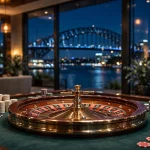
Roulette has several versions, but the main names to recognise are European, French and American. The key difference is visible on the wheel: European and French roulette have a green zero, while the American version has both a green zero and a green double zero.
European and French wheels each have 36 numbered pockets as well as the green 0. The American wheel includes the green 0 and 00. That extra marked pocket is the practical distinction to look for when you are identifying the version. No special terminology needed.
The names can make the European and French versions sound like entirely different games. For this comparison, though, their stated wheel layout is the same: 36 numbers and a single green zero. The difference worth keeping in mind here is between those single-zero versions and the American double-zero layout.
If you are reading a roulette table’s rules, check the version before you focus on anything else. A label such as “European” or “French” points to the single-zero arrangement described above; “American” indicates that the wheel has both 0 and 00. The green markings make the distinction easy to spot, whether the table is presented digitally or in another format.
This is a narrow detail, but it matters when comparing roulette tables: the version name tells you which zero markings are part of the wheel. It does not, by itself, explain every rule or condition attached to a particular table. Read the displayed rules as well, rather than assuming that the name answers everything.
When roulette is discussed alongside other casino table games, these versions are not separate broad categories of play so much as different wheel layouts within roulette. The clearest way to tell them apart is to count the green zero markings: one on European and French wheels, two on an American wheel. That simple check keeps the labels straight.
7-Reel Slots in Australia: Rules, Odds and Access
For a quick reference: European and French roulette have 36 numbered pockets and a green 0; American roulette has a green 0 and a green 00. That is the core distinction.
Poker at the table: the aim of the game
Poker is a contest to build the best possible hand. That is the central idea behind casino poker table games: players are trying to put together a hand that can stand above the others. The details can vary between forms of poker, but the basic aim stays clear.
If you are new to the subject, keep that aim in view before getting caught up in the word “casino” or in unfamiliar game names. Poker is not simply about being dealt cards; the focus is on the hand you build and how it compares with other players’ hands. The contest is between players, with each aiming to make the strongest hand possible.
That gives you a useful way to think about poker at a casino table without assuming every version follows the same rules. A label such as Pai Gow Poker points to a particular form, but the name alone does not tell you the full rules or how a hand is formed. Check the specific game’s instructions rather than carrying assumptions from one poker table to another.
The same caution applies when comparing different types of casino poker table games. The shared objective is the best possible poker hand; the details of play belong to the particular game. I’d start with that distinction. It keeps the basic idea simple without pretending that every table works identically.
Poker is often described as players battling it out, and that captures the competitive core: each player is trying to build a hand that beats the rest. You do not need a long list of variants to understand the point. At its heart, poker is about competing to make the strongest hand you can. The table is where those hands are compared; the aim is to have the best one.
Can you play table games online for real money?
Australian-based operators cannot offer residents real-money online casino table games. An offshore site’s availability or branding does not make it an Australian-authorised service.
Can you legally gamble online in Australia?
Australian-based operators are prohibited from offering residents real-money online casino games under the Interactive Gambling Act. An offshore site is not an Australian-licensed casino simply because it accepts Australian players.
Do casino bonuses actually benefit table game players?
They can, but table games often contribute only 10–20% toward wagering requirements, and some games may be excluded. Check the bonus terms for game contributions and maximum bets before accepting an offer.
Wild Fortune games, providers and live casino
Three-Reel Slots in Australia: Features and RTP
Understand how reel mechanics, bonus features, RTP, demo access and Australian rules shape what to...
Five-Reel Slots in Australia: What to Check
Reel count alone does not determine a game's rules or returns; RNG outcomes are independent,...

7-Reel Slots in Australia: Rules, Odds and Access
A practical look at reel counts, game versions, free-play limits, real-money checks and the odds...

Bonus Buy Slots in Australia: Features and RTP
Bonus buys provide direct entry to a feature, but outcomes remain random and the purchase...

High-Volatility Slots in Australia: How They Work
Volatility describes a broad balance between win frequency and potential size, not a schedule or...

Low-Volatility Slots in Australia: How They Play
Learn how volatility describes win frequency and payout swings, and why a steadier-looking session still...

Pokie Machines in Australia: What to Know Before Playing
A practical guide to game features, odds, free play, payments and the legal limits on...

Progressive Jackpot Slots: How They Work
See how progressive pools are funded and what game triggers, payout terms and bonus conditions...

Best RTP Slots in Australia: Understanding RTP
RTP can help compare long-run game expectations, but versions and short-term results mean the displayed...

Video Slots in Australia: Mobile Play and Game Basics
A practical guide to mobile slot interfaces, free-play modes, Australian access considerations and checking game...

Casino Dice Games in Australia: Rules and Risks
Online dice formats range from craps to screen-based games, but Australian law and the operator’s...

Crash Casino Games in Australia: Rules and Risks
A practical overview of how Australian rules, verification, payment terms and game fairness claims shape...

Lightning Link Online Pokies in Australia: What to Know
The guide separates venue machines from online casino claims and explains the Australian rules for...

Live baccarat online in Australia: legal guide
Australia has no officially licensed online casinos, and live-dealer baccarat remains an online casino service...

Live Blackjack Online Casinos in Australia: Legal Context
Understand what live dealer play involves, how to assess a site, and which game, payment...

Live Roulette in Australia with English-Speaking Dealers
Australia’s restrictions on online casino services shape how live roulette, real-money play, dealer language and...

Mines Casino Game in Australia: What to Check
A Mines title’s rules, demo mode, bonus terms and cashout details need checking separately from...

Plinko Casino Australia: Games, Payments and Rules
Plinko titles can use reels, a dropping-ball board or a mix of both, so the...

Pokies Tips and Tricks: What Can They Change?
Understand how random spins shape pokies play, and why practical checks and session boundaries matter...