Online Casino Payment Methods for Australians
 Available in AU

Deposits and withdrawals can follow different rules, while Australian payment options do not change the legal status of online casino games.
Table of Contents
- Start with the payment route, not the payment button
- Deposits and cashouts are separate checks
- The Australian wrinkle: PayID, BPAY and blocked cards
- What a payment gateway can—and cannot—tell you
- Vouchers have a hard spending ceiling—and a cashout catch
- Check the account conditions before you fund it
- Provider fees and the wait for your money
- Fast does not always mean the same thing
- Wallets on your phone: deposits are not cashouts
- Using PayID from your mobile
Start with the payment route, not the payment button
When you look at casino payment options, start by separating payment categories from payment buttons. A checkout page might show several ways to move money, but a familiar logo does not tell you whether that route is appropriate for someone in Australia—or whether the service itself may lawfully be offered here.
The legal point comes first. Under the Interactive Gambling Act 2001, it is illegal for operators to provide real-money online casino games, including pokies, poker and table games, to people physically located in Australia. A payment method does not change that. Calling a transaction a deposit, wallet transfer or purchase cannot turn a prohibited service into a lawful one.
That makes broad lists of Australian casino payment options easy to misread. A specialist review may describe bank transfers, e-wallets and prepaid vouchers as payment categories, and may mention cryptocurrency alongside them. Treat that as a description of categories discussed in the market, not as a green light to use every one. In particular, crypto and credit-related products are not acceptable deposit options for online wagering in Australia.
Choosing a payment method can affect how easily you fund an online casino account and access your winnings. Use these operator notes to check the payment-related details available before deciding where to play.
1. GoldenCrown
License: Curacao Gaming Control Board OGL/2023/176/0095 (Hollycorn N.V.) GoldenCrown is listed with a Curacao Gaming Control Board licence, OGL/2023/176/0095, held by Hollycorn N.V. No payment-specific details are provided here.
2. Neospin
License: Curacao Gaming Control Board OGL/2023/176/0095 (Hollycorn N.V.) Neospin is listed with a Curacao Gaming Control Board licence, OGL/2023/176/0095, held by Hollycorn N.V. No payment-specific details are provided here.
3. Wild Tokyo
License: Curacao · Payout speed: crypto 30-60 minutes, fiat 1-5 days · Min. deposit: A$10 Wild Tokyo lists a A$10 minimum deposit, with payouts stated at 30–60 minutes for crypto and 1–5 days for fiat. Its licence is listed as Curacao.
4. Ricky Casino
Payout speed: crypto under 1 hour, PayID 1-3 business days · Min. deposit: A$20 (A$30 to qualify for the bonus) Ricky Casino lists a A$20 minimum deposit, or A$30 to qualify for the bonus. Its stated payout times are under an hour for crypto and 1–3 business days for PayID.
5. DragonSlots Casino
License: Curacao Gaming Authority (Jumpman Gaming Ltd) DragonSlots Casino is listed with a Curacao Gaming Authority licence held by Jumpman Gaming Ltd. No payment-specific details are provided here.
6. Vegaz Casino
License: Curacao OGL/2024/1335/0780 · Min. deposit: EUR 20 Vegaz Casino is listed with Curacao OGL/2024/1335/0780 and a minimum deposit of EUR 20. No payment-specific method or payout-time details are provided here.
7. WinSpirit Casino
License: Curacao eGaming OGL/2024/923/0383 (Antillephone N.V.) · Min. deposit: A$30 WinSpirit Casino lists a A$30 minimum deposit and a Curacao eGaming licence, OGL/2024/923/0383, held by Antillephone N.V. No payment-specific method or payout-time details are provided here.
8. House of Pokies
License: international iGaming licence – jurisdiction not named in the source · Payout speed: PayID 1-24 hours · Min. deposit: A$30 (PayID from A$10) House of Pokies lists PayID payouts of 1–24 hours and a A$30 minimum deposit, reduced to A$10 for PayID. Its source describes the licence as international, without naming the jurisdiction.
9. Lucky Dreams
License: Curacao · Min. deposit: A$20 (POLi) Lucky Dreams lists a A$20 minimum deposit for POLi and a Curacao licence. No payout-time details are provided here.
10. JustCasino
License: Curacao Gaming Control Board JustCasino is listed with a Curacao Gaming Control Board licence. No payment-specific details are provided here.
Bitcoin is worth separating from the general idea of a digital payment. A search for casino Bitcoin payment methods may lead to pages describing crypto transactions, but that does not make Bitcoin an appropriate way to fund online casino play here. Blockchain transfers are irreversible and do not offer a chargeback option. That is a serious drawback even before the Australian legal position is considered. Don’t send funds on the assumption that a transfer can simply be recalled if something goes wrong.
The same caution applies to broader searches for online casino payment cryptocurrency, or for newer payment brands and services. A name appearing in a payment menu tells you only that the operator has chosen to display it; it does not establish that the service is lawful, suitable, or protected for Australian users. I would not treat a list of logos as a recommendation.
Credit cards and credit-related products are also out as deposit routes. It is tempting to think of a card as just another quick way to pay, but the market constraint is clear: online gambling services must not accept credit card payments. Don’t use a credit-linked product to get around that restriction.
For orientation, the main payment categories you may encounter in general discussions are bank transfers, e-wallets and prepaid vouchers. Each describes a different way money can be held or moved. The labels alone do not tell you whether a transaction is permitted, whether a particular service is available to you, or what conditions attach to it. Those are separate questions, and a payment page cannot answer the legal one by itself.
Aristocrat Online Pokies in Australia: What to Know
A phone payment casino search can also blur two different things: paying through a phone’s interface and using a particular payment product. The device is not the payment method. A mobile screen may display a bank transfer, wallet or other route, but the same legal limits apply as on a desktop.
So the sensible starting point is not “Which button looks easiest?” It is “What kind of transaction is this, and can this service lawfully be offered where I am?” If a page presents offshore real-money casino play as a normal option for Australians, the payment menu does not make that offer compliant. Familiar branding is no safeguard.
Deposits and cashouts are separate checks
A payment option shown beside a deposit field does not, by itself, tell you how a withdrawal would work. They are separate parts of the payment route, and a method listed for putting money in may not be offered for taking money out. A specialist review reports that casino payment methods can differ between deposits and withdrawals; treat that as a point to verify for the specific service, not a fixed rule for every operator.
That distinction matters because a familiar logo can make the checkout look simpler than it is. You might see a way to fund an account and assume the same route will carry a payout back. Do not build that assumption into your decision. Before sending money anywhere, look for an explicit explanation of the available withdrawal routes and whether the method you are considering is included.
Do
- Identify how a deposit is made
- Find separate withdrawal information
- Verify if the same method is available for both
Don’t
- Assume the deposit route will carry a payout
- Rely on a vague promise that withdrawals are supported
- Deposit funds before confirming cashout details
For a real check, read the payment information from both directions. First, identify how a deposit would be made. Then find the separate withdrawal information and check whether it names that same method or sets out another route. If the information only describes deposits, it has not answered the cashout question. A vague promise that withdrawals are supported is not a clear description of the method available to you.
If the stated withdrawal route differs from the deposit route, make sure you understand what that means before proceeding. You need to know which method would receive the money, whether you can access it, and whether the account details required for that route are yours and current. If the explanation is missing or unclear, ask the operator for a direct answer and keep the response. Do not deposit first and hope the details sort themselves out later.
This is a basic part of casino payment risk management: assess the route for money going in and the route for money coming out, rather than judging an online casino payment method from the deposit screen alone. The same check applies when comparing casino payment methods. “Accepted” can refer only to funding unless the service clearly says otherwise. Read the wording closely.
Best New Australian Online Pokies: Rules and Checks
There is also an important Australian context. Under the Interactive Gambling Act 2001, it is illegal for operators to provide real-money online casino games to people physically in Australia. That includes pokies and table games. Payment information does not change that legal position, and a listed payment route should not be read as evidence that an online casino is legally available in Australia. I would not treat a payment page as a green light.
If you come across a real-money casino payment page, keep the checks narrow and factual: what does it say about deposits, what does it say about withdrawals, and is the cashout method actually specified? Do not rely on a method name appearing in a general list, or on another person’s account of how a different service handled a payout. Availability can depend on the operator, and the details need to be confirmed directly for the service in question.
The practical point is simple: check both directions before making any decision. A deposit option is not a cashout promise. If you cannot establish the withdrawal route in advance, you cannot assess the full payment path. Stop there.
The Australian wrinkle: PayID, BPAY and blocked cards
Payment options that appear at an offshore casino checkout can look familiar, but the Australian banking layer changes what may work. The key distinction is between a payment service existing locally and an operator being permitted to provide real-money online casino games here. Under the Interactive Gambling Act 2001, operators cannot legally provide those games to people in Australia.
Legal Restriction
Under the Interactive Gambling Act 2001, it is illegal for operators to provide real-money online casino games to people physically located in Australia.
PayID is part of Australia’s New Payments Platform. Instead of entering account details, a person can connect a mobile number, email address or ABN to an Australian bank account and use that identifier for a payment. Every major Australian bank supports PayID, though whether an offshore casino checkout offers it is a separate matter. A local payment network does not make the underlying gambling service lawful.
That distinction matters when you see PayID described as a leading casino payment method in Australia. A specialist review has characterised it as a primary AUD deposit option at many offshore operators, but that is a report about the operators covered by that review, not a guarantee of general availability. Payment pages change, and a familiar bank-linked name can make an unfamiliar service look more settled than it is. It isn’t.
BPAY takes a different pace
BPAY is another recognisable Australian name, but don’t read “bank payment” as “instant.” A specialist review gives a processing estimate of one to two business days for BPAY payments. That makes it a poor fit if your only concern is getting funds credited straight away; it is better understood as a slower route when the checkout offers it.
A specialist review also describes BPAY as a backup option when PayID is unavailable, rather than a real-time gameplay method. Treat that as a description of the services reviewed, not a fixed rule for every operator. The practical point is simple: the same logo can have different availability and timing depending on the checkout. Check the displayed instructions before starting a transfer, and don’t assume a pending payment will be credited immediately.
Casinos That Accept Tether USDT in Australia
Cards can be familiar and still fail
Visa and Mastercard are widely recognised, which is exactly why a declined transaction can catch people out. A specialist review reports that many standard card payments to offshore casinos are now blocked by Australian financial institutions. That does not mean every card transaction will be declined, but it does mean a card logo at checkout is no promise that your bank will authorise the payment.
A specialist review also describes Visa and Mastercard deposits as instant when processed. That timing only applies if a transaction goes through; it doesn’t override a bank’s decision to block it. So “fast payment casino” claims can skip the detail that matters: a payment may be quick after approval, yet unavailable to you at the point of authorisation. Don’t keep retrying a declined transaction on the assumption that the next attempt will behave differently.
There is a further limit: credit cards and credit-related products are not acceptable deposit options for online wagering under the Australian market constraints. A card brand alone does not tell you whether a proposed transaction is appropriate. PayPal is clearer still: it has prohibited gambling transactions in Australia since 2021, so it should not be presented as a route for casino payments here.
In short, PayID, BPAY, Visa and Mastercard may appear in discussions of Australian casino payment methods, but those names describe payment rails, not permission to offer online casino games in Australia. Read the local rules first; a familiar checkout is no legal green light.
PayID
A bank-linked identifier (mobile, email, or ABN) used for transfers via Australia’s New Payments Platform.
BPAY
A slower bank payment route typically taking one to two business days to process.
Cards
Visa and Mastercard options that may be instant if processed, but are often blocked by Australian banks.
What a payment gateway can—and cannot—tell you
A payment gateway is the checkout layer between an account and a payment route. It may show which options an operator has made available, ask you to enter payment details, and display the currency being charged. That is useful for checking what the checkout is asking you to do. It is not proof that the operator is authorised to offer real-money casino services in Australia, nor an independent assessment of the gateway’s security or performance.
That distinction matters here. Under the Interactive Gambling Act 2001, providing real-money online casino games to people in Australia is illegal for operators. A polished checkout, familiar payment logo or successful transaction does not change that legal position. Treat the payment screen as an interface, not a stamp of approval.
The gateway may also be only one part of the payment process. The details on its screen can help you spot the selected method and currency, but they do not establish what documents the operator may later ask you to provide. A specialist review reports that an operator may request government-issued identification, proof of address dated within three months, and evidence that the payment method belongs to you. The exact request can depend on the operator and account checks, so keep the information you submit consistent and read the instructions carefully.
If documents are requested, check what the operator wants before sending anything. Make sure the name and details line up with the account and payment method, and use the operator’s stated submission route. A payment gateway does not, by itself, tell you whether your identity check is complete or whether an operator will accept a particular document. Don’t assume that a successful deposit means those checks are finished.
Currency deserves a look before you confirm. If the amount is converted from Australian dollars to euros, conversion can add a cost of 2–4%. The figure shown in one currency may therefore not match the amount ultimately charged in the other. Check which currency the checkout displays and whether conversion is involved before proceeding; a payment screen is a poor place for surprises.
Payment technology can make a transaction appear straightforward, but the screen only answers a narrow question: what route and details are being presented at checkout? It cannot establish that the service is lawful in Australia, certify the operator, or guarantee how your documents will be handled. Read what is actually displayed, and don’t treat a logo or confirmation message as more than it is.
A neat checkout is still just a checkout.
Vouchers have a hard spending ceiling—and a cashout catch
A prepaid voucher puts a firm boundary around what can be spent through it: you can use only the value loaded onto the voucher. That makes the payment method easy to understand at the point of purchase, but it does not make the voucher a complete way to handle money in an online casino payment system.
The catch appears when money needs to come back out. A voucher used for a deposit generally cannot receive a withdrawal, so a separate cashout method is needed. Treat those as two different jobs: the voucher may cover the payment in, but it should not be assumed to provide a route back to you. A checkout showing a voucher logo is not confirmation that the same option can handle withdrawals.
A prepaid voucher generally cannot receive a withdrawal, meaning a separate cashout method must be established.
I’d think of the loaded amount as a spending ceiling, not as a balance you can move freely in both directions. Once you have used the voucher to pay, any remaining value stays subject to the voucher’s own terms; winnings or returned funds are a separate matter. Before making any payment, confirm what withdrawal route would apply and whether it is available to you. Otherwise, the payment can seem straightforward right up to the moment you need to cash out. Awkward timing.
This is also why “prepaid” should not be read as “protected” or “reversible”. A voucher limits the amount you can pay with that voucher, but it does not settle questions about account access, withdrawal eligibility or the operator’s terms. Nor does using one change the legal position: under Australia’s Interactive Gambling Act 2001, it is illegal for an operator to provide real-money online casino games to people physically located in Australia. The payment label does not alter that.
Real Cash Online Pokies in Australia: What to Know
There is no need to make a voucher do a job it was not designed for. Its practical role is bounded by the amount loaded and the payment it can make. The important distinction is simple: paying via a voucher and receiving a withdrawal are not mirror-image transactions. If a service presents them as though they are, read the withdrawal conditions carefully rather than relying on the deposit screen.
For anyone comparing casino payment systems, that distinction matters more than the appearance of the checkout. A familiar voucher option may make the initial payment feel contained, but it cannot by itself answer how a withdrawal would be handled. Keep the two routes separate in your mind, and do not treat a successful voucher payment as proof that funds can later be returned through it.
In Australia, this is an explanation of payment mechanics, not an invitation to use an offshore casino. The legal restriction is on operators providing real-money casino services to people in the country; a voucher does not make such a service compliant. A hard spending ceiling is useful to understand. A cashout route is a different question.
Check the account conditions before you fund it
A casino payment portal is more than a place to choose a payment button. Before entering any details, I’d use it to check what the deposit actually commits you to: whether a promotion is attached, what conditions apply to it, and what the account rules say about using or withdrawing any resulting balance. A familiar method name on the screen doesn’t answer those questions.
Start with the promotion box. A no-deposit offer may still come with wagering requirements, identity verification and withdrawal conditions. “No deposit” describes how the offer begins; it doesn’t mean winnings are automatically available to withdraw or that there are no steps to complete. Read the promotion terms alongside the account terms, not just the short description beside the offer.
Check Account Conditions
- Read wagering requirements for any offers
- Check identity verification and withdrawal conditions
- Decide whether to accept or decline automatically applied bonuses
- Verify that the payment method matches account rules
Pay particular attention to whether a bonus is optional or applied automatically. If the portal shows a promotion selected, look for a way to decline it before you proceed. If it doesn’t make that clear, pause rather than assuming you can sort it out later. Conditions can affect what you may do with the balance, so it’s worth knowing what you’re accepting before money moves.
Then look for the practical account rules around verification and withdrawals. A promotion may require verification before a withdrawal can be processed, and its terms may set conditions that still apply after you have met the initial offer. I wouldn’t rely on a headline or a chat message to explain those details; the written terms should make them clear. Keep a copy or screenshot of the relevant wording, especially if it changes between the offer page and checkout.
The payment portal can also help you spot a mismatch between the method you intended to use and the account’s stated conditions. Don’t treat the presence of PayPal, POLi, Boku or a Neosurf option as proof that every related account rule is suitable for you. A method’s appearance in a menu says little about promotions, verification or what happens when you request a withdrawal. Check the rules attached to the account, rather than judging it by the payment logo.
One point sits above the checkout details: under Australia’s Interactive Gambling Act 2001, operators cannot legally provide real-money online casino games to people physically located in Australia. A payment portal does not change that. This is a practical reminder, not a reason to treat the portal as an endorsement or assurance.
If an offer’s wagering, verification or withdrawal wording is hard to find, unclear or inconsistent, don’t proceed on a guess. I’d rather leave an offer untouched than discover its conditions only when trying to access a balance. Read first. Pay later.
Provider fees and the wait for your money
A payment provider’s name tells you little about the full cost of moving money. The wallet may charge one fee, the casino another, and a bank transfer can add both a processing wait and a separate charge. I’d compare the route from the casino balance to your bank account, not just the button shown at checkout.
A specialist review reported that Skrill withdrawals to a bank took one to two days, with some casinos adding a transaction fee of one to three per cent. That fee can take a noticeable slice from a payout, so check the casino’s own terms and Skrill’s current charges before relying on the estimate. The review’s timing is not a promise for every account or transfer.
The same kind of review said MuchBetter withdrawals were faster than traditional bank transfers, which could take as long as five days. Treat that as a comparison to investigate, not a guaranteed arrival time: the casino still has to approve and send the withdrawal, and the provider’s own processing comes after that. Faster on one leg does not mean instant in your bank account.
Processing and Fees
Skrill withdrawals to a bank may take one to two days with a 1-3% transaction fee. MuchBetter is reported as faster than traditional bank transfers, which can take up to five days. Some casinos may charge flat bank-transfer fees between $5 and $15.
Bank transfers can also sit in a manual queue at the casino. A specialist review described operators processing them once or twice a week; under that schedule, a request made on Friday could arrive by Wednesday. That is a useful reminder to check when the operator handles withdrawals, not only the bank’s transfer time. “Pending” can be the slow part.
Fees need the same scrutiny. A specialist review reported that some casinos charge a flat bank-transfer fee of $5–$15, while crypto withdrawals were described as generally free. Those figures and conditions should not be read as universal tariffs; check the specific operator’s payment terms. Crypto is not an acceptable deposit method for online wagering in Australia, and blockchain transfers are irreversible, with no chargeback option.
One review also cited a 1.45% Neteller charge for credit-card funding. That is not a suggestion to use a credit card for gambling: credit-card payments and credit-related products are not acceptable deposit options for online wagering in Australia. If you use Neteller for any permitted transaction, confirm its current fees and the casino’s own charges through a non-credit route.
I’d write down three things before making a payment: the provider’s fee, the casino’s fee, and the stated processing schedule. If any one is unclear, the headline speed is not much help. Fees first. Then timing.
Fast does not always mean the same thing
“Instant” can describe a payment arriving at checkout; it says nothing about how quickly you can receive a withdrawal. That distinction matters here, because a card transaction and a blockchain transfer move on different clocks—and neither should be treated as a permitted deposit route for real-money online casino play in Australia.
A specialist review describes Visa and Mastercard deposits as instant when accepted. But that is a report about processing speed, not a green light to pay by credit card. Credit-card payments for online gambling are not an acceptable deposit option, and Australian financial institutions block many standard card transactions to offshore casinos. A quick authorisation, where one is reported, does not change those limits.
Crypto has a different timing profile, but it is not an acceptable deposit method either. The figures reported for withdrawals concern blockchain processing, not a promise that funds will be available immediately: a specialist review puts Litecoin at about ten minutes, while Bitcoin can take as long as an hour if its network is congested. Those are network timings; they do not establish how long an operator takes to approve or send a withdrawal.
There is another catch beyond the clock. Ethereum gas fees can eat into winnings, so the amount that reaches a wallet may be lower than the amount sent. And blockchain transfers are irreversible: there is no card-style chargeback if you send funds to the wrong address or make an error. No take-backs.
So when a payment page uses “instant” as a selling point, read it narrowly. It may refer only to the deposit authorisation or, for crypto, to network confirmation. It does not mean that a withdrawal is instant, that a transaction is reversible, or that the payment route is lawful for Australian online casino deposits. The Interactive Gambling Act 2001 prohibits operators from providing real-money online casino games to people in Australia. A timing label does not alter that legal position.
Attention Blockchain transfers are irreversible and do not offer a chargeback option if an error occurs or funds are sent to the wrong address.
Wallets on your phone: deposits are not cashouts
A casino payment app can make a phone deposit feel simple, but the wallet shown at checkout only tells you how money may enter the account. It does not establish that the same service can receive a payout. I treat those as two separate permissions: one for funding, another for withdrawals.
Apple Pay is one phone-based option described in a specialist review: you can authorise a deposit from your digital wallet with biometric authentication. That may remove the need to enter card details at checkout, but it is still only a deposit route. Do not assume an Apple Pay balance can be used for a withdrawal; confirm the operator’s permitted cashout methods before paying in. The distinction is easy to miss.
The same check applies when you see a familiar wallet logo in a payment menu. Its presence does not confirm that every transaction type is supported, or that the method will remain available for a later withdrawal. Read the account’s payment instructions, and make sure you have a separate, permitted cashout route before funding it. A phone screen can make the button look like the whole story. It isn’t.
PayPal needs particular care in Australia: it has prohibited gambling transactions here since 2021. A PayPal account should not be treated as a way to pay for gambling, even if you use it for ordinary online purchases. Nor should a wallet’s general availability be taken as evidence that it can be used for gambling deposits or payouts.
If a checkout offers Apple Pay or another phone wallet, check exactly what that option is authorised to do. Do not use Apple Pay or Google Pay as a withdrawal route. Before making a deposit, confirm the operator’s available withdrawal methods and whether you can use one that suits you. That small check matters more than a tidy wallet icon.
Using PayID from your mobile
PayID is a link between an identifier and an Australian bank account, made through the New Payments Platform. That identifier can be a mobile number, an email address or an ABN. If you use your phone number, the number identifies the linked account; it is not a separate mobile-wallet balance.
That distinction matters when you see PayID described as a mobile payment option. Your phone may be where you manage your bank account, but PayID itself is the bank-linked payment route. Whether a particular operator lists it is a separate question. A specialist review reports that deposit support depends on the operator and that withdrawal support needs to be checked independently; don’t assume that a deposit option also works for cashouts.
There is a more important Australian context before you consider any such service. Under the Interactive Gambling Act 2001, providing real-money online casino games to people in Australia is illegal for operators. A payment method being named on a site does not make that service lawful or mean it is available to you.
For general payment literacy, keep the mobile number and the account link in mind: PayID connects the identifier to a bank account, rather than turning the phone into a payment account of its own. If you encounter a claim that an online casino accepts PayID, treat that as a claim about that operator’s payment setup, not a guarantee about withdrawals or an endorsement of the service. The details can change, so a deposit listing alone is not enough to establish the full route.
I’d avoid treating “mobile payment” as a promise of a simple phone-based cashout. PayID’s link to a bank account explains the payment mechanism; it does not establish that an operator supports either side of a transaction. Keep those separate.
Are there fees for using e-wallets at Australian online casinos?
Yes, fees can apply: some casinos charge 1–3% for Skrill transactions, and Neteller charges 1.45% for credit card funding.
Which crypto is the fastest for withdrawals?
Litecoin is the fastest of the cryptocurrencies mentioned, with withdrawals taking about 10–30 minutes. Bitcoin can take up to an hour when the network is congested.
Do Australian online casinos charge fees for deposits or withdrawals?
Yes, fees may apply: bank transfers can incur a flat $5–$15 fee, while crypto withdrawals are usually free. Currency conversion from AUD to EUR can cost 2–4%.
What is PayID and how does it work in Australian online casinos?
PayID links your mobile number, email address or ABN to an Australian bank account through the New Payments Platform. Deposit availability depends on the operator, and you should check separately whether PayID is supported for withdrawals.
Wild Fortune payment methods and money-movement rules
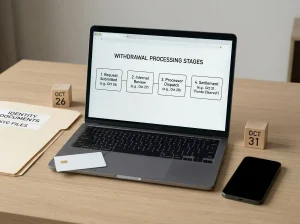
Wild Fortune withdrawal limits and processing stages
Wild Fortune Notes Wild Fortune applies an AU fiat withdrawal minimum, daily, weekly and monthly...

Anonymous Crypto Casinos in Australia: Legal Guide
Australian rules apply to offshore casino services even when they accept cryptocurrency, while user liability...

Aristocrat Online Pokies in Australia: What to Know
The Aristocrat name alone does not identify a game, confirm its features, or show where...

Aussie Crypto Casinos: Payments, Rules and Checks
A practical guide to offshore payment flows, Australian considerations, verification limits, bonus terms and crypto...

Best New Australian Online Pokies: Rules and Checks
This guide explains Australia's restrictions and the limits of available information on offshore sites, payments,...

Best-Paying Online Pokies in Australia: Payouts & Rules
Understand how payout claims, bonus conditions, Bitcoin payments and Australian rules shape the risks of...

Bitcoin Pokies in Australia: Payments and Rules
Bitcoin is a payment option, not a game mode; the guide explains how real-money play,...

Casino Sites That Accept Amex in Australia
A casino may list Amex, but the card issuer can still block a gambling-related payment,...

Casino Sites That Accept BPAY in Australia
A BPAY search alone does not confirm casino support, and the payment methods available can...

Casino Sites That Accept Credit Cards in Australia
Card acceptance can depend on the casino and issuer, while payment limits, fees, verification and...

EcoPayz casino sites in Australia: what is verified
The article separates payment-provider support from Australian legality and explains why deposits, withdrawals and game...

Casino sites that accept Osko in Australia: what to check
The page separates payment claims, deposit and withdrawal routes, and the legal context for offshore...

Paysafecard Casino Sites in Australia: What to Check
The guide separates operator restrictions under the Interactive Gambling Act 2001 from player status and...

Casino Sites and Skrill in Australia: What to Know
Australia’s rules apply to real-money online casino games offered to people in the country, while...

Trustly Casinos in Australia: What Can Be Confirmed
Trustly availability for Australian customers needs clear operator confirmation; payment claims do not verify games...

Casinos That Accept Apple Pay in Australia
Apple Pay’s everyday use in Australia does not confirm casino cashier support, and deposit access...

Casinos That Accept Bitcoin in Australia: How Payments Work
See how wallet transfers, blockchain confirmations, cashier checks and bonus terms affect Bitcoin casino deposits...

Bitcoin Cash Casinos in Australia: Rules and Checks
Australian law assesses the casino service and its operator; BCH funding, bonus terms, verification and...

Casinos That Accept CashtoCode in Australia
Learn what can be confirmed about CashtoCode support, payout rules and Australian restrictions on real-money...

Casinos That Accept Ethereum in Australia: Payments
Ethereum is a digital currency, while each casino independently determines whether it offers the option...

Casinos That Accept Google Pay in Australia
Google Pay availability does not establish that an online casino may legally serve Australians or...

Casinos That Accept Litecoin in Australia: Claims
A Litecoin payment claim may not establish availability for Australian customers or explain which account...

Casinos That Accept Mastercard in Australia
Australian card payments may be commonplace, but online casino acceptance depends on the specific payment...

Casinos That Accept MiFinity in Australia: What to Check
Casino games and payment methods are separate questions, and a general MiFinity mention may not...

Casinos That Accept Neosurf in Australia: What to Check
Australian card and mobile-wallet habits offer context, but only an operator’s own payment arrangements can...

Casinos That Accept Neteller in Australia
A Neteller mention alone does not confirm Australian access, supported games, deposit options or withdrawal...

Casinos That Accept PayID in Australia: What to Know
A PayID option does not establish that an online casino may legally offer real-money games...

Casinos That Accept PayPal in Australia: What to Check
PayPal availability, deposit conditions and withdrawal options can differ, so a payment label alone does...

Casinos That Accept POLi in Australia: Key Checks
Payment availability, permission to offer online pokies, and withdrawal support are separate questions, so one...

Casinos That Accept Tether USDT in Australia
USDT mentions alone do not confirm payment support; acceptance, deposit and withdrawal terms need separate...

Casinos That Accept Visa in Australia: What to Know
A Visa label does not confirm an operator is authorised, that a card will work,...

Dragon Link Online Pokies in Australia: What to Know
A cautious guide to online format, free-play limits, Australian legal context and the claims a...

Easy Withdrawal Casinos in Australia: Payout Guide
A withdrawal can involve an operator review and payment processing, so a fast transfer does...

Fast Withdrawal Casinos in Australia: Payment Routes
Payment options, verification checks and the withdrawal process all affect how quickly funds may reach...

Instant Bank Transfers for Australian Casinos: What to Know
Bank-linked payment labels do not confirm legality, processing speed, withdrawal routes or how casino bonus...

PayID Casino Withdrawals in Australia: How They Work
PayID can move funds in real time after release, while operator checks and bonus wagering...

Instant PayID Withdrawals in Australia: What to Know
PayID can move funds in real time after release, but casino review, verification and account...

PayID Pokies in Australia: Payments and Checks
PayID directs transfers using an identifier, but it does not verify a pokies operator or...
No-Verification Casino Withdrawals in Australia
A closer look at identity checks, casino approval, payment timing and bonus terms helps put...

No KYC Casinos in Australia: Cash-Out Checks
The guide separates registration claims from withdrawal checks and compares crypto, PayID, bonuses and wagering...

Online Pokies Instant Withdrawals in Australia
Withdrawal timing depends on more than the payment rail: operator checks and receiving institutions can...

Online Pokies PayID Australia: Deposits and Withdrawals
PayID is an identifier-based way to send money through participating banks, but site availability and...

Pay by Phone Casinos in Australia: What It Means
Separate mobile play from phone-bill billing, and understand how PayID transfers and Australian gambling rules...

Quick Withdrawal Casinos in Australia: Cashout Times
E-wallet estimates describe only part of the process: casino approval, payment routing and account checks...

Real Cash Online Pokies in Australia: What to Know
The guide separates practice credits from real-money play and outlines checks for offers, deposits, Bitcoin...

Safe Online Pokies in Australia: Bitcoin Basics
A guide to game credits, offshore-site context, payment differences, privacy trade-offs and checks that can...

Same-Day Casino Payouts in Australia: What to Know
A payout can pause during operator checks or while the payment moves through its route...

Solana Casino Comparison in Australia: Legal Guide
The guide separates SOL ownership from offshore casino use and covers funding, cashing out, platform...

PayID and under-one-hour casino withdrawals in Australia
PayID may speed the transfer after release, while operator checks and Australian restrictions remain separate...