Wild Fortune payment methods and money-movement rules
 Available in AU
Wild Fortune runs a hybrid cashier with card processing, bank-transfer rails, MiFinity and a broad set of cryptocurrencies. The practical payment picture is shaped by more than the method list: minimum deposits vary by rail, deposited funds are subject to a 3x playthrough rule before withdrawal, card cashouts can follow a return-to-source sequence, and payment providers or intermediary banks can still add charges even where the casino-side payment fee is free.
Table of Contents
Deposit rules affect when funds can move back out
Wild Fortune’s banking information shows fiat deposit minimums of €10 or €20 depending on the method, while the general terms use €20 or equivalent as the baseline. That makes the minimum method-dependent rather than one universal number. The method-level amount displayed in the banking flow is the useful figure for a specific rail.
The terms also require deposited funds to be wagered at least 3x before withdrawal. This is separate from any promotional wagering condition. A player depositing their own funds therefore has to account for the casino’s cash-deposit playthrough rule before treating the balance as immediately withdrawable.
That rule changes the cash-flow sequence:
- Choose a supported card, bank, e-wallet or cryptocurrency rail.
- Meet the minimum shown for that method.
- Complete the required 3x playthrough on deposited funds before withdrawal.
- Complete any identity or payment-method checks requested for the account.
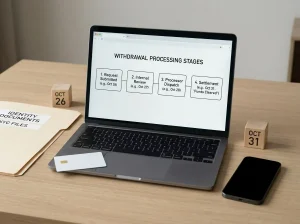
- Submit the withdrawal through an available method and then wait for casino processing and the payment rail’s settlement stage.
The identity-check stage is covered in more detail in the account and verification guide. It matters because payment evidence can form part of the document set requested before a withdrawal is completed.
Withdrawal handling has a separate approval stage
The operator states an aim to process withdrawal requests within 72 hours after approval. That is a casino processing target, not a guaranteed end-to-end arrival time. Settlement after the casino releases a payment still depends on the method and, for bank transfers, can involve the banking chain.
Card withdrawals can also follow a source-of-funds sequence. Wild Fortune’s terms allow net deposits to be returned first to the originating card, while the operator may require or use another available method when the original route is not suitable for the withdrawal.
The dedicated withdrawal guide maps the AU fiat minimum, daily/weekly/monthly caps, bank-transfer settlement note and verification steps in detail. On the payments overview, the key point is that deposit acceptance and withdrawal delivery are not a single operation: playthrough, approval, verification and settlement can sit between them.
- Casino processing target: within 72 hours after approval.
- Verification: photo ID, proof of address, payment evidence and additional checks can be requested.
- Card routing: net deposits may first be returned to the originating card.
- Settlement: depends on the payment rail after casino processing.
Payment methods span fiat and cryptocurrency rails
The listed payment mix includes Visa/Mastercard or card processing, bank-transfer routes, MiFinity and cryptocurrency deposits in BTC, BCH, ETH, LTC, DOGE, USDT, XRP, ADA, TRX and BNB. The AU-localised banking material also presents NodaPay, PicksellPay and Volt bank-transfer options alongside credit-card and MiFinity routes.
That mix matters because the cashier is not one interchangeable pool of methods. Cards, bank rails, e-wallets and cryptocurrency transfers each have different operational characteristics even when they all lead to the same casino balance. A card route can be tied to return-to-source handling, a bank transfer can involve intermediary institutions, MiFinity functions as a separate wallet rail, and crypto requires the sender to pay close attention to the asset and destination details shown in the payment flow.
For a reader comparing methods, the useful questions are therefore practical rather than promotional: what minimum applies to the selected rail, can the same route support the intended withdrawal sequence, and can an external provider add a charge? Wild Fortune’s own cashier fee is listed as free, but the terms allow bank, payment-provider or intermediary costs to sit outside that casino-side fee policy.
For cryptocurrency, the available facts support the coin list but not a stable network mapping for each asset. The table therefore treats the network as a payment-dialog choice rather than assigning ERC20, TRC20, BEP20 or another chain without a brand-specific basis.
| Coin | Network | Min Dep | Min WD | Speed | Fee |
|---|---|---|---|---|---|
| BTC | Payment dialog | Method-specific crypto minimum | €20 equivalent | Casino processing target: within 72 hours after approval | Casino-side fee: free; provider charges can apply |
| ETH | Payment dialog | Method-specific crypto minimum | €20 equivalent | Casino processing target: within 72 hours after approval | Casino-side fee: free; provider charges can apply |
| USDT | Payment dialog | Method-specific crypto minimum | €20 equivalent | Casino processing target: within 72 hours after approval | Casino-side fee: free; provider charges can apply |
| LTC | Payment dialog | Method-specific crypto minimum | €20 equivalent | Casino processing target: within 72 hours after approval | Casino-side fee: free; provider charges can apply |
| DOGE | Payment dialog | Method-specific crypto minimum | €20 equivalent | Casino processing target: within 72 hours after approval | Casino-side fee: free; provider charges can apply |
| BCH, XRP, ADA, TRX, BNB | Payment dialog | Method-specific crypto minimum | €20 equivalent | Casino processing target: within 72 hours after approval | Casino-side fee: free; provider charges can apply |
Fiat rails
Fiat options sit alongside the cryptocurrency table because Wild Fortune is a hybrid cashier rather than a crypto-only casino. The core rails are:
- Cards: Visa/Mastercard or card processing, with return-to-origin rules relevant to some withdrawals.
- Bank transfer: bank-transfer rails are listed, including AU-localised options such as NodaPay and Volt.
- MiFinity: listed as an e-wallet payment method.
- PicksellPay: shown in the AU-localised banking selection.
Fiat deposit minimums sit at €10 or €20 depending on method in the banking material, while the general terms use €20 or equivalent. That is why a single headline minimum would hide the method-level variation.
The games guide covers the catalogue separately; payment access should not be used as a proxy for game quality, provider breadth or live-casino depth.
Fees depend on where the charge originates
Wild Fortune sets the casino-side payment fee at zero. That does not eliminate charges created elsewhere in the payment chain. A bank, card issuer, e-wallet, crypto network or intermediary can apply its own pricing or conversion cost.
This distinction is especially useful for mixed fiat/crypto cashiers:
- Casino fee: the operator lists its payment fee as free.
- Provider fee: a payment provider can apply its own charge.
- Intermediary banking cost: bank-transfer chains can introduce charges outside the casino’s own fee line.
- Crypto transfer cost: blockchain transfers can carry network costs, and crypto value can move between deposit and withdrawal.
Crypto deposits also carry price-volatility and irreversible-transfer risk. The practical safeguard is procedural rather than promotional: verify the selected asset and network in the payment dialog before sending funds, because a blockchain transfer cannot generally be reversed in the way a conventional card correction might be handled.
Payment costs also need to be separated by layer. Wild Fortune lists its own payment fees as free, but that casino-side policy does not control charges imposed by banks, payment providers, intermediaries or crypto transfer infrastructure. The terms specifically note possible intermediary bank costs. For a practical comparison, the cashier fee and the external rail cost should be treated as two different questions.
Questions about Wild Fortune payments
What payment methods does Wild Fortune list?
Wild Fortune lists card processing, bank-transfer rails, MiFinity and cryptocurrency deposits including BTC, BCH, ETH, LTC, DOGE, USDT, XRP, ADA, TRX and BNB. Its AU-localised banking material also shows NodaPay, PicksellPay and Volt.
What is the minimum deposit at Wild Fortune?
The banking material shows fiat minimums of €10 or €20 depending on method, while the general terms use €20 or equivalent. The minimum is therefore method-dependent rather than one universal amount.
Does Wild Fortune charge payment fees?
The casino-side payment fee is zero. Banks, payment providers, intermediaries or crypto networks can still apply separate charges.
How quickly does Wild Fortune process withdrawals?
The operator states an aim to process withdrawal requests within 72 hours after approval. Settlement after processing still depends on the payment method and any required verification.
Do deposited funds have to be wagered before withdrawal?
Yes. Wild Fortune’s terms require deposited funds to be wagered at least 3x before withdrawal.
Payment rules extend beyond the deposit itself
Wild Fortune offers a broad hybrid set of fiat and crypto rails, but the method list is only the first layer of the transaction. A useful reading of the cashier also includes the method-dependent deposit minimum, the 3x playthrough rule on deposited funds, verification requirements, return-to-source card handling, the 72-hour post-approval processing target and any third-party fees outside the casino’s own fee line. Taken together, those rules explain why a deposit can be simple while moving money back out can involve several separate stages.