
PayID Pokies in Australia: Payments and Checks
 Available in AU

PayID directs transfers using an identifier, but it does not verify a pokies operator or the service behind a payment.
Table of Contents
What PayID Does—and What It Doesn’t Tell You
PayID is a way to identify the person or business receiving a bank transfer without relying on a BSB and account number. In Australia, the identifier can be something familiar, such as a mobile number or email address. It is linked to a bank account, so the sender can use that identifier to direct a payment through their banking service.
The system runs through the New Payments Platform (NPP), which enables quick transfers between participating banks. That is the basic job: help move money between accounts using an identifier. PayID does not assess why a payment is being made, certify the recipient’s business, or decide whether the underlying service is lawful. It is payment plumbing, not a quality mark.
That distinction matters when you see PayID mentioned alongside pokies. A payment option can sound reassuring because it is familiar and tied to Australian banking. But its presence alone tells you nothing about whether a venue is legitimate, whether its games are fair, whether it publishes accurate payout information, or whether it will honour a withdrawal. Those are separate questions, and PayID cannot answer them.
If you’re looking for new pokies sites in Australia, check the payment methods and licence details before you deposit. Use this list as a reference for the information disclosed about each operator, and confirm whether PayID is available to you.
1. GoldenCrown
License: Curacao Gaming Control Board OGL/2023/176/0095 (Hollycorn N.V.) You can note that GoldenCrown lists a Curaçao Gaming Control Board licence, OGL/2023/176/0095, held by Hollycorn N.V.
2. Neospin
License: Curacao Gaming Control Board OGL/2023/176/0095 (Hollycorn N.V.) Neospin lists a Curaçao Gaming Control Board licence, OGL/2023/176/0095, held by Hollycorn N.V.
3. Wild Tokyo
License: Curacao · Payout speed: crypto 30-60 minutes, fiat 1-5 days · Min. deposit: A$10 You can deposit from A$10. The stated payout times are 30–60 minutes for crypto and 1–5 days for fiat.
4. Ricky Casino
Payout speed: crypto under 1 hour, PayID 1-3 business days · Min. deposit: A$20 (A$30 to qualify for the bonus) You can deposit from A$20, or A$30 to qualify for the bonus. Stated payouts take under an hour for crypto and 1–3 business days for PayID.
5. DragonSlots Casino
License: Curacao Gaming Authority (Jumpman Gaming Ltd) DragonSlots Casino lists a Curaçao Gaming Authority licence held by Jumpman Gaming Ltd.
6. Vegaz Casino
License: Curacao OGL/2024/1335/0780 · Min. deposit: EUR 20 Vegaz Casino lists licence OGL/2024/1335/0780 and a minimum deposit of EUR 20.
7. WinSpirit Casino
License: Curacao eGaming OGL/2024/923/0383 (Antillephone N.V.) · Min. deposit: A$30 You can note WinSpirit Casino’s Curaçao eGaming licence, OGL/2024/923/0383, held by Antillephone N.V. Its stated minimum deposit is A$30.
8. House of Pokies
License: international iGaming licence – jurisdiction not named in the source · Payout speed: PayID 1-24 hours · Min. deposit: A$30 (PayID from A$10) You can use PayID, with a stated payout time of 1–24 hours; PayID deposits start at A$10, while the stated minimum deposit is A$30. The source describes its licence as international but does not name the jurisdiction.
9. Lucky Dreams
License: Curacao · Min. deposit: A$20 (POLi) Lucky Dreams lists a Curaçao licence and a minimum deposit of A$20 when using POLi.
10. JustCasino
License: Curacao Gaming Control Board JustCasino lists a Curaçao Gaming Control Board licence.
I’d treat the payment logo the same way I treat a bank transfer detail on an invoice: useful for understanding how money might move, but not evidence that the other party has passed any wider test. A business can refer to a recognised payment method without that method endorsing the business. The name belongs to the payment system, not to a promise about the service attached to it.
There is also an important Australian legal distinction. Under the Interactive Gambling Act 2001, it is illegal for operators to provide real-money online casino games, including pokies, to people physically located in Australia. That applies regardless of whether a site mentions PayID or another payment method. A payment feature does not change the law or turn a prohibited service into a permitted one.
So when you encounter a page describing new PayID pokies in Australia, separate the payment claim from the casino claim. The first is about a way of identifying a recipient for a bank transfer. The second concerns an online gambling service, and the payment method cannot make that service lawful for Australian customers. The two may appear in the same sentence on a website; they are not the same thing.
The word “new” can muddy this further. It may describe a site’s recently added payment option, a new page, or simply fresh promotional wording. It does not mean PayID itself is new, nor does it show that a venue has been independently checked. PayID is an established part of Australia’s digital payments landscape; a venue’s use of its name is a separate matter.
Best-Paying Online Pokies in Australia: Payouts & Rules
It is easy to let a familiar local payment term do too much work in your head. I’ve found that the sensible reading is the narrow one: PayID indicates a payment mechanism, and no more. It does not certify the operator, guarantee the handling of funds, or provide evidence about a game’s fairness. A fast-moving transfer system is not a referee.
Keep the categories apart. PayID concerns how a transfer can be addressed between bank accounts. The NPP is the infrastructure that supports quick transfers between banks. The Interactive Gambling Act sets the legal boundary for operators providing online casino games to people in Australia. Each has a different role. Blurring them makes a payment label look like an assurance when it is not.
That is the useful starting point for anyone trying to understand PayID pokies in Australia: recognise what the payment system does, then avoid reading extra claims into its name. It can tell you something about the proposed payment route. It cannot tell you that the venue is lawful, fair, transparent, or dependable. A logo is not a licence.
PayID and Online Pokies: Check Before You Sign Up
PayID appearing on a payment page tells you only that the operator claims to accept that payment method. It does not establish that a transfer will be available from your bank, that the operator is trustworthy, or that the service is lawful in Australia. Those are separate questions, and the payment logo answers only the narrowest one.
Legal Warning
Under the Interactive Gambling Act 2001, it is illegal for operators to provide real-money online casino games, including pokies, to people physically located in Australia.
That legal distinction matters here. Under the Interactive Gambling Act 2001, it is illegal for operators to provide real-money online casino games, including pokies, to people physically located in Australia. PayID availability does not change that rule or make an offshore service lawful. A payment option is not a green light.
Availability is not the same everywhere
Even when a site lists PayID, access can depend on the operator’s current payment arrangements and on your bank’s policies. A specialist review has reported that some Australian banks, including members of the Big Four, may block PayID transfers to gambling merchants they identify. That is a reported possibility, not a fixed rule for every bank or customer; bank policies and payment controls can change.
So there are two different checks. First, does the site currently display PayID as an option for the relevant transaction? Second, will your bank allow the transfer? A “yes” to the first does not guarantee a “yes” to the second. Nor does a payment page reliably predict what will happen when you try to use it.
If you are looking at a site’s payment information, treat it as a description of what the operator says it supports—not confirmation that your particular bank will process a payment. Banks can apply their own acceptable-use policies, and a blocked transfer is not necessarily a technical fault you can fix by trying again. Repeated attempts may simply leave you with more uncertainty. Not much of a shortcut.
What the cashier page can—and cannot—show
Payment details may be listed in a cashier or banking section, sometimes before an account is created and sometimes only after login. If you encounter such information, look for whether PayID is explicitly named and whether the page distinguishes deposits from withdrawals. A general “fast payments” claim is not the same as a clear statement that PayID is available.
Wild Fortune payment methods and money-movement rules
The page may also state a minimum deposit. A specialist review of PayID-accepting sites places many listed minimums in the A$10–A$30 range, but that should not be treated as a universal or permanent tariff. Individual operators can set different conditions, and the displayed terms may change. The figure is useful only as a prompt to read the particular payment terms—not as a reason to choose a site.
The cashier page cannot establish that a real-money casino service is permitted to operate for people in Australia. It also cannot show whether a bank will approve a transfer, whether a payment will be processed successfully, or whether an operator will handle a later withdrawal as expected. Keep those limits in view when reading claims about convenience or availability.
Do not confuse payment access with legitimacy
A site can list PayID without that being evidence of a local licence, fair games, transparent return-to-player information, or willingness to pay winnings. Payment infrastructure is not a quality check. Nor does a polished cashier page settle the legal question.
The Australian Communications and Media Authority is the regulator responsible for enforcing the Interactive Gambling Act. The relevant point for a reader is straightforward: real-money online casino games offered to people in Australia are prohibited services under that law. Checking whether PayID appears on a page does not turn the service into an authorised option.
Attention: A payment logo is not a licence, and the presence of PayID does not prove that a service is authorised, fair, or legal in Australia.
For the same reason, a claimed approval by a bank, payment provider, or third party should not be read as approval of the gambling service itself. A bank may process a payment without endorsing the operator; a bank may also block it under its policies. Neither outcome is a verdict on fairness or legal status.
A cautious way to read payment claims
If you come across a claim that a site accepts PayID, check what the claim actually covers and when it was updated. Is it a current statement from the operator, or a general description repeated elsewhere? Does it refer specifically to PayID, or just to bank transfers? Is the information about deposits, withdrawals, or both? Those distinctions help you understand the claim, but they do not remove the legal restriction on online casino services in Australia.
I would not create an account or send money on the strength of a payment logo. The key point is not whether a site can display a PayID option; it is that payment availability is variable, bank controls may intervene, and PayID does not establish that an online pokies service is lawful or safe to use. A method of payment is just that.
Making a PayID Deposit or Withdrawal
Before getting into the mechanics, there is an important Australian context: under the Interactive Gambling Act 2001, it is illegal for operators to provide real-money online casino games, including pokies, to people physically located in Australia. The description below explains how PayID transfers are presented in this setting; it is not a recommendation to use an online casino.
Bitcoin Pokies in Australia: Payments and Rules
A PayID payment can move money in either direction: from a bank account towards a casino balance, or from a casino balance back to a bank account. The payment method handles the transfer, but it does not control every step around it. A deposit may be credited promptly once processed, while a withdrawal also depends on the operator releasing the funds. Those are separate parts of the journey.
Depositing
For a deposit, the cashier gives you the payment details to use for a PayID transfer. You make the payment through your bank, then wait for the casino balance to update. PayID deposits at online casinos are typically completed within seconds. That is the transfer speed, not a promise about how quickly every account screen refreshes or every payment issue is resolved.
Take care at the confirmation screen. Check the recipient and the amount against the payment instructions before authorising the transfer. PayID transactions cannot be reversed once confirmed, so a mistaken payment is not like an online order you can simply cancel. If the details look wrong or you are unsure, stop rather than sending money and trying to sort it out afterwards.
Once the payment is confirmed, keep the bank confirmation until the balance reflects the deposit. If it does not appear, avoid sending the same amount again straight away. A duplicate transfer can create a second problem rather than fix the first one. Check the transaction status in your banking app and contact the relevant support team with the confirmation details if you need help tracing it. Do not share passwords, passcodes or other security credentials to resolve a payment query.
Making a Deposit
Use Cashier Details
Get the necessary payment details from the casino’s cashier section.
Authorise Transfer
Make the payment through your bank, carefully checking the recipient and amount before confirming.
Verify Balance
Wait for the casino balance to update and keep your bank confirmation until the deposit reflects.
PayID itself does not charge a transfer fee. Reputable venues also do not add a separate charge for PayID deposits. That does not make every payment arrangement cost-free by definition: the terms presented by the service still matter. Keep the distinction clear between a fee charged for using PayID and a condition imposed by the recipient.
Withdrawing
A withdrawal reverses the direction of the money, but it is not simply a bank transfer that you initiate yourself. You request payment from the casino, and the operator must process and release it before the funds can reach your bank account. PayID supports withdrawals as well as deposits, and money can move quickly in both directions once the relevant processing is complete.
That difference is easy to miss. The speed associated with PayID describes the payment method; it does not guarantee that a withdrawal request will be approved or sent immediately. The operator’s own handling comes first. Once a transfer has been confirmed, it is also irreversible, so check the destination and amount carefully before confirming any payment details.
If the withdrawal has been marked as sent but has not appeared in your account, check its status with the operator and compare it with the transaction history in your bank. Keep any confirmation or reference information. If the operator says the transfer was completed, that information may help the bank trace it. If the request is still pending, the money may not yet have left the operator’s system; another PayID transfer will not speed that stage up.
Best New Australian Online Pokies: Rules and Checks
For either direction, the practical rule is simple: verify before confirming, then keep a record. PayID can make the transfer itself quick, but it cannot undo a confirmed payment or remove the steps that sit on either side of the transfer. Speed is useful. A mistaken payment is still a mistaken payment.
Before Your First PayID Transaction
If you are in Australia, pause before preparing a PayID payment to an online casino. Under the Interactive Gambling Act 2001, operators must not provide real-money online casino games, including pokies, to people physically located in Australia. PayID appearing on a payment page does not change that legal position, and it does not establish that a service is authorised to offer those games here.
There are also practical checks that apply to PayID generally. Your PayID details need to match the identifier registered with your bank. If the details do not line up, a transfer may not be processed as you expected. Check the recipient information displayed by your banking app carefully before confirming any payment; once a PayID transfer is confirmed, it cannot be reversed.
Your bank sets the daily limit for PayID transfers. Check that limit through your bank’s own channels, rather than assuming a payment page can override it. The bank’s limit is a boundary on transfers from your account, not evidence that a particular recipient or service is appropriate.
PayID Transaction Check
- Verify that your PayID details match the identifier registered with your bank
- Check your bank’s daily limit for PayID transfers
- Confirm the recipient name in your banking app matches the intended party
- Verify the legal status of the service in your jurisdiction
For ordinary PayID payments, treat the name and identifier shown in your banking app as a final verification step. If the displayed recipient does not match the person or organisation you intended to pay, stop and contact your bank. Do not rely on a payment reference or an operator’s branding to resolve a mismatch.
Payment pages may also state a minimum deposit. Those figures can differ between services and can change, so a figure shown elsewhere should not be treated as current terms. More importantly, a low minimum is not a reason to send money or a sign that an online casino is legitimate. A payment method is only a way to move funds; it says nothing by itself about the legal status of the service, the fairness of games or whether a customer will receive winnings.
I would not enter banking details or confirm a transfer simply because a page lists PayID. Check what the payment is for, who the recipient is, and whether the transaction is lawful. If you have already sent money and are concerned about the recipient or the transfer, contact your bank promptly.
What to Check When Comparing PayID Costs
A withdrawal can cost more than the amount shown beside the payment method. The useful comparison is between the minimum you are allowed to request and the amount that may actually reach your account after any operator deduction. Those are separate terms, and a low minimum does not tell you whether a fee applies.
Pay by Phone Casinos in Australia: What It Means
There is an important Australian context first: under the Interactive Gambling Act 2001, providing real-money online casino games, including pokies, to people in Australia is illegal for operators. PayID availability does not change that legal position, and a payment option is not proof that a service is lawful, fair or reliable. The figures below describe terms reported in specialist reviews, not a recommendation to use an online casino.
Separate the minimum from the fee
A specialist review puts PayID withdrawal minimums in the A$20–A$50 range. That figure is a guide to the amount a venue may require before it will accept a withdrawal request; it is not a promise that every operator uses those limits. The operator’s own terms are the relevant place to check a stated minimum, and the cashier page may show the available payment options and their conditions.
A minimum affects how much you must leave in an account before requesting a payment. It does not, by itself, mean the operator will deduct money. Look for a separate fee line, and check whether the terms describe a charge per withdrawal or a deduction that applies only in particular circumstances. A fee can make a small withdrawal poor value even when the request meets the minimum.
Specialist reviews have also reported that some operators deduct A$5–A$10 when a withdrawal falls below an internal threshold, with A$100 or A$200 cited as examples of those thresholds. Treat that as a reported practice, not a market-wide rule. The key detail is the wording: a minimum withdrawal and an internal threshold are not necessarily the same thing. One may determine whether you can submit a request; the other may determine whether a deduction is applied.
Withdrawal Thresholds
Some operators may deduct A$5–A$10 from withdrawals that fall below internal thresholds, such as A$100 or A$200.
Read the fee wording closely
Some specialist reviews report a separate charge of A$2–A$5 per withdrawal at certain casinos. That is distinct from a deduction linked to a threshold. If both kinds of terms appear, work out which one applies to the withdrawal you are considering rather than assuming that one replaces the other.
Also check whether the listed charge is described as a PayID fee or an operator fee. PayID does not levy a transfer charge itself, but a venue may set its own payment terms. Reputable venues do not add a separate charge for PayID deposits or withdrawals; a fee claim should therefore be checked against the operator’s published terms rather than inferred from the payment method alone.
Keep the wording in front of you. “No PayID fee” does not necessarily answer whether an operator has a withdrawal charge under another label, or whether a small payment falls below an internal threshold. Conversely, a reported charge at one venue is not evidence that another applies it. The details matter more than a broad claim about PayID.
Compare what leaves and what arrives
For any payment terms you are reviewing, compare the requested amount with the net amount after stated deductions. If a fee is fixed, it takes a larger share of a smaller withdrawal. If a deduction depends on an internal threshold, check precisely how the threshold is defined and whether the terms say the deduction applies below it. Do not assume that a threshold means you must withdraw a particular amount; rely on the written condition.
Real Cash Online Pokies in Australia: What to Know
Take care with the total cost of repeated requests, too. A per-withdrawal charge is tied to each request, while a threshold-based deduction depends on the amount and the operator’s rule. Combining them into a single vague “PayID cost” can hide the difference. The terms should let you identify the trigger, the amount charged and whether it is taken from the requested payment.
I would not treat a low minimum as a quality signal. It says something about the operator’s payment conditions, not about whether the service is lawful in Australia or whether it will pay a customer as expected. Nor does seeing PayID establish licensing, transparency or fairness. Those are different questions; the payment label cannot answer them.
Before relying on any stated cost, read the operator’s terms and cashier information together, and check that the figures refer specifically to withdrawals rather than deposits. If the wording is unclear or the fee is not disclosed, do not fill in the gap with an assumption. The published condition is what counts. Small print, costly consequences.
Real-Money Payments: Delays, Reviews and Bonus Terms
PayID moves funds quickly once a transfer is sent, but that does not determine how quickly a casino approves or releases a withdrawal. The casino has its own review process, and the time spent there can be longer than the transfer itself. A payment method’s speed is only one part of the timeline.
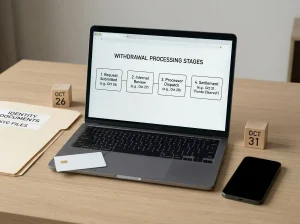
For withdrawals, separate the stages: the request is submitted, the casino checks it, the casino approves and sends it, and PayID transfers the funds to the account. A delay before approval is not the same as a delay in the bank transfer. That distinction matters when you are trying to work out where a payout is sitting.
Withdrawal Stages
The process consists of four stages: the request is submitted, the casino checks the account, the casino approves and sends the funds, and PayID transfers the money to your bank account.
Approval comes before the transfer
A casino may review a withdrawal internally before sending the money. Specialist reviews report that the payout timeline can depend on the operator’s checks and on whether the player’s identity verification, often called KYC, is complete. If documents or details still need attention, the request may remain under review rather than being ready for PayID.
The casino’s own pending period can also hold a request before funds leave its system. One specialist review describes a possible pending period of 24–72 hours for casino-initiated PayID withdrawals. Treat that as a reported operator practice, not a fixed feature of PayID: the payment network cannot tell you how long a casino will keep a request pending.
After approval, the transfer is a separate stage. Specialist reviews describe PayID withdrawals as taking 12–24 hours after approval, with some reports saying that approved funds may arrive the same day. Those are reported timings, not a promise for every operator or account. The combined time from requesting a withdrawal to receiving it may be 2–4 days where an internal pending period applies.
If a request is taking longer than expected, check its status with the operator and ask whether it is pending review, awaiting documents, or approved and sent. Those are different situations, and the next step depends on which one applies. A “processing” label on its own may not tell you where the delay is occurring. Keep the request details and any messages together; it is easier to follow up when you can refer to the same transaction.
A fast payment rail cannot speed up a review
It is tempting to judge a payout by how fast a deposit arrived. That comparison misses the casino’s part of the process. PayID may move money quickly between banks, but it cannot complete identity checks, clear a casino’s pending queue or change the operator’s withdrawal procedures.
Safe Online Pokies in Australia: Bitcoin Basics
Before relying on a stated payout time, look for what the time actually measures. Does it begin when you submit the request, when the operator approves it, or when the transfer is sent? A figure that applies only after approval does not include the time spent waiting for review. If the terms do not explain the stages clearly, ask the operator for that distinction rather than treating a short transfer estimate as an end-to-end payout promise.
There is also a legal context for Australians. Under the Interactive Gambling Act 2001, providing real-money online casino games, including pokies, to people physically located in Australia is illegal for operators. A quick payment method does not alter that rule or make a real-money service lawful.
Read bonus conditions separately
Promotional terms can add another layer to a withdrawal. A specialist review reports wagering requirements of 30x–45x the bonus amount as a common range. The multiplier describes how much qualifying wagering is required under the offer’s rules; it does not mean a bonus is cash ready to withdraw. Read the actual terms before accepting an offer, including what counts towards wagering and what conditions apply to a withdrawal.
Do not assume that meeting a wagering requirement means a payout will be immediate. The operator may still review the account and withdrawal, and the PayID transfer happens only after approval and sending. Nor does a bonus make an online casino service appropriate or lawful for a person in Australia. The number in the offer is just one condition, not a measure of the service’s safety or reliability.
I would keep the two questions separate: what conditions attach to the bonus, and what process applies to a withdrawal. If either is unclear, do not infer the answer from a fast deposit or a payment logo. A quick in. A different story out.
Are online pokies legal in Australia?
No. Under the Interactive Gambling Act 2001, operators cannot legally provide real-money online casino games, including pokies, to people physically located in Australia.
What is the key benefit of using PayID pokies?
PayID can move payments quickly between bank accounts, with deposits typically completed within seconds. Using PayID does not make an online pokies service lawful in Australia.
What is the minimum PayID deposit?
Typical minimum deposits are A$10–A$20, although some operators accept A$5. Your bank may also set a daily PayID transfer limit.
Can I play pokies using PayID?
No—PayID is a payment method, not permission to use an online casino. Operators cannot legally provide real-money online pokies to people physically located in Australia.
How long do PayID withdrawals take?
After casino approval, a PayID transfer usually reaches your account the same day, often within 12–24 hours. Casino review or a 24–72-hour pending period can make the total wait around 2–4 days.
Wild Fortune payment methods and money-movement rules
Wild Fortune withdrawal limits and processing stages
Wild Fortune Notes Wild Fortune applies an AU fiat withdrawal minimum, daily, weekly and monthly...

Anonymous Crypto Casinos in Australia: Legal Guide
Australian rules apply to offshore casino services even when they accept cryptocurrency, while user liability...

Aristocrat Online Pokies in Australia: What to Know
The Aristocrat name alone does not identify a game, confirm its features, or show where...

Aussie Crypto Casinos: Payments, Rules and Checks
A practical guide to offshore payment flows, Australian considerations, verification limits, bonus terms and crypto...

Best New Australian Online Pokies: Rules and Checks
This guide explains Australia's restrictions and the limits of available information on offshore sites, payments,...

Online Casino Payment Methods for Australians
Deposits and withdrawals can follow different rules, while Australian payment options do not change the...

Best-Paying Online Pokies in Australia: Payouts & Rules
Understand how payout claims, bonus conditions, Bitcoin payments and Australian rules shape the risks of...

Bitcoin Pokies in Australia: Payments and Rules
Bitcoin is a payment option, not a game mode; the guide explains how real-money play,...

Casino Sites That Accept Amex in Australia
A casino may list Amex, but the card issuer can still block a gambling-related payment,...

Casino Sites That Accept BPAY in Australia
A BPAY search alone does not confirm casino support, and the payment methods available can...

Casino Sites That Accept Credit Cards in Australia
Card acceptance can depend on the casino and issuer, while payment limits, fees, verification and...

EcoPayz casino sites in Australia: what is verified
The article separates payment-provider support from Australian legality and explains why deposits, withdrawals and game...

Casino sites that accept Osko in Australia: what to check
The page separates payment claims, deposit and withdrawal routes, and the legal context for offshore...

Paysafecard Casino Sites in Australia: What to Check
The guide separates operator restrictions under the Interactive Gambling Act 2001 from player status and...

Casino Sites and Skrill in Australia: What to Know
Australia’s rules apply to real-money online casino games offered to people in the country, while...

Trustly Casinos in Australia: What Can Be Confirmed
Trustly availability for Australian customers needs clear operator confirmation; payment claims do not verify games...

Casinos That Accept Apple Pay in Australia
Apple Pay’s everyday use in Australia does not confirm casino cashier support, and deposit access...

Casinos That Accept Bitcoin in Australia: How Payments Work
See how wallet transfers, blockchain confirmations, cashier checks and bonus terms affect Bitcoin casino deposits...

Bitcoin Cash Casinos in Australia: Rules and Checks
Australian law assesses the casino service and its operator; BCH funding, bonus terms, verification and...

Casinos That Accept CashtoCode in Australia
Learn what can be confirmed about CashtoCode support, payout rules and Australian restrictions on real-money...

Casinos That Accept Ethereum in Australia: Payments
Ethereum is a digital currency, while each casino independently determines whether it offers the option...

Casinos That Accept Google Pay in Australia
Google Pay availability does not establish that an online casino may legally serve Australians or...

Casinos That Accept Litecoin in Australia: Claims
A Litecoin payment claim may not establish availability for Australian customers or explain which account...

Casinos That Accept Mastercard in Australia
Australian card payments may be commonplace, but online casino acceptance depends on the specific payment...

Casinos That Accept MiFinity in Australia: What to Check
Casino games and payment methods are separate questions, and a general MiFinity mention may not...

Casinos That Accept Neosurf in Australia: What to Check
Australian card and mobile-wallet habits offer context, but only an operator’s own payment arrangements can...

Casinos That Accept Neteller in Australia
A Neteller mention alone does not confirm Australian access, supported games, deposit options or withdrawal...

Casinos That Accept PayID in Australia: What to Know
A PayID option does not establish that an online casino may legally offer real-money games...

Casinos That Accept PayPal in Australia: What to Check
PayPal availability, deposit conditions and withdrawal options can differ, so a payment label alone does...

Casinos That Accept POLi in Australia: Key Checks
Payment availability, permission to offer online pokies, and withdrawal support are separate questions, so one...

Casinos That Accept Tether USDT in Australia
USDT mentions alone do not confirm payment support; acceptance, deposit and withdrawal terms need separate...

Casinos That Accept Visa in Australia: What to Know
A Visa label does not confirm an operator is authorised, that a card will work,...

Dragon Link Online Pokies in Australia: What to Know
A cautious guide to online format, free-play limits, Australian legal context and the claims a...

Easy Withdrawal Casinos in Australia: Payout Guide
A withdrawal can involve an operator review and payment processing, so a fast transfer does...

Fast Withdrawal Casinos in Australia: Payment Routes
Payment options, verification checks and the withdrawal process all affect how quickly funds may reach...

Instant Bank Transfers for Australian Casinos: What to Know
Bank-linked payment labels do not confirm legality, processing speed, withdrawal routes or how casino bonus...

PayID Casino Withdrawals in Australia: How They Work
PayID can move funds in real time after release, while operator checks and bonus wagering...

Instant PayID Withdrawals in Australia: What to Know
PayID can move funds in real time after release, but casino review, verification and account...
No-Verification Casino Withdrawals in Australia
A closer look at identity checks, casino approval, payment timing and bonus terms helps put...

No KYC Casinos in Australia: Cash-Out Checks
The guide separates registration claims from withdrawal checks and compares crypto, PayID, bonuses and wagering...

Online Pokies Instant Withdrawals in Australia
Withdrawal timing depends on more than the payment rail: operator checks and receiving institutions can...

Online Pokies PayID Australia: Deposits and Withdrawals
PayID is an identifier-based way to send money through participating banks, but site availability and...

Pay by Phone Casinos in Australia: What It Means
Separate mobile play from phone-bill billing, and understand how PayID transfers and Australian gambling rules...

Quick Withdrawal Casinos in Australia: Cashout Times
E-wallet estimates describe only part of the process: casino approval, payment routing and account checks...

Real Cash Online Pokies in Australia: What to Know
The guide separates practice credits from real-money play and outlines checks for offers, deposits, Bitcoin...

Safe Online Pokies in Australia: Bitcoin Basics
A guide to game credits, offshore-site context, payment differences, privacy trade-offs and checks that can...

Same-Day Casino Payouts in Australia: What to Know
A payout can pause during operator checks or while the payment moves through its route...

Solana Casino Comparison in Australia: Legal Guide
The guide separates SOL ownership from offshore casino use and covers funding, cashing out, platform...

PayID and under-one-hour casino withdrawals in Australia
PayID may speed the transfer after release, while operator checks and Australian restrictions remain separate...