
Easy Withdrawal Casinos in Australia: Payout Guide
 Available in AU

A withdrawal can involve an operator review and payment processing, so a fast transfer does not necessarily mean an immediate payout.
Table of Contents
- What “Easy Withdrawal” Really Means
- PayID: Fast Once the Casino Approves It
- Real-Money Cashouts: Match the Method to the Payout
- Check These Details Before You Choose a Payment Method
- Casino Games and the Cashout Process
- Australian Payment Options and Their Trade-Offs
- Slot Cashouts: Know the Limits Before You Play
- Live Casino Withdrawals and First-Time Checks
- Bonus Terms That Can Hold Up a Withdrawal
- Cashouts: When “Instant” Starts—and When It Doesn’t
What “Easy Withdrawal” Really Means
“Easy withdrawal” sounds like one event: you ask for your balance and the money arrives. In practice, it is a chain of separate steps. A delay at any point can make the overall wait longer, even if the final payment transfer is quick.
There is an important Australian context before getting into those steps. The Interactive Gambling Act 2001 prohibits operators from providing real-money online casino games, including slots, poker and table games, to people physically in Australia. The process below explains how a cashout can work in general; it is not a recommendation to use an offshore service.
From request to release
The process begins when you submit a withdrawal request through an account. You select the amount, provide the requested payment details and confirm. At this stage, the request has been sent, but that does not mean the operator has approved or released the funds.
Next comes the operator’s review. It may check that the account belongs to you, that the withdrawal details match the account, and that the request meets the operator’s terms. A specialist review notes that payout speed depends on several factors; the practical point is that the payment method is only one part of the journey.
Withdrawal methods and processing times can shape how convenient a casino is for you. Use the details below as a starting point, and check the available payment and withdrawal terms before signing up.
1. GoldenCrown
License: Curacao Gaming Control Board OGL/2023/176/0095 (Hollycorn N.V.) GoldenCrown is listed with a Curacao Gaming Control Board licence, OGL/2023/176/0095, held by Hollycorn N.V. No withdrawal methods or payout times are specified here.
2. Neospin
License: Curacao Gaming Control Board OGL/2023/176/0095 (Hollycorn N.V.) Neospin is listed with a Curacao Gaming Control Board licence, OGL/2023/176/0095, held by Hollycorn N.V. No withdrawal methods or payout times are specified here.
3. Wild Tokyo
License: Curacao · Payout speed: crypto 30-60 minutes, fiat 1-5 days · Min. deposit: A$10 Wild Tokyo lists crypto payouts in 30–60 minutes and fiat payouts in 1–5 days. Its minimum deposit is A$10.
4. Ricky Casino
Payout speed: crypto under 1 hour, PayID 1-3 business days · Min. deposit: A$20 (A$30 to qualify for the bonus) Ricky Casino lists crypto payouts in under an hour and PayID payouts in 1–3 business days. The minimum deposit is A$20, or A$30 to qualify for the bonus.
5. DragonSlots Casino
License: Curacao Gaming Authority (Jumpman Gaming Ltd) DragonSlots Casino is listed with a Curacao Gaming Authority licence held by Jumpman Gaming Ltd. No payout timing or deposit minimum is specified here.
6. Vegaz Casino
License: Curacao OGL/2024/1335/0780 · Min. deposit: EUR 20 Vegaz Casino is listed with Curacao licence OGL/2024/1335/0780 and a minimum deposit of EUR 20. No withdrawal details are specified here.
7. WinSpirit Casino
License: Curacao eGaming OGL/2024/923/0383 (Antillephone N.V.) · Min. deposit: A$30 WinSpirit Casino is listed with Curacao eGaming licence OGL/2024/923/0383, held by Antillephone N.V. Its minimum deposit is A$30; no payout details are specified here.
8. House of Pokies
License: international iGaming licence – jurisdiction not named in the source · Payout speed: PayID 1-24 hours · Min. deposit: A$30 (PayID from A$10) House of Pokies lists PayID payouts in 1–24 hours. The minimum deposit is A$30, or A$10 when using PayID; the source describes its licence as international but does not name the jurisdiction.
9. Lucky Dreams
License: Curacao · Min. deposit: A$20 (POLi) Lucky Dreams is listed with a Curacao licence and a minimum POLi deposit of A$20. No payout timing or other withdrawal details are specified here.
10. JustCasino
License: Curacao Gaming Control Board JustCasino is listed with a Curacao Gaming Control Board licence. No withdrawal or deposit details are specified here.
Identity checks can add a separate step. A specialist review reports that first withdrawals can prompt requests for identity documents. If you are asked to provide them, the request may remain pending while the operator checks the information. Completing verification in advance can significantly speed up later withdrawals, because the same basic check may not need to interrupt a future request. Keep your details accurate and respond through the account’s stated process.
Once the operator has completed its checks, it can approve and release the payment. Only then does the payment provider or banking network handle the transfer to the destination account. The time taken at that final stage depends on the chosen method and its processing arrangements. It is distinct from the time spent waiting for the operator’s decision.
That distinction matters when you see a claim about an “instant” payout. Instant can describe the transfer after release; it does not mean the money necessarily arrives the moment you submit a request. An operator may still need to review the withdrawal first. A fast payment rail cannot make that review disappear.
Fast Withdrawal Casinos in Australia: Payment Routes
Where the wait can build
Think of the total wait as several parts added together: request handling, any account or security review, approval and release, then the payment transfer. Some requests may pass through these stages without an extra check. Others may pause because information needs confirming or because the request is being reviewed.
The wording on a cashier page can blur these stages. “Processed” might mean that the operator has accepted the request, not that your bank or payment account has received the funds. “Pending” can mean the operator has not yet completed its part. If a status is unclear, ask which stage it refers to and whether you need to do anything. That is more useful than treating every status label as a delivery estimate.
You should also distinguish a withdrawal request from money that is available to withdraw. Account terms may set conditions on whether a balance can be paid out; a request that does not meet those conditions may not move straight to payment review. Read the relevant terms before submitting, rather than assuming the amount displayed in an account is automatically ready to leave it.
For a fair comparison, look for separate information on the operator’s review and the payment provider’s transfer. A single headline time can conceal which part it measures. It may describe the operator’s processing, the transfer after release, or an end-to-end experience. Those are not interchangeable. If the stated time does not say where the clock starts and stops, it is hard to use as a reliable expectation.
What “easy” should mean
I would judge ease by clarity as much as speed. Can you find the withdrawal steps? Are the account checks explained? Does the operator tell you when a request is still being reviewed and when it has been released? Are the applicable terms easy to locate? Clear answers help you understand what is happening if a payment does not arrive as soon as you expected.
Do
- Complete identity verification in advance
- Keep your account details accurate
- Respond promptly to document requests
- Track the status of your request
Don’t
- Treat status labels as delivery estimates
- Assume all balances are automatically ready for payout
- Ignore the relevant withdrawal terms
- Chase the wrong part of the process
Keep a record of the request confirmation and any messages about the review. If the status changes, note whether the funds have been approved and released or are still awaiting action. That simple distinction helps you ask a focused question instead of chasing the wrong part of the process.
A smooth cashout is not just a fast transfer. It is a request that can be submitted correctly, reviewed without avoidable back-and-forth, and tracked through to receipt. The stages are separate. That’s the key.
PayID: Fast Once the Casino Approves It
PayID is Australia’s bank-to-bank payment system, built on the New Payments Platform (NPP). It lets a payment be addressed using an identifier linked to a bank account rather than requiring the sender to enter the recipient’s full account details. Transfers move through the Osko network in real time.
That describes the bank-transfer part, not the whole withdrawal. When an operator releases a payment to a PayID, the transfer can arrive promptly; the request may still be waiting for the operator to check and approve it first. “Instant” is therefore a description of the payment leg, not a promise that money will reach your account as soon as you press the withdrawal button.
There is an important Australian context here: the Interactive Gambling Act 2001 prohibits operators from providing real-money online casino games to people physically in Australia. PayID’s availability as a bank payment service does not change that rule or make an offshore casino service lawful to provide.
Where the time goes
A withdrawal has separate stages. You submit the request and identify the PayID destination. The operator then checks the request against its account and security requirements. If it approves and releases the funds, the payment travels through the banking network. A delay before release is an operator-side hold; a delay after release is a payment or bank-side issue. It helps to know which stage is pending before deciding that PayID itself is slow.
Best New Australian Online Pokies: Rules and Checks
A specialist review reported that some services promoted instant withdrawals but took as long as a day while carrying out internal checks. That is a useful distinction, not a timetable to rely on: a fast network cannot make an operator approve a request sooner. The same review identified first-time identity checks, requests above $2,000, and bank processing windows as possible sources of delay. Those are different causes, so the status shown in an account—or a clear response from support—matters more than the word “instant” in a payment description.
First-time requests can involve extra scrutiny because the operator may need to establish who controls the account and whether the payment destination matches the customer’s details. If documents or information are requested, an incomplete response can leave the request waiting. Preparing accurate account details and completing identity checks early can reduce avoidable back-and-forth, though it cannot guarantee a particular release time.
PayID details also need to be consistent. Use the same PayID details for a withdrawal as those used for a deposit, and only request payment to an account linked to the profile. A mismatch can prompt a security review rather than a quick release. It is a small detail with a long shadow.
The basic request flow is straightforward: open the wallet or withdrawal area, enter the PayID identifier, specify the amount, then confirm. But confirmation only submits the request. It does not mean the operator has approved it or sent the transfer. Keep those stages separate when checking a status message or estimating when funds might arrive.
PayID Request Flow
Step 1: Submit Request
Open the wallet or withdrawal area, enter the PayID identifier, specify the amount, and confirm.
Step 2: Operator Review
The operator checks the request against account and security requirements to approve and release the funds.
Step 3: Banking Transfer
Once released, the payment travels through the banking network via the Osko network in real time.
If an operator says a request is pending, ask whether it is still under review or has been released. If it has been released, the relevant question is whether the receiving bank has processed the transfer. That simple distinction can save you from chasing the wrong party. PayID’s real-time design applies once a payment is moving through the network; it cannot override a review queue, a security hold, or a bank’s processing window.
Do not treat fast PayID wording as a guarantee of immediate cash in your account. Read the operator’s stated processing conditions, including any manual review policy, and allow for the approval stage as well as the transfer. Quick rail; separate gate.
Real-Money Cashouts: Match the Method to the Payout
Australia’s rules matter before payment speed does: the Interactive Gambling Act 2001 prohibits operators from providing real-money online casino games to people in Australia. The payment methods below are therefore a comparison of how different rails are described, not a recommendation to use an online casino.
For the mechanics, separate the operator’s handling of a withdrawal from the transfer itself. A request may wait for the operator to release it; only then does the payment method’s timing come into play. A fast rail cannot make the whole process immediate.
E-wallets
PayPal and Skrill are examples of e-wallets that Australian players may encounter on real-money platforms. Their practical appeal is that the payment is handled through a wallet account rather than travelling directly through a traditional bank transfer. The casino still has to release the withdrawal first, and the wallet provider must then complete its part.
Timing descriptions vary. One specialist review reported e-wallet withdrawals being completed within hours rather than days; other payment information describes processing within a day. Those are reported timings, not a promise for every transaction. Account checks, operator handling and the wallet provider’s own processing can all affect when funds arrive.
If you already use an e-wallet, it may be worth checking whether the platform supports withdrawals to it, rather than assuming a method accepted for deposits will also work for cashouts. That detail can change the practical timeline.
Traditional bank transfers
A bank transfer is a direct route to a bank account, but it can involve more waiting after the operator releases the payment. A specialist review described transfers as taking as long as five business days to complete. That is a reported upper timeframe, not a fixed schedule for every bank or transaction.
Weekends and bank processing windows can also make a calendar wait feel longer than the stated business-day period. If you need to plan around a payment, read the platform’s own withdrawal terms and allow for the bank stage as well as the operator’s stage.
The trade-off is straightforward: an e-wallet may complete sooner according to some published accounts, while a bank transfer can take several business days. Neither route removes the approval step.
Instant banking and cryptocurrency
Some specialist reviews report that certain real-money platforms offer instant banking through providers such as POLi. The label describes the banking service, not a guarantee that a withdrawal request will be approved and paid instantly. Confirm that the service is available for withdrawals, since availability for depositing does not establish availability for cashing out.
E-wallets
Payments handled through wallet accounts (e.g., PayPal, Skrill), often reported as being completed within hours or a day.
Bank Transfers
Direct routes to bank accounts that can take longer, with some reports stating up to five business days.
Instant Banking
Services like POLi described as instant banking; the label refers to the service rail, not the total approval time.
Cryptocurrency
Transactions capable of being near-instant once released, depending on the relevant network processing.
Cryptocurrency is another option reported by some platforms. A specialist review described crypto transactions as capable of being near-instant, but that refers to the transfer rail, not the time spent waiting for an operator to approve a withdrawal. The exact timing can also depend on the transaction being processed through the relevant network.
Across all these methods, the useful comparison is not simply “fast” against “slow”. It is how long the operator takes to release the money, followed by how long the chosen rail takes to deliver it. Read both parts before forming an expectation. A quick rail helps only after the payment is sent.
Check These Details Before You Choose a Payment Method
A payment method can look straightforward until you read the withdrawal terms. I’d check three things before treating a cashout option as usable: whether the money must go back to its deposit route, what limits apply, and whether a fee can be deducted. These are separate conditions, and a clear answer on one does not settle the others.
Where the money can be sent
Operators generally require a withdrawal to return to the method used for the deposit, where that is possible. So a payment option shown on a cashier page does not necessarily mean you can choose it freely for every cashout. The operator may need to send funds back through the original route.
This matters if you have used more than one deposit method. Check which one the operator treats as the return route, and whether it can handle the withdrawal. For PayID, use the same PayID details for a withdrawal as for the deposit; a mismatch can prompt a security review. Any receiving account should also be linked to your casino profile.
If the original method cannot receive a payment, look for the stated alternative process rather than assuming another option will be accepted. The terms should explain what happens. If they do not, ask support to clarify before submitting a request. It is easier to sort out a routing question in advance than after the money is waiting for instructions.
Limits in the terms
Look for both a minimum and a maximum withdrawal amount. A specialist review reported that reputable PayID operators publish these limits clearly; treat that as a point to verify in the current terms, not as a reason to assume every operator’s rules are the same.
Read the wording closely. A maximum for one transaction is not necessarily the full amount that can be withdrawn over a longer period. Specialist reviews also note that weekly or monthly caps may be separate from per-transaction limits. If those rules apply, a large balance might have to be requested in portions or released over time under the operator’s policy.
That distinction is easy to miss when a cashier page shows only a single maximum. Check the withdrawal terms as well as the payment screen, and confirm whether any separate cap or instalment policy affects the amount you are trying to receive. No mystery maths, please.
Fees and deductions
A listed payment method does not guarantee that the stated withdrawal amount will arrive unchanged. Check the terms for operator fees and any charge connected to the payment route. Filmink.com.au has reported that a fee may apply to PayID withdrawals; that is a reported possibility, not a universal charge. Look for the current fee disclosure rather than assuming the report describes every operator.
Check if withdrawal fees are fixed or transaction-dependent, and verify whether they are deducted before the payment is sent.
Also check whether the fee is fixed or depends on the transaction, if the terms say so, and whether it is taken before the payment is sent. If the wording is unclear, ask for the amount or calculation in writing. A small-looking deduction can make a difference when you are comparing the amount requested with the amount received.
For any real-money platform, the published withdrawal conditions should set out limits, fees and processing terms. Read them together: the return route determines where funds can go, limits determine how much can be sent, and fees affect what arrives. A payment label alone tells you very little.
Casino Games and the Cashout Process
A casino cashout is not one action with one clock. The request has to be submitted, checked by the operator and then released for payment. If you are trying to understand why a withdrawal can pause, look first at the checks around the request—not just the payment method.
There is an important Australian context: under the Interactive Gambling Act 2001, operators may not provide real-money online casino games to people in Australia.
From request to review
In a typical account wallet, you select the withdrawal option, enter an amount and confirm the request. The operator then checks whether the account and withdrawal meet its requirements. That review may include confirming your identity and checking that the funds can be released.
A specialist review reports that first withdrawals can prompt a request for identity documents. The exact checks depend on the operator, so do not assume that a successful deposit means your account is already verified. If you are asked for information, follow the instructions in the account and make sure the details you provide are clear and consistent. Completing identity verification early can significantly reduce friction with later withdrawals.
A delay at this stage is different from a delay in the payment network. The request may still be waiting for approval; the funds have not necessarily been sent. That distinction matters when a page advertises an “instant” cashout. A specialist review has described sites where internal checks held up advertised instant withdrawals for as long as 24 hours. That is a reported example, not a reliable promise about what any particular service will do.
Manual checks and release
Some requests need a closer look rather than routine processing. Casino policies should explain when manual review applies, including for withdrawals exceeding $2,000. A review can mean the operator needs to verify account information or assess the request before releasing funds. It does not mean the payment has already started.
Once the operator approves the request, it releases the funds through the chosen payment route. Only then does the payment phase begin. So when you read a cashout claim, check what it measures: time from request to approval, or time from release to receipt. Those are different intervals.
Keep the account details in order and use withdrawal information linked to your casino profile. If a request is paused, check the account messages and terms for the reason before submitting it again; duplicate requests can make it harder to follow what is being reviewed. If the service requires identity verification, waiting until the first cashout to deal with it is a poor time-saving plan. Better handled early.
Legal Prohibition
The Interactive Gambling Act 2001 prohibits operators from providing real-money online casino games, including slots and table games, to people physically in Australia.
For Australian readers, the legal position is not a small-print detail. Real-money online casino games—including slots and table games—are prohibited services when supplied to customers in Australia. Understanding how a cashout is processed does not change that restriction.
Australian Payment Options and Their Trade-Offs
Payment options described for Australians vary by provider, but availability should not be mistaken for legality. Under the Interactive Gambling Act 2001, operators cannot lawfully provide real-money online casino games to people in Australia. The methods below therefore describe payment features reported in connection with offshore services, not a recommendation to use them.
A specialist review reports that Australian-facing services may list credit or debit cards, PayPal, Skrill, bank transfers and, at some operators, cryptocurrency. That does not mean every method can be used for both deposits and withdrawals. Nor does a payment option on a page establish that a service is permitted to operate here.
E-wallets such as PayPal and Skrill can be useful for receiving funds where a service supports withdrawals to them. E-wallet withdrawals are described as being processed within 24 hours, while card payments and bank transfers may take several days. That is a comparison of stated processing periods, not a promise about when money will reach you: the operator’s handling and the payment provider’s own processing are separate considerations.
Cards are familiar, but their withdrawal usefulness can be limited. A card may be accepted for a payment without being available as a route for receiving a payout. Credit cards must not be accepted for online gambling services in Australia, so an offshore service’s card option should not be read as approval to use it.
Bank transfers can provide a direct route to an account, but published processing periods may be longer than for e-wallets. Check whether the service supports withdrawals to your bank and whether it requires the receiving account to match your profile details. Those conditions matter as much as the payment label.
No-Verification Casino Withdrawals in Australia
Cryptocurrency is offered by some services, according to specialist reviews, but availability and withdrawal support vary. You would also need to understand the service’s own payment instructions before treating it as a practical cashout route.
Prepaid vouchers such as Neosurf are a separate case. A specialist review describes them as deposit options that generally cannot receive withdrawals. If you pay with a voucher, check how any balance could be returned before proceeding. Useful distinction.
Slot Cashouts: Know the Limits Before You Play
A withdrawal cap can affect how much you receive in one go, even when your balance is higher. For anyone comparing claims about easy cashouts from online slots, the useful distinction is between a per-transaction maximum and a limit that applies across a longer period.
A per-transaction cap sets the most you can request in a single cashout. A weekly or monthly cap works differently: it restricts the total amount that can be withdrawn during that period. A specialist review has reported that weekly or monthly limits may sit alongside per-transaction maximums. So a stated maximum for one request does not, by itself, tell you how much you could withdraw over a week or month.
Policies vary. Filmink.com.au has reported that an operator’s policy may limit withdrawal amounts. Treat any figure shown on a payment page as only part of the picture until you have checked the full terms. Look for separate wording on the maximum per request and any total limit over a stated period. If the terms are unclear, do not assume that splitting a balance into several requests will get around a cap; the longer-period limit may still apply.
Attention A per-transaction maximum is not the same as a weekly or monthly cap; a total limit over a longer period may still apply.
It also helps to check whether a displayed limit applies to all withdrawal methods or only to the one selected. If the policy is unclear about that distinction, ask the operator to explain it in writing before relying on a particular payout route. Keep the answer with your records.
For a large balance, the practical issue is not just the headline cap but how the policy handles an amount above it. It may mean making separate requests or waiting for a later period, depending on the operator’s terms. Do not infer a schedule from the per-request figure alone.
One important Australian context: the Interactive Gambling Act 2001 prohibits operators from providing real-money online slot services to people physically in Australia. This is information about how withdrawal limits are described, not a recommendation to use such a service. If you are reviewing terms, read the limits as written and avoid treating “easy cashout” as a promise that the full balance can be paid in one transaction. Short version: check both caps.
Live Casino Withdrawals and First-Time Checks
A quick payment method cannot skip the checks that happen before money is released. With a first cashout, the operator may need to confirm that the person requesting it matches the account holder and that the destination account is linked to the profile. Australian rules require casinos to verify a player’s identity before processing withdrawals.
That can mean being asked for identity documents or other details. A specialist review identifies first-time KYC checks as a common reason a withdrawal takes longer. The delay may come while documents are submitted, assessed or clarified; the transfer itself has not necessarily started yet. Send clear, current documents through the account’s secure verification process, and make sure your profile details match them. A mismatch can lead to extra questions.
For PayID, use the same details for a withdrawal that you used for a deposit. Changing them may prompt a security review. More generally, withdrawals should go only to accounts linked to your casino profile. These checks are not the payment rail being slow; they are an operator decision that must be cleared first.
A specialist review also notes that withdrawals above $2,000 may face additional review, alongside first-time verification and bank processing windows. That is not a universal threshold or a promise that smaller requests will avoid checks: an operator’s own terms and account circumstances matter. If a review is pending, ask support what information is still needed rather than submitting repeated requests, which can make the status harder to follow.
Before requesting a cashout, check that your identity details are complete and consistent, your payment destination is in your name and linked to your profile, and you can respond promptly if the operator asks for more information. Completing verification early can make later withdrawals smoother, though it does not remove every possible review. Keep a record of the request and any messages so you can follow up clearly if the status stalls.
One important local point: Australia’s Interactive Gambling Act 2001 prohibits operators from providing real-money online casino games, including live casino games, to people in Australia. The process described above is general information about verification and payment checks, not an invitation to use such a service. A fast transfer cannot make a prohibited service lawful.
Verification and Payments
- Identity verification is a mandatory step before funds are released.
- Mismatched payment details can trigger additional security reviews.
- Withdrawals over $2,000 may face more stringent manual checks.
- Completing KYC early reduces friction during the cashout process.
Bonus Terms That Can Hold Up a Withdrawal
A bonus can make the balance on screen look larger, but it may also come with a condition that has to be met before you can attempt a withdrawal. Check the wagering clause before accepting an offer. The key detail is what the requirement applies to: the bonus alone, or the bonus and your deposit together.
With bonus-only wagering, qualifying play is counted against the bonus funds. Under a combined-funds rule, it is counted against the deposit as well as the bonus. That can leave you with more to wager before the condition is cleared. A specialist review describes bonus-funds-only wagering as the preferable arrangement for players; the practical reason is that the deposit is not added to the amount used to calculate the requirement.
Read the wording rather than relying on the offer’s headline. Look for the definition of “wagering requirement” and whether it refers to bonus funds or the combined deposit and bonus. If that distinction is unclear, treat the terms as unresolved until the operator explains them. A generous-looking bonus does not tell you how much play is required to release it.
Do not submit a withdrawal request while a bonus condition remains unmet. The wagering requirement must be completed first, and the terms should explain how the operator determines that it has been satisfied. If you have accepted more than one offer, check whether each has its own conditions; do not assume that completing one clears the others.
I’d also check whether the bonus is optional and what happens if you decline or cancel it. Accepting an offer without understanding its rules can tie up funds you expected to withdraw. The bonus is not free money. It is a set of terms attached to the balance.
For anyone in Australia, there is a more important point than the fine print: the Interactive Gambling Act 2001 prohibits operators from providing real-money online casino games, including slots and table games, to people physically located in Australia. This explanation is informational, not an invitation to use an offshore real-money platform.
Quick Withdrawal Casinos in Australia: Cashout Times
Cashouts: When “Instant” Starts—and When It Doesn’t
“Instant” describes the movement of money after an operator has approved a withdrawal. It does not mean the whole journey—from submitting a request to seeing funds in your account—happens at once. The request may still be waiting for checks or approval before the payment network gets involved.
PayID runs through Australia’s New Payments Platform (NPP), which supports real-time transfers between bank accounts. That explains why the transfer itself can be near-instant once released. It does not control how quickly an operator reviews a request, and it cannot make a pending withdrawal arrive sooner.
A specialist review reported average PayID withdrawal times of 30–90 seconds for the options it assessed. Treat that as a report about those particular cases, not a promise for every operator or transaction. A fast result after approval says little about the time spent waiting beforehand.
I’d read any “instant withdrawal” claim as a description of one stage, then look for the operator’s stated approval process and timing. If a request is under review, the clock on the payment phase has not meaningfully started. If it has been approved and released, the transfer may move quickly—but timing can still vary.
That distinction matters most when you are trying to work out when money will actually be available to you. A confirmation that a withdrawal was requested is not the same as confirmation that it was approved, and approval is not the same as receipt. Keep those milestones separate rather than treating the word “instant” as a start-to-finish estimate.
There is also a legal point specific to Australia: the Interactive Gambling Act 2001 prohibits operators from providing real-money online casino services to people located here. Payment descriptions do not change that position or establish that a service is lawful or available to Australian residents.
So, when you see “instant”, ask which step it refers to. The answer should be the transfer after approval—not the entire cashout process.
How do you choose the best easy withdrawal casino site?
Look for clear withdrawal steps, identity-check requirements, processing stages, fees and cashout limits, including any weekly or monthly caps. Check whether the stated timeframe covers the operator’s review or only the transfer after funds are released.
What are easy withdrawal casinos?
They are sites where cashouts can be requested correctly, tracked through review and payment, and completed without avoidable delays. In Australia, the Interactive Gambling Act 2001 prohibits operators from providing real-money online casino games to people physically in the country.
How fast are withdrawals?
It depends on both the operator’s review and the payment method: e-wallets are often completed within hours, while bank transfers can take up to five business days. PayID transfers can be near-instant once the operator releases the funds, but checks—especially on a first withdrawal—can add time.
What payment methods are available?
Options may include credit or debit cards, PayPal or Skrill, bank transfers and, at some sites, cryptocurrency. PayID is another bank-transfer option; prepaid vouchers such as Neosurf are usually for deposits rather than withdrawals.
Wild Fortune payment methods and money-movement rules
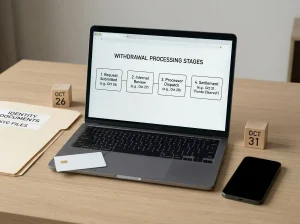
Wild Fortune withdrawal limits and processing stages
Wild Fortune Notes Wild Fortune applies an AU fiat withdrawal minimum, daily, weekly and monthly...

Anonymous Crypto Casinos in Australia: Legal Guide
Australian rules apply to offshore casino services even when they accept cryptocurrency, while user liability...

Aristocrat Online Pokies in Australia: What to Know
The Aristocrat name alone does not identify a game, confirm its features, or show where...

Aussie Crypto Casinos: Payments, Rules and Checks
A practical guide to offshore payment flows, Australian considerations, verification limits, bonus terms and crypto...

Best New Australian Online Pokies: Rules and Checks
This guide explains Australia's restrictions and the limits of available information on offshore sites, payments,...

Online Casino Payment Methods for Australians
Deposits and withdrawals can follow different rules, while Australian payment options do not change the...

Best-Paying Online Pokies in Australia: Payouts & Rules
Understand how payout claims, bonus conditions, Bitcoin payments and Australian rules shape the risks of...

Bitcoin Pokies in Australia: Payments and Rules
Bitcoin is a payment option, not a game mode; the guide explains how real-money play,...

Casino Sites That Accept Amex in Australia
A casino may list Amex, but the card issuer can still block a gambling-related payment,...

Casino Sites That Accept BPAY in Australia
A BPAY search alone does not confirm casino support, and the payment methods available can...

Casino Sites That Accept Credit Cards in Australia
Card acceptance can depend on the casino and issuer, while payment limits, fees, verification and...

EcoPayz casino sites in Australia: what is verified
The article separates payment-provider support from Australian legality and explains why deposits, withdrawals and game...

Casino sites that accept Osko in Australia: what to check
The page separates payment claims, deposit and withdrawal routes, and the legal context for offshore...

Paysafecard Casino Sites in Australia: What to Check
The guide separates operator restrictions under the Interactive Gambling Act 2001 from player status and...

Casino Sites and Skrill in Australia: What to Know
Australia’s rules apply to real-money online casino games offered to people in the country, while...

Trustly Casinos in Australia: What Can Be Confirmed
Trustly availability for Australian customers needs clear operator confirmation; payment claims do not verify games...

Casinos That Accept Apple Pay in Australia
Apple Pay’s everyday use in Australia does not confirm casino cashier support, and deposit access...

Casinos That Accept Bitcoin in Australia: How Payments Work
See how wallet transfers, blockchain confirmations, cashier checks and bonus terms affect Bitcoin casino deposits...

Bitcoin Cash Casinos in Australia: Rules and Checks
Australian law assesses the casino service and its operator; BCH funding, bonus terms, verification and...

Casinos That Accept CashtoCode in Australia
Learn what can be confirmed about CashtoCode support, payout rules and Australian restrictions on real-money...

Casinos That Accept Ethereum in Australia: Payments
Ethereum is a digital currency, while each casino independently determines whether it offers the option...

Casinos That Accept Google Pay in Australia
Google Pay availability does not establish that an online casino may legally serve Australians or...

Casinos That Accept Litecoin in Australia: Claims
A Litecoin payment claim may not establish availability for Australian customers or explain which account...

Casinos That Accept Mastercard in Australia
Australian card payments may be commonplace, but online casino acceptance depends on the specific payment...

Casinos That Accept MiFinity in Australia: What to Check
Casino games and payment methods are separate questions, and a general MiFinity mention may not...

Casinos That Accept Neosurf in Australia: What to Check
Australian card and mobile-wallet habits offer context, but only an operator’s own payment arrangements can...

Casinos That Accept Neteller in Australia
A Neteller mention alone does not confirm Australian access, supported games, deposit options or withdrawal...

Casinos That Accept PayID in Australia: What to Know
A PayID option does not establish that an online casino may legally offer real-money games...

Casinos That Accept PayPal in Australia: What to Check
PayPal availability, deposit conditions and withdrawal options can differ, so a payment label alone does...

Casinos That Accept POLi in Australia: Key Checks
Payment availability, permission to offer online pokies, and withdrawal support are separate questions, so one...

Casinos That Accept Tether USDT in Australia
USDT mentions alone do not confirm payment support; acceptance, deposit and withdrawal terms need separate...

Casinos That Accept Visa in Australia: What to Know
A Visa label does not confirm an operator is authorised, that a card will work,...

Dragon Link Online Pokies in Australia: What to Know
A cautious guide to online format, free-play limits, Australian legal context and the claims a...

Fast Withdrawal Casinos in Australia: Payment Routes
Payment options, verification checks and the withdrawal process all affect how quickly funds may reach...

Instant Bank Transfers for Australian Casinos: What to Know
Bank-linked payment labels do not confirm legality, processing speed, withdrawal routes or how casino bonus...

PayID Casino Withdrawals in Australia: How They Work
PayID can move funds in real time after release, while operator checks and bonus wagering...

Instant PayID Withdrawals in Australia: What to Know
PayID can move funds in real time after release, but casino review, verification and account...

PayID Pokies in Australia: Payments and Checks
PayID directs transfers using an identifier, but it does not verify a pokies operator or...

No-Verification Casino Withdrawals in Australia
A closer look at identity checks, casino approval, payment timing and bonus terms helps put...

No KYC Casinos in Australia: Cash-Out Checks
The guide separates registration claims from withdrawal checks and compares crypto, PayID, bonuses and wagering...

Online Pokies Instant Withdrawals in Australia
Withdrawal timing depends on more than the payment rail: operator checks and receiving institutions can...

Online Pokies PayID Australia: Deposits and Withdrawals
PayID is an identifier-based way to send money through participating banks, but site availability and...

Pay by Phone Casinos in Australia: What It Means
Separate mobile play from phone-bill billing, and understand how PayID transfers and Australian gambling rules...

Quick Withdrawal Casinos in Australia: Cashout Times
E-wallet estimates describe only part of the process: casino approval, payment routing and account checks...

Real Cash Online Pokies in Australia: What to Know
The guide separates practice credits from real-money play and outlines checks for offers, deposits, Bitcoin...

Safe Online Pokies in Australia: Bitcoin Basics
A guide to game credits, offshore-site context, payment differences, privacy trade-offs and checks that can...

Same-Day Casino Payouts in Australia: What to Know
A payout can pause during operator checks or while the payment moves through its route...

Solana Casino Comparison in Australia: Legal Guide
The guide separates SOL ownership from offshore casino use and covers funding, cashing out, platform...

PayID and under-one-hour casino withdrawals in Australia
PayID may speed the transfer after release, while operator checks and Australian restrictions remain separate...