Casinos That Accept Tether USDT in Australia
 Available in AU

USDT mentions alone do not confirm payment support; acceptance, deposit and withdrawal terms need separate verification.
Table of Contents
- What “Online Tether Casino” Means for Australian Readers
- How to Assess Tether Casino Claims Without a Verified Shortlist
- Online Sites and Bonus Claims: What the Available Evidence Can Support
- Slot and Deposit-Bonus Searches: Keep Claims Separate from Evidence
- Game Searches and Tether Payment Questions
- Australian Tether Searches and the TRC20 Question
- The Australian Legal Context for Offshore Casino Searches
- Playing with Tether: Availability Must Be Verified
- Live-Dealer Searches and Tether Acceptance
- Tether Deposits, Withdrawals and Unverified Terms
What “Online Tether Casino” Means for Australian Readers
When someone asks about an online casino that takes Tether, the practical question is about payment acceptance: does the service let a customer use USDT to fund an account, and what does it allow them to do with any balance afterwards? The wording may also mention Australia, mobile access or live play, but those details do not answer the payment question. They are separate parts of what a person may be trying to establish.
I’d keep the terms distinct. “Online casino” describes the kind of service being sought; “Tether” or “USDT” identifies the proposed payment method. Putting the words together does not show that a particular operator accepts it. Nor does a page that mentions cryptocurrency establish that USDT is supported. Payment methods can be specific: a service might refer to one digital currency without thereby confirming another. That distinction matters before you treat a general claim as a usable payment option.
There is also a difference between seeing USDT mentioned somewhere and finding a clear statement about how it is handled. A useful acceptance statement would need to say that USDT itself is available, rather than leave you to infer it from a broad reference to crypto. It should also be clear what stage the statement covers. Permission to make a deposit, for instance, would not by itself tell you whether withdrawals are available through the same method. Those are different questions, not small print around one answer.
If you’re looking for casinos that accept Tether (USDT) in Australia in 2026, check the available licensing and payment details before choosing where to play. These short verdicts highlight the specific information available for each operator.
1. GoldenCrown
License: Curacao Gaming Control Board OGL/2023/176/0095 (Hollycorn N.V.) GoldenCrown is listed with a Curaçao Gaming Control Board licence, OGL/2023/176/0095, held by Hollycorn N.V.
2. Neospin
License: Curacao Gaming Control Board OGL/2023/176/0095 (Hollycorn N.V.) Neospin is listed with a Curaçao Gaming Control Board licence, OGL/2023/176/0095, held by Hollycorn N.V.
3. Wild Tokyo
License: Curacao · Payout speed: crypto 30-60 minutes, fiat 1-5 days · Min. deposit: A$10 Wild Tokyo lists a Curaçao licence and a minimum deposit of A$10. Its stated payout speed is 30–60 minutes for crypto and 1–5 days for fiat.
4. Ricky Casino
Payout speed: crypto under 1 hour, PayID 1-3 business days · Min. deposit: A$20 (A$30 to qualify for the bonus) Ricky Casino lists crypto payouts in under an hour and PayID payouts in 1–3 business days. The minimum deposit is A$20, or A$30 to qualify for the bonus.
5. DragonSlots Casino
License: Curacao Gaming Authority (Jumpman Gaming Ltd) DragonSlots Casino is listed with a Curaçao Gaming Authority licence held by Jumpman Gaming Ltd.
6. Vegaz Casino
License: Curacao OGL/2024/1335/0780 · Min. deposit: EUR 20 Vegaz Casino lists licence OGL/2024/1335/0780 and a minimum deposit of EUR 20.
7. WinSpirit Casino
License: Curacao eGaming OGL/2024/923/0383 (Antillephone N.V.) · Min. deposit: A$30 WinSpirit Casino is listed with a Curaçao eGaming licence, OGL/2024/923/0383, held by Antillephone N.V. Its stated minimum deposit is A$30.
8. House of Pokies
License: international iGaming licence – jurisdiction not named in the source · Payout speed: PayID 1-24 hours · Min. deposit: A$30 (PayID from A$10) House of Pokies lists an international iGaming licence, though the jurisdiction is not named. Its PayID payout speed is 1–24 hours; the minimum deposit is A$30, or A$10 for PayID.
9. Lucky Dreams
License: Curacao · Min. deposit: A$20 (POLi) Lucky Dreams lists a Curaçao licence and a minimum POLi deposit of A$20.
10. JustCasino
License: Curacao Gaming Control Board JustCasino is listed with a Curaçao Gaming Control Board licence.
The wording “Tether casino in Australia” adds a location, but it does not settle what “for Australian readers” means. A page may be written for an Australian audience without establishing that a service is available to people physically in Australia, or that it may lawfully provide online casino games here. Payment acceptance and legal availability are not interchangeable. A payment logo or a line about USDT cannot settle either issue on its own.
This is where a quick search can blur several ideas together. “Tether online casino” might mean a site that claims to accept USDT, a casino page discussing crypto payments in general, or simply a reader looking for information before making a decision. A mobile reference may be about viewing a website on a phone; it says nothing by itself about the payment method. Likewise, “live” in a phrase about a casino does not establish that live-dealer play is offered or that Tether can be used for it. The words sit together; the evidence still has to connect them.
The same care applies when someone uses Australian terms for casino games. A reference to pokies does not prove that a particular game is available, and it should not be taken as evidence of a payment feature. In this context, the useful question is narrower: is there a clear, current statement about USDT acceptance, and what exactly does it cover? If the wording is vague, it is safer not to fill the gap with an assumption.
Casinos That Accept Visa in Australia: What to Know
I would also separate a general description of Tether from a claim about a particular service. Knowing what USDT refers to does not reveal which payment methods an operator supports, whether a transaction would be accepted, or what rules apply to an account. Those details cannot be derived from the name of the currency. A reader should not have to guess whether “crypto accepted” includes the specific asset they have in mind.
So the phrase “online Tether casino” is best understood as a request to clarify a payment claim, not as proof that an option exists. The location, device and style of play mentioned in a search phrase may each raise another question, but they should not be bundled into a single assumption. First establish what a statement actually says about USDT; do not treat nearby references to a casino, Australia or mobile use as confirmation.
There is a wider boundary here, too. Australian law prohibits operators from providing real-money online casino games to people in Australia. A discussion of payment terminology should not be mistaken for an invitation to use such a service, or as confirmation that one is legally available. That’s the line to keep clear.
Legal Warning
Australian law prohibits operators from providing real-money online casino games to people in Australia.
In short, the phrase points to payment acceptance as the subject, not to a verified operator or a confirmed way to play. For an Australian reader, that distinction is more than wording. A claim about USDT needs to be read as a claim requiring clear support, while questions about access and legality remain separate. No inference from the phrase alone is enough.
How to Assess Tether Casino Claims Without a Verified Shortlist
“Best” sounds like a verdict, but it only means something when you know what was compared and how. A page calling a Tether casino the best should explain what that label rests on. If it does not, treat it as a claim, not a finding. I would not turn an unsupported shortlist into a recommendation.
Start by separating the questions bundled into a broad search for a leading Tether casino in Australia. Is the claim about an operator, a payment method, a particular game, or an offer? Those are different things to verify. A page can discuss USDT without establishing that a named service accepts it. It can describe games without showing that the payment method works there. One claim does not prove the others.
Ask what “best” is measuring
A ranking needs a stated basis. That might sound obvious, but a page can use “top”, “latest” or “best” without explaining what was assessed, when it was checked, or what would change the order. Without those details, the label gives you no useful comparison.
Look for clear, checkable statements rather than broad praise. Does the page name the operator? Does it say which payment method it means by Tether, and distinguish that from other payment options? Does it explain whether the information comes from the operator’s own cashier or from a separate review? If the page gives no way to trace the claim, you cannot tell whether it describes a live feature or simply repeats older copy.
Casinos That Accept Ethereum in Australia: Payments
That does not make every claim false. It means you should keep the confidence level in proportion to the evidence. A confident heading is not evidence. Neither is a row of badges or a polished table.
Separate a site name from proof of acceptance
A list of purported Tether casino sites may look like a ready-made answer. But a name in a list does not establish that USDT is accepted, that the option is available to Australian users, or that the information is current. Those points need to be demonstrated separately.
When checking a payment claim, look for a specific statement tied to the named operator and its own published payment information. Be cautious if a page shifts between “crypto accepted” and “Tether accepted” as if they were interchangeable. A general reference to cryptocurrency does not, by itself, confirm support for a particular digital currency.
The same care applies to labels such as “new” or “latest”. A recent publication date can tell you when a page was posted; it does not prove that its details were checked then. If the operator’s name, payment method, or basis for the claim is missing, the date does little to settle the question.
Do not let one feature stand in for another
A claim about payment acceptance tells you nothing on its own about game selection, and a claim about games tells you nothing about payment availability. Search results may put these ideas side by side, but proximity is not verification. I keep them in separate boxes.
Do
- Look for clear, checkable statements
- Trace claims to the operator’s own cashier
- Keep payment, games and promotional claims distinct
Don’t
- Treat a confident heading as evidence
- Assume “crypto accepted” confirms USDT support
- Let one feature stand in for another
This matters when a page promotes a “best” option across several categories at once. Ask whether each category has its own evidence. If a site is praised for its payment options, that does not establish that its games are suitable for you. If a page calls its game range extensive, that does not demonstrate USDT support. Broad praise can blur distinctions that matter.
Treat ratings with the same caution. A score is only as useful as its method: what was assessed, who did the assessment, and whether the criteria are clear. If those details are absent, a score is decoration, not a comparison.
A practical test before trusting a claim
I use a short checklist:
- Is the operator identified clearly?
- Is the statement specifically about USDT, rather than cryptocurrency in general?
- Is the claim connected to information published by the operator?
- Is the date of the information visible, and does it say what was checked?
- Are payment, games and any promotional claims kept distinct?
- Does the page explain how it reached its ranking or recommendation?
If several answers are unclear, pause rather than filling the gaps with assumptions. That is not a reason to try a service to find out. Australian law prohibits operators from offering real-money online casino games to people in Australia, and Australian consumer law does not protect players who use offshore casinos. A promotional ranking should not be read as permission, protection, or proof of access.
The plain answer is that a “best Tether casino” label cannot be trusted on wording alone. It needs identifiable, current support for the specific claim being made. Without that, a list is just a list.
Online Sites and Bonus Claims: What the Available Evidence Can Support
A Tether casino claim and a no-deposit bonus claim are two separate things. A site might use USDT as a payment label in its marketing, while a bonus promotion has its own eligibility rules and conditions. Treating those claims as one package can make an appealing headline sound more certain than it is.
Casinos That Accept PayID in Australia: What to Know
If you are comparing online casino claims, look for specific, readable terms rather than a banner that simply promises a bonus. A promotion should explain who can take part, what action is required, which games count, and what conditions apply before any reward can be withdrawn. If those details are vague, contradictory or hard to find, the headline does not settle the matter.
The same care applies to claims that a casino accepts Tether. A payment logo or a mention of USDT is not enough on its own to tell you whether the option is available to Australian users, whether it applies to the account you would use, or whether the advertised promotion is connected to that payment method. Read each statement as a claim that needs its own confirmation. Separate questions, separate evidence.
“Best” is also a judgement, not a feature. One person may mean a clear set of terms; another may mean a particular payment option or a bonus with fewer restrictions. Without a defined basis for comparison, a ranking does little to help you decide what a claim actually means. I would start with the conditions, not the superlative.
A no-deposit bonus claim is a separate matter from Tether payment acceptance; each requires its own confirmation of terms and eligibility.
Be cautious when a promotion uses the phrase “no deposit.” It does not, by itself, explain whether registration, identity checks or other conditions apply. Nor does it tell you whether the reward can be used immediately, which restrictions govern play, or what must happen before a withdrawal is permitted. Those are the details that make a promotion understandable; the label alone does not.
For an Australian reader, there is a more basic question before any offer can be weighed: whether the service may lawfully provide online casino games to people in Australia. The Interactive Gambling Act 2001 prohibits operators from offering those services to Australian residents, and the Australian Communications and Media Authority enforces the Act. Australian consumer law does not protect players who use offshore casinos. A bonus headline cannot change that position.
I would not treat a polished page, a familiar payment symbol or a confident “best” label as proof that a site is suitable or that an offer is available to you. Keep the claims separate: one concerns whether USDT is accepted; another concerns whether a bonus exists and what its terms say; the legal position is a different matter again. If the wording leaves those distinctions blurred, pause rather than filling in the gaps yourself. Clear terms matter. So does the law.
Casinos That Accept Neteller in Australia
Slot and Deposit-Bonus Searches: Keep Claims Separate from Evidence
Searches that combine Tether with slot-style games and a deposit bonus can sound like they describe one straightforward offer: make a deposit in USDT, then receive an extra credit for play. The wording alone does not establish that such an offer exists, that USDT is accepted, or that any advertised terms apply to Australians. A bonus label is not proof of a payment method or a usable promotion.
The same caution applies to claims about free play or a welcome reward. “No deposit” describes a claimed condition, not a guarantee that no payment, eligibility check or other requirement applies. A headline may leave out the conditions that determine whether an offer is available and what it permits. Without clear, current terms, there is no sound basis for treating a bonus as something a reader can claim.
There is a more fundamental issue for Australians. Under the Interactive Gambling Act 2001, operators cannot provide real-money online casino games, including slot-style games, to people physically in Australia. The Australian Communications and Media Authority enforces the Act. The law does not explicitly criminalise a player for using an offshore site, but that does not make an operator’s service lawful to provide here. Australian consumer law also does not protect players who use offshore casinos.
That matters when a promotion is framed as a way to start playing without paying upfront. Promotional language can make a service sound low-risk or ordinary; it does not change the legal position or provide Australian consumer protections. Nor does a reference to Tether settle whether a particular offer or payment route is genuine, available, or subject to conditions.
Attention Australian consumer law does not protect players who use offshore casinos, regardless of the payment method used.
If you encounter wording that pairs USDT with a bonus and slot-style play, read it as a claim, not as a recommendation or an invitation to sign up. Do not infer that a bonus is available to Australian residents from a page title, a copied advertisement or a general description. Be particularly wary of language that presents “free” play as consequence-free: the term may describe only one aspect of an offer, while leaving other restrictions unstated.
The search wording can therefore be separated into two claims: one about a supposed promotion, another about a payment method. Neither makes the other true. A deposit bonus does not confirm Tether acceptance, and a mention of Tether does not establish that a bonus exists. Keep the claims distinct. The legal boundary remains.
Game Searches and Tether Payment Questions
When casino games and Tether appear together, it is easy to read them as one claim: that a service offers games and lets you pay with USDT. They are separate questions. A page might discuss games without supporting Tether payments, or mention Tether without establishing what games, if any, are available. The wording alone does not settle either point.
I’d keep the terms distinct when reading a page. “Games” describes what a service says it provides; “payment” describes how it says customers can fund an account. Neither phrase confirms the other. A reference to Tether in a general payment list is not proof that it can be used for a particular game, and a page about a game does not show that USDT is accepted.
Casinos That Accept Mastercard in Australia
The same applies when Tether appears alongside a bonus claim. A bonus is an offer with its own conditions, not evidence of payment support or game availability. Before treating a claim as meaningful, look for the exact terms and ask what they actually establish. A label alone is thin evidence.
Be especially cautious with language suggesting anonymity. A payment method’s name does not establish that an account can be opened or used without identity checks. Online gambling services may require customers to verify their identity before handling financial activity. “Anonymous” is a claim to examine, not a feature you can infer from the use of a cryptocurrency.
There is also a local distinction that can get lost in broad online wording. In Australia, the Interactive Gambling Act 2001 makes it illegal for operators to provide real-money online casino games to people here. The Australian Communications and Media Authority enforces that law. Australian consumer law does not protect players who use offshore casinos. That matters even when a page presents game access and payment support as if they were ordinary product features.
So, if you see a reference to playing casino games with Tether, read it as a claim about two separate things, not as confirmation that either is available to you in Australia. Keep the game description, payment statement, and any offer terms in their own lanes. Search wording can join them together; it cannot prove the connection.
That’s the useful distinction.
Australian Tether Searches and the TRC20 Question
When you see Tether described as an option for Australian customers, separate two claims: that a service accepts USDT, and that it accepts a particular network version of USDT. A reference to TRC20 addresses the second question; on its own, it does not establish either one. A payment label is not proof that a cashier offers that method.
What is TRC20?
TRC20 refers to a particular network version of Tether (USDT). A reference to this network is a specific claim that must be verified separately from general USDT acceptance.
The same distinction matters when a page describes a “real-money” Tether casino. That phrase may sound specific, but it does not tell you whether USDT is actually available to Australian users, which network the operator supports, or whether the service can legally provide casino games to people in Australia. Those are separate points, not details you can safely infer from a headline.
I would look for a clear, current statement in the cashier and the payment terms before treating a network name as meaningful. The wording should identify USDT and the relevant network, and it should apply to the service and location being discussed. If it only says “crypto” or “Tether,” that leaves the network question unanswered. If it names TRC20 but gives no clear payment instructions, the label alone still does not show that a deposit can be made.
There is no confirmed basis here to say that an Australian-facing casino supports USDT on TRC20, or that an Australian Tether casino is available. That is not the same as proving that no operator anywhere uses the network. It means you should not treat a broad claim about USDT casinos as evidence of a specific option for Australians. Small distinction. Important one.
Be careful with pages that blend location, payment method and network into one confident claim. A service might refer to Tether without specifying a network; a network reference might not apply to Australian customers; and an Australia-facing description does not by itself establish that real-money casino games may lawfully be offered here. Those details need to stand on their own.
Trustly Casinos in Australia: What Can Be Confirmed
The Australian rule is directed at operators: the Interactive Gambling Act 2001 prohibits offering real-money online casino games to people physically in Australia. The Australian Communications and Media Authority enforces that law. So a payment claim should not be read as a signal that a casino service is lawful or available for Australians. Australian consumer law also does not protect players using offshore casinos.
For you, the practical reading is simple: treat “Tether,” “USDT” and “TRC20” as claims that need separate, location-specific confirmation. Do not assume that a network name settles acceptance, or that acceptance settles whether a service can be offered in Australia. A neat label cannot do that work.
The Australian Legal Context for Offshore Casino Searches
A search for an online casino that takes Tether can look like a payment question, but in Australia the legal position comes first. The Interactive Gambling Act 2001 makes it unlawful for operators to provide real-money online casino games to people physically located in Australia. That covers casino-style services offered to Australian residents, whether the site describes itself as a crypto casino or lists USDT among its payment methods.
The rule concerns the operator’s conduct. The Act does not explicitly make an individual player’s use of an offshore casino a criminal offence. That distinction matters, but it is not an endorsement or a sign that an offshore service is authorised for Australian customers. Casino-style games remain prohibited services when provided to people in Australia.
Legal Realities
- The Interactive Gambling Act 2001 prohibits real-money online casino services to people in Australia
- ACMA enforces the Act by blocking offshore sites
- Australian consumer law provides no protection for players using offshore casinos
- Payment options like Tether do not alter the legal status of the service
The Australian Communications and Media Authority, or ACMA, is responsible for enforcing the Act. Offshore sites may be subject to blocking and enforcement action, so a page that appears accessible at one moment is not proof that the service can lawfully offer casino games here. Nor does a claim about Tether acceptance alter the legal status of the underlying activity. A payment option and permission to provide a service are separate matters.
There is another practical point that is easy to miss: Australian consumer law does not protect players who use offshore casinos. If a dispute arises over an account, a payment or winnings, you should not assume that the protections available in an ordinary Australian consumer transaction will apply. A familiar interface, Australian-facing wording or a crypto payment method does not create local consumer safeguards.
So, when you see a claim about a casino with USDT, read it as a statement about a purported payment feature—not as evidence that the operator may legally offer online casino games to Australians. The same applies to claims aimed at mobile users or to a supposed Tether casino test. Neither wording changes the law or establishes a right to local protection.
I would keep those questions separate: what a page claims about payment, what the law permits an operator to offer in Australia, and what recourse a customer would have if something goes wrong. The legal answer is not hidden in the cashier. It sits outside it.
Casinos That Accept Neosurf in Australia: What to Check
Playing with Tether: Availability Must Be Verified
Wanting to play casino games with Tether involves two separate questions: whether a service offers the games, and whether it accepts USDT. A mention of crypto in a payment menu would not, by itself, establish that games are available to you or that you can lawfully use the service from Australia. Keep those points apart.
The wording “play with Tether” can make the payment method sound like the main decision. It is only one part of the picture. A claim about USDT does not tell you what games are offered, who can access them, or what conditions apply. Nor should a search result or promotional line be treated as proof that a particular service supports the currency. Claims need to be checked against the operator’s own current terms; a vague crypto label leaves too much unsaid.
There is a local boundary that matters before any payment detail: under the Interactive Gambling Act 2001, operators cannot provide real-money online casino games to people in Australia. That applies to casino-style games regardless of whether the proposed payment is Tether, a card or another method. A payment option does not change the legal status of the service.
The “no identity checks” idea deserves the same caution. An operator’s claim that it asks for little information at sign-up is not a promise that you will never need to verify your identity. Online casinos commonly ask customers to complete identity checks before handling financial transactions. Read any stated requirements carefully; don’t assume that a crypto payment removes them.
If you are weighing an offshore service, remember that Australian consumer law does not protect players who use offshore casinos. That leaves you without the local consumer protections you might expect when something goes wrong. Not a small detail.
Verify Before Playing
- Confirm the operator is identified clearly
- Check for a specific statement about USDT acceptance
- Verify the specific network (e.g., TRC20) is supported
- Review the operator’s current terms for deposits and withdrawals
- Confirm if identity verification is required for financial transactions
So treat “playing with Tether” as a claim to examine, not an assurance of access. Separate the payment claim from the game offer, the conditions from the headline, and the existence of a service from whether it can lawfully offer real-money casino games to people in Australia. A currency name cannot settle those questions.
Live-Dealer Searches and Tether Acceptance
When you look for live-dealer casino games alongside Tether, two separate things are being bundled together: a type of game and a possible payment method. A service describing live-dealer play does not, by that description alone, establish that it accepts USDT. Equally, a claim about crypto payments does not confirm that live-dealer games are available.
That distinction matters because the wording can make the combination sound like one verified feature. It is not. To establish whether a particular service supports both, you would need clear, current information about its payment methods and games. A mention of “crypto” is not enough to identify USDT, and a mention of USDT does not confirm support for a particular network or game format.
I would treat claims about a live-dealer experience and Tether acceptance as separate claims to verify, not as a package. Look for the exact token named, the stated network, and whether live-dealer games are explicitly described. Be wary of a broad label doing the work of several missing details. It doesn’t.
There is also an important Australian limit behind this topic. The Interactive Gambling Act 2001 prohibits operators from providing real-money online casino games to people in Australia, and the Australian Communications and Media Authority enforces the law. The fact that a page describes a game or payment option does not make the service lawful to provide here. Australian consumer law also does not protect players who use offshore casinos.
So, if you encounter a claim that a live-dealer casino accepts Tether, read it as a claim requiring verification—not as evidence that the service is available to you, that both features work together, or that using it is protected under Australian consumer law. Keep the game description, payment claim and Australian legal context distinct.
Casinos That Accept Litecoin in Australia: Claims
Tether Deposits, Withdrawals and Unverified Terms
A deposit and a withdrawal are separate parts of a payment arrangement. Seeing Tether mentioned beside a deposit option would not, by itself, tell you whether withdrawals can also be made in USDT, or whether both stages use the same conditions. Check the wording for each stage rather than treating “Tether accepted” as a complete description.
The cashier is where payment options and transaction conditions are set out. If USDT is shown, read the stated network, any fees, transaction limits and processing information before making a decision. Those details matter: a payment method’s name alone cannot tell you what a transfer will cost or how long it will take. I would not treat claims of instant or fast withdrawals as settled terms without clear, applicable conditions.
The same care applies to “no-deposit” wording. It is not enough to establish that an offer exists, who can use it, or what conditions attach. A bonus code does not explain its own terms. Do not assume a promotion is available or that a withdrawal is possible simply because a page uses those phrases.
Financial transactions may also involve identity checks. Online casinos commonly ask customers to verify their identity before handling financial activity, so payment steps may depend on completing that process. Keep that separate from the question of whether USDT is supported: verification does not prove that a particular payment option or withdrawal route is available.
For Australian readers, there is a more basic limit. The Interactive Gambling Act 2001 prohibits operators from providing real-money online casino games to people in Australia, and Australian consumer law does not protect players using offshore casinos. A payment claim does not change that legal position.
I would read deposit and withdrawal wording as two claims to assess separately, not as a promise that both will work as expected. If the conditions are unclear, there is no sound basis for assuming the transfer will be instant, free, or available in both directions.
Which online casinos accept American Express for deposits?
Jackpot City Casino, Spin Palace, Ruby Fortune, Ignition Casino, Joe Fortune and PlayAmo are listed as supporting Amex deposits for Australian players.
How do you check if casino sites accept Amex deposits?
Check the casino’s cashier for American Express among the available deposit methods. If it is offered, select it, enter your card details and deposit amount in AUD, then submit the payment.
What are the fees involved with American Express payments?
Amex deposits are typically free, though a casino may add a 1.5% surcharge. A 3% currency conversion fee may also apply, and withdrawals can incur a fee.
Are there any limits on how much I can deposit or withdraw using American Express?
Yes. Each casino sets its own Amex deposit and withdrawal limits, so check the limits shown in its cashier or payment terms.
Can I withdraw winnings directly to my American Express card?
Some casinos allow Amex withdrawals, but not all do, and you generally need to have made a previous deposit with Amex. Withdrawals can take up to five days to clear.
Are there any fees for depositing with American Express?
Amex deposits are typically free, but a casino may charge a 1.5% surcharge. A 3% currency conversion fee may apply.
How can I know if an online casino will accept American Express?
Look for American Express in the casino’s cashier among its deposit methods. An Amex payment may still be declined if the card issuer blocks payments to that website.
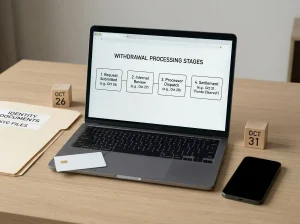
Wild Fortune payment methods and money-movement rules
Wild Fortune withdrawal limits and processing stages
Wild Fortune Notes Wild Fortune applies an AU fiat withdrawal minimum, daily, weekly and monthly...

Anonymous Crypto Casinos in Australia: Legal Guide
Australian rules apply to offshore casino services even when they accept cryptocurrency, while user liability...

Aristocrat Online Pokies in Australia: What to Know
The Aristocrat name alone does not identify a game, confirm its features, or show where...

Aussie Crypto Casinos: Payments, Rules and Checks
A practical guide to offshore payment flows, Australian considerations, verification limits, bonus terms and crypto...

Best New Australian Online Pokies: Rules and Checks
This guide explains Australia's restrictions and the limits of available information on offshore sites, payments,...

Online Casino Payment Methods for Australians
Deposits and withdrawals can follow different rules, while Australian payment options do not change the...

Best-Paying Online Pokies in Australia: Payouts & Rules
Understand how payout claims, bonus conditions, Bitcoin payments and Australian rules shape the risks of...

Bitcoin Pokies in Australia: Payments and Rules
Bitcoin is a payment option, not a game mode; the guide explains how real-money play,...

Casino Sites That Accept Amex in Australia
A casino may list Amex, but the card issuer can still block a gambling-related payment,...

Casino Sites That Accept BPAY in Australia
A BPAY search alone does not confirm casino support, and the payment methods available can...

Casino Sites That Accept Credit Cards in Australia
Card acceptance can depend on the casino and issuer, while payment limits, fees, verification and...

EcoPayz casino sites in Australia: what is verified
The article separates payment-provider support from Australian legality and explains why deposits, withdrawals and game...

Casino sites that accept Osko in Australia: what to check
The page separates payment claims, deposit and withdrawal routes, and the legal context for offshore...

Paysafecard Casino Sites in Australia: What to Check
The guide separates operator restrictions under the Interactive Gambling Act 2001 from player status and...

Casino Sites and Skrill in Australia: What to Know
Australia’s rules apply to real-money online casino games offered to people in the country, while...

Trustly Casinos in Australia: What Can Be Confirmed
Trustly availability for Australian customers needs clear operator confirmation; payment claims do not verify games...

Casinos That Accept Apple Pay in Australia
Apple Pay’s everyday use in Australia does not confirm casino cashier support, and deposit access...

Casinos That Accept Bitcoin in Australia: How Payments Work
See how wallet transfers, blockchain confirmations, cashier checks and bonus terms affect Bitcoin casino deposits...

Bitcoin Cash Casinos in Australia: Rules and Checks
Australian law assesses the casino service and its operator; BCH funding, bonus terms, verification and...

Casinos That Accept CashtoCode in Australia
Learn what can be confirmed about CashtoCode support, payout rules and Australian restrictions on real-money...

Casinos That Accept Ethereum in Australia: Payments
Ethereum is a digital currency, while each casino independently determines whether it offers the option...

Casinos That Accept Google Pay in Australia
Google Pay availability does not establish that an online casino may legally serve Australians or...

Casinos That Accept Litecoin in Australia: Claims
A Litecoin payment claim may not establish availability for Australian customers or explain which account...

Casinos That Accept Mastercard in Australia
Australian card payments may be commonplace, but online casino acceptance depends on the specific payment...

Casinos That Accept MiFinity in Australia: What to Check
Casino games and payment methods are separate questions, and a general MiFinity mention may not...

Casinos That Accept Neosurf in Australia: What to Check
Australian card and mobile-wallet habits offer context, but only an operator’s own payment arrangements can...

Casinos That Accept Neteller in Australia
A Neteller mention alone does not confirm Australian access, supported games, deposit options or withdrawal...

Casinos That Accept PayID in Australia: What to Know
A PayID option does not establish that an online casino may legally offer real-money games...

Casinos That Accept PayPal in Australia: What to Check
PayPal availability, deposit conditions and withdrawal options can differ, so a payment label alone does...

Casinos That Accept POLi in Australia: Key Checks
Payment availability, permission to offer online pokies, and withdrawal support are separate questions, so one...

Casinos That Accept Visa in Australia: What to Know
A Visa label does not confirm an operator is authorised, that a card will work,...

Dragon Link Online Pokies in Australia: What to Know
A cautious guide to online format, free-play limits, Australian legal context and the claims a...

Easy Withdrawal Casinos in Australia: Payout Guide
A withdrawal can involve an operator review and payment processing, so a fast transfer does...

Fast Withdrawal Casinos in Australia: Payment Routes
Payment options, verification checks and the withdrawal process all affect how quickly funds may reach...

Instant Bank Transfers for Australian Casinos: What to Know
Bank-linked payment labels do not confirm legality, processing speed, withdrawal routes or how casino bonus...

PayID Casino Withdrawals in Australia: How They Work
PayID can move funds in real time after release, while operator checks and bonus wagering...

Instant PayID Withdrawals in Australia: What to Know
PayID can move funds in real time after release, but casino review, verification and account...

PayID Pokies in Australia: Payments and Checks
PayID directs transfers using an identifier, but it does not verify a pokies operator or...
No-Verification Casino Withdrawals in Australia
A closer look at identity checks, casino approval, payment timing and bonus terms helps put...

No KYC Casinos in Australia: Cash-Out Checks
The guide separates registration claims from withdrawal checks and compares crypto, PayID, bonuses and wagering...

Online Pokies Instant Withdrawals in Australia
Withdrawal timing depends on more than the payment rail: operator checks and receiving institutions can...

Online Pokies PayID Australia: Deposits and Withdrawals
PayID is an identifier-based way to send money through participating banks, but site availability and...

Pay by Phone Casinos in Australia: What It Means
Separate mobile play from phone-bill billing, and understand how PayID transfers and Australian gambling rules...

Quick Withdrawal Casinos in Australia: Cashout Times
E-wallet estimates describe only part of the process: casino approval, payment routing and account checks...

Real Cash Online Pokies in Australia: What to Know
The guide separates practice credits from real-money play and outlines checks for offers, deposits, Bitcoin...

Safe Online Pokies in Australia: Bitcoin Basics
A guide to game credits, offshore-site context, payment differences, privacy trade-offs and checks that can...

Same-Day Casino Payouts in Australia: What to Know
A payout can pause during operator checks or while the payment moves through its route...

Solana Casino Comparison in Australia: Legal Guide
The guide separates SOL ownership from offshore casino use and covers funding, cashing out, platform...

PayID and under-one-hour casino withdrawals in Australia
PayID may speed the transfer after release, while operator checks and Australian restrictions remain separate...