Casinos That Accept Litecoin in Australia: Claims
 Available in AU

A Litecoin payment claim may not establish availability for Australian customers or explain which account and service conditions apply.
Table of Contents
- What an Online Litecoin Casino Claim Can—and Can’t—Tell You
- How to Assess Casino Claims Without a Verified Shortlist
- Australian Player Protections and Offshore Sites
- Bonus and Slot Claims: What This Guide Can Verify
- What the Available Facts Say About Crypto Casino Payments
- Before You Try to Play: Account Checks
- Litecoin Deposits and Withdrawals: Details That Aren’t Verified
- Live Dealer Searches and the Missing Litecoin Evidence
- Litecoin Slot Searches Without Unverified Game Claims
What an Online Litecoin Casino Claim Can—and Can’t—Tell You
“Accepts Litecoin” sounds clear, but it can mean less than it appears to. A site may use the phrase in a headline, a payment graphic or a general description without showing whether Litecoin is actually available for an Australian customer, or what the claim covers. Treat the wording as an assertion to examine, not as proof that a particular service or payment arrangement is available.
The distinction matters because a payment method can be mentioned without being available in every situation. A page may describe a general feature, while the terms applying to a customer depend on location, account status or other conditions. Unless the claim states its scope, it leaves those points open. The same caution applies to descriptions of an online casino, a mobile version or a live-dealer area: a label does not establish that the service can be accessed or used as described.
I would look for precise wording rather than a string of crypto symbols or a broad “supported payments” badge. Does the statement identify Litecoin by name? Does it say what the support refers to, and which customers it covers? Is the wording attached to a current, specific explanation, or does it sit in a generic promotional block? A claim that answers none of those questions may be difficult to interpret, even if it looks confident.
If you’re looking for casinos that accept Litecoin in Australia in 2026, check the available licensing and payment details before choosing where to play. These verdicts highlight the specific information provided for each casino.
1. GoldenCrown
License: Curacao Gaming Control Board OGL/2023/176/0095 (Hollycorn N.V.) GoldenCrown is listed with a Curaçao Gaming Control Board licence, OGL/2023/176/0095, held by Hollycorn N.V.
2. Neospin
License: Curacao Gaming Control Board OGL/2023/176/0095 (Hollycorn N.V.) Neospin is listed with a Curaçao Gaming Control Board licence, OGL/2023/176/0095, held by Hollycorn N.V.
3. Wild Tokyo
License: Curacao · Payout speed: crypto 30-60 minutes, fiat 1-5 days · Min. deposit: A$10 Wild Tokyo lists a Curaçao licence and a minimum deposit of A$10. Its stated payout times are 30–60 minutes for crypto and 1–5 days for fiat.
4. Ricky Casino
Payout speed: crypto under 1 hour, PayID 1-3 business days · Min. deposit: A$20 (A$30 to qualify for the bonus) Ricky Casino states that crypto payouts take under an hour, while PayID payouts take 1–3 business days. The minimum deposit is A$20, or A$30 to qualify for the bonus.
5. DragonSlots Casino
License: Curacao Gaming Authority (Jumpman Gaming Ltd) DragonSlots Casino is listed with a Curaçao Gaming Authority licence held by Jumpman Gaming Ltd.
6. Vegaz Casino
License: Curacao OGL/2024/1335/0780 · Min. deposit: EUR 20 Vegaz Casino lists licence OGL/2024/1335/0780 and a minimum deposit of EUR 20.
7. WinSpirit Casino
License: Curacao eGaming OGL/2024/923/0383 (Antillephone N.V.) · Min. deposit: A$30 WinSpirit Casino is listed with a Curaçao eGaming licence, OGL/2024/923/0383, held by Antillephone N.V. Its stated minimum deposit is A$30.
8. House of Pokies
License: international iGaming licence – jurisdiction not named in the source · Payout speed: PayID 1-24 hours · Min. deposit: A$30 (PayID from A$10) House of Pokies lists an international iGaming licence, though the source does not name the jurisdiction. Its stated PayID payout time is 1–24 hours; the minimum deposit is A$30, or A$10 via PayID.
9. Lucky Dreams
License: Curacao · Min. deposit: A$20 (POLi) Lucky Dreams lists a Curaçao licence and a minimum deposit of A$20 when using POLi.
10. JustCasino
License: Curacao Gaming Control Board JustCasino is listed with a Curaçao Gaming Control Board licence.
Be careful with language that blurs separate ideas. “Crypto friendly” does not necessarily mean Litecoin is accepted. “Digital currency payments” does not identify which currency is involved. Nor does a mention of Litecoin prove that it can be used for every part of an account’s financial activity. Those are different claims, and a reader should not silently fill in the gaps between them.
The word “Australian” needs the same care. A page aimed at Australian readers, or a result that uses Australian wording, does not by itself establish that an online casino service is available to people physically in Australia. A location label is not a payment confirmation, and a payment claim is not a statement about legal availability. Keep those questions separate rather than treating one as evidence for the other.
The practical test is whether the claim is specific enough to be checked without guesswork. Look for a clearly described payment method and conditions attached to it, rather than relying on an icon, a short heading or an undated list. If the wording leaves you unsure whether Litecoin is actually covered, the uncertainty is part of the claim. It is not a detail you can safely supply from assumption.
Casinos That Accept Mastercard in Australia
Even detailed wording has limits. A page can describe a payment option, but that does not independently establish how it would work for a particular person or transaction. Online casinos may also require a customer to complete identity and customer checks before handling financial activity. That requirement is separate from whether a page names a currency, so a payment label alone says nothing about whether an account has met those checks.
This is why a phrase such as “Litecoin casino in Australia” should not be read as a complete description. It joins a currency, a type of gambling service and a location into a compact label, but each part raises a separate question. Is the currency specifically identified? What does the service claim cover? Does the location wording describe actual availability, or is it simply part of the page’s presentation? A short label cannot answer all of that by itself.
The same goes for mobile wording. A page that mentions mobile access is making a claim about how its site is presented or reached; it does not, on its own, confirm anything about Litecoin. And a mention of live play is not evidence that a particular payment method applies to that feature. Keep the claims in their own lanes. It is an unglamorous habit, but it stops a vague label doing the work of several missing explanations.
Do
- Look for precise wording identifying Litecoin by name
- Check if the claim identifies which customers are covered
- Verify if wording is attached to a current explanation
Don’t
- Rely on crypto symbols or broad payment badges
- Assume “crypto friendly” means Litecoin is accepted
- Use a location label as proof of payment confirmation
I would not treat repeated wording across multiple pages as independent confirmation either. A phrase can be copied, shortened or reused without adding detail. What helps is clear, consistent wording about the specific point being claimed. If that clarity is absent, the soundest reading is narrow: the page uses a Litecoin-related label, and the label alone does not establish acceptance for Australian customers.
That is the limit of the phrase. It can tell you what a page is claiming; it cannot, by itself, settle what is available, to whom, or under what conditions. A confident badge is still just a badge.
How to Assess Casino Claims Without a Verified Shortlist
A “best” label sounds like a verdict. In practice, it is only useful when you can see what was compared, which criteria mattered and whether the same standards were applied to every site. Without that, a ranking of casinos said to accept Litecoin cannot tell you which claim is reliable or which option is better. It is a list with a confident heading.
That is not a quiet endorsement of the sites that appear elsewhere, nor a claim that every online list is wrong. The distinction matters: a confident ranking can make an unconfirmed payment claim look settled.
What a fair comparison would need
Start with the claim itself. Does the site say Litecoin is available to customers in Australia, or does it mention the currency in a general list of payment methods? Those statements are not interchangeable. A payment method might appear on a page without showing whether it is available to a particular customer, or whether the information still applies. You need a clear, current statement tied to the service being described.
Casinos That Accept POLi in Australia: Key Checks
Then look for consistency. If one review calls a site “best” because it accepts Litecoin, while another uses the same label based on a different feature, the rankings cannot be compared at face value. The writer should explain the criteria, show how each site was assessed and distinguish confirmed details from promotional language. If those steps are not visible, the order of the names may reflect the page’s priorities rather than a meaningful comparison.
That is where many readers get tripped up. A neat table can feel more objective than a paragraph, but formatting does not prove a claim. Nor does repeating the same claim across several pages establish that it has been checked independently. The detail you need is not how often a site is called “top”; it is what supports the specific claim being made.
Treat rankings as claims, not findings
When you see a list of leading online casinos that supposedly accept Litecoin, separate its two promises. One is that the listed sites accept the currency. The other is that they deserve their position in the ranking. Each needs support of its own. Even if a payment claim were confirmed, that would not automatically show that a site is better than another one.
A useful review should make its method legible. It should say what it considered, use the same yardstick for each entry and avoid turning unknown details into favourable assumptions. If the explanation relies on broad praise—“trusted,” “easy” or “best”—without showing what those words mean, you have little to work with. I would not fill in the gaps on a reviewer’s behalf.
Attention: A neat table or a high ranking does not prove a claim; formatting and repetition are not substitutes for independent verification.
Be careful with labels that sound precise but have no visible standard behind them. “Best online casino with Litecoin” might refer to payment availability, the range of games, the sign-up process or something else entirely. Unless the page spells out the basis, the phrase tells you more about its headline than its evidence. A list can still be useful as a starting point for checking claims; it should not become proof simply because it is ranked.
The same applies when Australian players are named in a general claim. A site’s broad statement about cryptocurrency does not, by itself, establish that Australian customers can use Litecoin there. Nor does an Australian-facing description confirm that every detail on a third-party page is current. Keep the scope of the claim narrow: who it concerns, what it says and what evidence is offered.
I’d use a simple rule: don’t let the ranking do the checking for you. Read the underlying claim, look for a clear basis for comparison and leave the “best” label undecided when that basis is not apparent. That is less satisfying than a tidy winner. It is also more honest.
Australian Player Protections and Offshore Sites
The key legal distinction in Australia is between the person using a service and the operator providing it. The Interactive Gambling Act 2001 places the prohibition on operators: it bars them from offering real-money online casino games to people in Australia. That category includes familiar casino-style games such as poker, blackjack, roulette and pokies. A site being accessible from a screen does not make its service lawful to provide here.
Bitcoin Cash Casinos in Australia: Rules and Checks
The law does not explicitly make an Australian player’s use of an offshore casino a criminal offence. That is a narrow point, not a sign that the service is approved or protected. The operator’s position is different: offering the prohibited service to people in Australia is unlawful. A foreign licence, a locally familiar brand, or a payment option that appears to work does not change that Australian rule.
The Australian Communications and Media Authority (ACMA) is responsible for enforcing the Act. Offshore casino services are subject to blocking and enforcement action in Australia. Access can therefore be disrupted, and a site’s appearance online should not be taken as evidence that it has been authorised for Australian residents. A site may also be operating from another jurisdiction under rules that do not provide an Australian remedy.
That distinction matters when someone encounters claims about a “best” casino, games, bonuses or a particular payment method. A polished site and a confident claim about Litecoin do not answer the legal question. Nor does a foreign authorisation establish that the operator may lawfully offer real-money casino play to people physically in Australia. The relevant Australian prohibition concerns the service being provided here; it is not altered by the currency a site says it accepts.
Legal Warning
The Interactive Gambling Act 2001 prohibits operators from offering real-money online casino games to people in Australia.
There is also a practical difference between being able to reach a site and having meaningful recourse if something goes wrong. Australian consumer law does not protect players who use offshore casinos. If an offshore operator delays a payment, closes an account, disputes a balance or applies its own terms in a way you contest, you cannot assume that Australian consumer protections will resolve the dispute. The fact that a website has an Australian-facing page or accepts Australian customers does not itself create that protection.
In plain terms, you may have fewer practical ways to challenge an operator from here. The company may be based overseas, its terms may refer to a foreign legal system, and the Australian regulator’s role is not to act as your personal account mediator. A complaint can still be made through relevant channels, but that is not the same as having a reliable Australian consumer-law remedy or a guarantee that money can be recovered. Less leverage, not more.
I would treat claims of “Australian-friendly” service with care. That phrase can describe a site’s language, its currency display, or the fact that it accepts visitors from Australia; it does not mean that Australian law has approved the service. The same goes for promotional language describing a site as the latest option or a leading choice. Those are commercial descriptions, not legal status.
Casinos That Accept Visa in Australia: What to Know
This is especially important when a site presents a foreign licence as reassurance. Such a licence may relate to the operator’s obligations in the place that issued it. It does not override the Interactive Gambling Act 2001 or turn a prohibited Australian-facing casino service into a locally authorised one. You should not read a licence badge as an Australian consumer guarantee. It does not give you the protections that are absent when you use an offshore casino.
Litecoin does not alter any of these points. A digital currency is a payment method, not a legal permission. If a site says it accepts Litecoin, that claim does not establish that the casino is lawful to provide in Australia, that an Australian authority supervises the account, or that Australian consumer law will protect you in a dispute. The currency on the cashier is not a substitute for legal status.
There is a further reason not to treat apparent access as approval: enforcement can affect access to offshore services. A link that loads today, or a page that appears in a browser, is not a ruling on whether the operator is permitted to serve Australian residents. Likewise, a site’s availability through a particular route does not create a right to use the service or make a consumer remedy available. I would separate what a website claims about itself from what Australian law permits.
Be cautious about language that blurs the operator’s obligations and the player’s position. Saying that players are not explicitly criminalised for using offshore sites does not mean the activity is endorsed, protected, or equivalent to using a locally regulated casino. The Act’s prohibition on operators remains central. And the absence of a specific criminal offence for the player does not repair the consumer-protection gap.
Australian consumer law does not protect players who use offshore casinos, meaning you have fewer practical ways to challenge an operator in a dispute.
If you are assessing a Litecoin casino claim, keep the questions distinct: what does Australian law say about the operator’s service, and what protection would you have if a dispute arose? A payment claim answers neither. A foreign licence answers neither in Australian terms. An attractive bonus or a familiar game name cannot supply a missing legal safeguard.
For anyone in Australia, the practical takeaway is sober rather than dramatic: offshore casino use sits outside the protection Australian consumer law provides to players, while the law prohibits operators from offering real-money online casino games to people here. ACMA enforces that framework. Do not mistake a site’s accessibility, marketing or payment claims for approval or local protection.
Bonus and Slot Claims: What This Guide Can Verify
Bonus language can make a casino offer sound simple: welcome credit, extra play after a deposit, or a promotion that asks for no deposit at all. But a label is not the terms. It does not tell you whether an offer is available to people in Australia, whether Litecoin is involved, or what conditions apply.
That matters with phrases such as a Litecoin casino welcome bonus or a no-deposit bonus. They describe different kinds of promotions, not proof that a specific promotion exists. A claim may refer to a general casino offer while saying nothing about whether it applies to a particular payment method. Nor does “free play” necessarily mean cash that can be withdrawn; the wording alone cannot settle what an offer permits.
Casinos That Accept Neosurf in Australia: What to Check
I would treat any bonus description as incomplete unless its actual terms make clear who can access it and what conditions attach. Those terms might address eligibility, games, payment methods, and how winnings are handled. Without the full conditions, a headline can leave out the detail that changes what the offer means. Don’t mistake attractive wording for a usable offer. Fine print matters.
The same caution applies to searches for free Litecoin play or online games associated with Litecoin. A phrase combining a currency with a game category does not identify a particular game, prove that it is available, or show that it accepts that currency.
There is also an important Australian context. Under the Interactive Gambling Act 2001, operators cannot provide real-money online casino games, including slots, to people physically in Australia. The law does not make the player liable simply for using an offshore site, but Australian consumer law does not protect players who use offshore casinos. A bonus label does not change either point.
So if a promotion is described as a Litecoin deposit bonus, a welcome offer, or free play, read that as a claim requiring substantiation—not as evidence that the offer is available to you or that a related game can be played. The name alone says nothing reliable about eligibility or conditions.
I’d keep the distinction plain: promotional wording is not the same as verified terms, and a game category is not a confirmed game.
Bonus and Game Claims
- A label is not the terms and does not prove a promotion’s availability in Australia
- Terms must explicitly state eligibility, payment methods, and withdrawal conditions
- Cryptocurrency labels do not override the Interactive Gambling Act 2001
What the Available Facts Say About Crypto Casino Payments
Crypto payment claims need to be read coin by coin. Information about Bitcoin or Ethereum cannot establish that a casino accepts Litecoin, or that Litecoin can be used for a particular game. The names may appear together under a broad “crypto” label, but that label alone does not tell you which currencies a service supports.
That is a broad description of those payment methods; it is not a promise about every transaction or every casino. Processing can involve the service’s own rules as well as the cryptocurrency network, so a general statement about crypto should not be treated as a specific payment term.
Most importantly, those Bitcoin and Ethereum characteristics do not establish anything about Litecoin. They do not show that a Litecoin casino payment is available, how it would be handled, or whether it could be used for casino games. It would be a mistake to take a statement about one cryptocurrency and quietly extend it to another. Same broad category, different payment details.
The same distinction matters when a site uses loose wording such as “crypto accepted.” That phrase does not, by itself, identify the coins covered. Nor does it tell you whether a payment method applies to deposits, withdrawals, or both. The meaningful detail would be the named currency and the conditions attached to it, not the general label.
It is also worth separating payment language from claims about games. A cryptocurrency payment description does not confirm that any particular game is available, and a game reference does not establish which payment methods a service accepts. “Litecoin” appearing beside casino or game wording is not enough to join those claims together.
So the narrow takeaway is simple: Bitcoin and Ethereum are associated with the general description of quick crypto transactions and limited or no fees. That description should stay with those named currencies. It is not evidence of Litecoin acceptance, a Litecoin game, or a way to play casino games using Litecoin. The distinction is small on a page and rather important at the cashier.
Casinos That Accept CashtoCode in Australia
Before You Try to Play: Account Checks
Account verification is a separate issue from the payment method shown on a site. Online casinos typically require customers to complete a Know Your Customer (KYC) assessment before financial transactions. That requirement is general; it does not describe a Litecoin-specific process or confirm that any casino accepts Litecoin.
A “no KYC” label should not be treated as proof that an account can transact without checks. The label alone tells you little about what the operator may require before handling money. If you encounter a claim that you can play casino games with Litecoin without verification, distinguish the marketing wording from the actual account terms. A payment option and an account-check policy are not the same thing.
KYC is the operator’s identity assessment. The practical point is that verification may stand between account creation and a financial transaction. So a page promising immediate access, or suggesting that a crypto payment removes account checks, does not establish that those checks will be waived. Read the stated account conditions rather than assuming that cryptocurrency changes them.
I would also avoid treating “no KYC” as a safety feature. A claim that checks are absent does not tell you how the service handles accounts, what conditions apply to transactions, or whether the claim is accurate. Without clear, consistent terms, you cannot use that wording to predict what will happen when an account is reviewed.
For someone considering whether to play at a site described as a Litecoin casino, the useful question is not simply whether Litecoin appears in a payment menu. It is whether the account rules explain when verification may be required and what the operator expects from customers. If those rules are unclear, the label has not answered the question. That applies whether a page talks about casino games, pokies, or crypto payments.
Casinos That Accept PayID in Australia: What to Know
None of this establishes that a particular operator accepts Litecoin, permits play from Australia, or will process a transaction. KYC is only one general condition to understand; it is not confirmation of a payment route or permission to use a service. Keep those questions separate. No shortcut implied.
Litecoin Deposits and Withdrawals: Details That Aren’t Verified
A Litecoin deposit claim does not, by itself, tell you how a payment would work. It says nothing reliable about whether a transaction is accepted, when funds would appear, what charges might apply or how a withdrawal could be made. Those details depend on the specific arrangement, and they should not be assumed from the fact that a site mentions cryptocurrency.
General information about crypto payments is not a substitute. Bitcoin and Ethereum are described as offering instant deposits and withdrawals with limited or no fees. That does not establish the same timing or cost for Litecoin. Nor does it show that Litecoin is accepted for casino payments in Australia. One coin’s payment characteristics cannot simply be carried across to another.
The same caution applies to phrases such as “instant Litecoin withdrawal” or “fast payout.” They are claims, not processing terms. Without clear, applicable conditions, they do not tell you when a withdrawal is reviewed, whether the payment route matches the deposit route, or whether a fee or limit could affect the amount received. Don’t treat “instant” as a promise of money arriving instantly in your wallet.
A “no-deposit” label does not answer deposit or withdrawal questions either. It does not establish whether Litecoin is supported, what conditions attach to a promotion, or whether any resulting balance could be withdrawn. Those are separate claims, and each would need clear terms before it could be relied on.
There is also a larger Australian issue: the Interactive Gambling Act 2001 prohibits operators from providing real-money online casino games to people in Australia. Australian consumer law does not protect players who use offshore casinos. A payment claim should not be mistaken for reassurance about the service behind it.
So if you see a Litecoin deposit or withdrawal claim, read it narrowly. It is not proof of a working payment route, a particular speed, or a fee-free transaction. No shortcut there.
Live Dealer Searches and the Missing Litecoin Evidence
A live dealer game brings a human presenter into a streamed table game, rather than relying only on a computer-generated display. That distinction matters if you are checking whether a casino supports both live play and Litecoin: evidence for one does not establish the other.
A site may describe live tables, and a separate page may mention cryptocurrency. Neither claim, on its own, shows that Litecoin can be used for those tables. Nor does a general reference to crypto tell you which currencies are supported, or whether a payment method applies to every part of the service. The details have to match: the named currency, the Australian customer context and the live-dealer offering.
That is where broad labels such as “crypto casino” can mislead. They may tell you little about a particular coin or game category. If a page does not explicitly connect Litecoin with live dealer play, treat that connection as unestablished rather than filling in the gap yourself. A cashier listing a currency would not, by itself, demonstrate that live tables are available to Australian residents either.
I would also separate game availability from payment availability. A live table being shown on a casino page does not prove that its cashier accepts Litecoin; a crypto payment claim does not prove that live dealer games are offered. Those are separate claims, and each needs its own clear support. A neat badge is not the same thing as a usable, specific explanation.
For Australian readers, there is a further point: real-money online casino games, including table games, are prohibited services when offered to people in Australia. The Interactive Gambling Act 2001 places the restriction on operators, and the Australian Communications and Media Authority enforces the law. Do not read an offshore site’s marketing as confirmation that it may lawfully provide live casino games here.
So, if you are weighing a claim about Litecoin and live dealers, look for explicit, consistent details rather than assuming that one general crypto statement covers every game. If the wording stops short of that connection, the careful answer is simply that it has not been established. No guesswork needed.
Litecoin Slot Searches Without Unverified Game Claims
A request for Litecoin games or casino sites can sound like a simple search for a payment option. In Australia, though, the more important distinction is legal: the Interactive Gambling Act 2001 prohibits operators from providing real-money casino-style games, including pokies, to people in Australia. A site’s claim about accepting Litecoin does not change that.
Treat names attached to claims about Litecoin games as claims to examine, not as proof that a service is available to Australian residents or lawful to use here. The same goes for labels such as “trusted” or “licensed”: they do not, by themselves, establish that an offshore operator has permission to offer real-money casino games in Australia. There is no local online-casino licence that makes such an offer lawful.
The distinction matters because a page can use familiar terms while leaving the key facts unclear: who operates the service, where it is based, and whether it is offering prohibited gambling to Australians. A Litecoin reference is not evidence about any of those things. Nor does it verify a particular game catalogue.
Australian law places the prohibition on operators, not on individual players using offshore sites. But that does not give you the protections you would have with a lawful local consumer service. Australian consumer law does not protect players using offshore casinos, and access to those services may be blocked or enforced against. That is a poor foundation for trusting a claim.
I would not read a game name, payment badge or “licensed” label as a green light. In this market, the legal position comes first; a cryptocurrency label does not soften it. Keep the distinction clear.
How do you check if casino sites accept Amex deposits?
Check the casino’s cashier for American Express as a deposit option. Even if it is listed, the payment may be declined if Amex or your bank blocks transactions to that site.
Which online casinos accept American Express for deposits?
Jackpot City Casino, Spin Palace, Ruby Fortune, Ignition Casino, Joe Fortune and PlayAmo are listed as supporting Amex deposits for Australian players.
Can I withdraw winnings directly to my American Express card?
Some casinos do not allow withdrawals to Amex, and withdrawals generally require that you previously deposited with Amex. A casino may also charge a withdrawal fee.
Are there any fees for depositing with American Express?
Amex deposits typically have no fee, but a casino may add a 1.5% surcharge. A 3% currency conversion fee may also apply to Amex cards.
How can I know if an online casino will accept American Express?
Look for American Express in the casino’s cashier when choosing a deposit method. Availability can vary, and Amex or your bank may still block a payment to a particular site.
What are the deposit and withdrawal limits at the best Amex casinos?
Each casino sets its own Amex deposit and withdrawal limits, so check the limits shown by that casino. Amex transaction limits are usually higher than those for Mastercard and Visa.
Can I use Amex to withdraw winnings from an Australian online casino?
Some Australian online casinos allow Amex withdrawals, but not all do. You generally need to have deposited with Amex first, and a withdrawal fee may apply.
Wild Fortune payment methods and money-movement rules
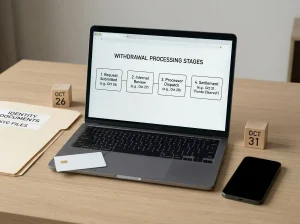
Wild Fortune withdrawal limits and processing stages
Wild Fortune Notes Wild Fortune applies an AU fiat withdrawal minimum, daily, weekly and monthly...

Anonymous Crypto Casinos in Australia: Legal Guide
Australian rules apply to offshore casino services even when they accept cryptocurrency, while user liability...

Aristocrat Online Pokies in Australia: What to Know
The Aristocrat name alone does not identify a game, confirm its features, or show where...

Aussie Crypto Casinos: Payments, Rules and Checks
A practical guide to offshore payment flows, Australian considerations, verification limits, bonus terms and crypto...

Best New Australian Online Pokies: Rules and Checks
This guide explains Australia's restrictions and the limits of available information on offshore sites, payments,...

Online Casino Payment Methods for Australians
Deposits and withdrawals can follow different rules, while Australian payment options do not change the...

Best-Paying Online Pokies in Australia: Payouts & Rules
Understand how payout claims, bonus conditions, Bitcoin payments and Australian rules shape the risks of...

Bitcoin Pokies in Australia: Payments and Rules
Bitcoin is a payment option, not a game mode; the guide explains how real-money play,...

Casino Sites That Accept Amex in Australia
A casino may list Amex, but the card issuer can still block a gambling-related payment,...

Casino Sites That Accept BPAY in Australia
A BPAY search alone does not confirm casino support, and the payment methods available can...

Casino Sites That Accept Credit Cards in Australia
Card acceptance can depend on the casino and issuer, while payment limits, fees, verification and...

EcoPayz casino sites in Australia: what is verified
The article separates payment-provider support from Australian legality and explains why deposits, withdrawals and game...

Casino sites that accept Osko in Australia: what to check
The page separates payment claims, deposit and withdrawal routes, and the legal context for offshore...

Paysafecard Casino Sites in Australia: What to Check
The guide separates operator restrictions under the Interactive Gambling Act 2001 from player status and...

Casino Sites and Skrill in Australia: What to Know
Australia’s rules apply to real-money online casino games offered to people in the country, while...

Trustly Casinos in Australia: What Can Be Confirmed
Trustly availability for Australian customers needs clear operator confirmation; payment claims do not verify games...

Casinos That Accept Apple Pay in Australia
Apple Pay’s everyday use in Australia does not confirm casino cashier support, and deposit access...

Casinos That Accept Bitcoin in Australia: How Payments Work
See how wallet transfers, blockchain confirmations, cashier checks and bonus terms affect Bitcoin casino deposits...

Bitcoin Cash Casinos in Australia: Rules and Checks
Australian law assesses the casino service and its operator; BCH funding, bonus terms, verification and...

Casinos That Accept CashtoCode in Australia
Learn what can be confirmed about CashtoCode support, payout rules and Australian restrictions on real-money...

Casinos That Accept Ethereum in Australia: Payments
Ethereum is a digital currency, while each casino independently determines whether it offers the option...

Casinos That Accept Google Pay in Australia
Google Pay availability does not establish that an online casino may legally serve Australians or...

Casinos That Accept Mastercard in Australia
Australian card payments may be commonplace, but online casino acceptance depends on the specific payment...

Casinos That Accept MiFinity in Australia: What to Check
Casino games and payment methods are separate questions, and a general MiFinity mention may not...

Casinos That Accept Neosurf in Australia: What to Check
Australian card and mobile-wallet habits offer context, but only an operator’s own payment arrangements can...

Casinos That Accept Neteller in Australia
A Neteller mention alone does not confirm Australian access, supported games, deposit options or withdrawal...

Casinos That Accept PayID in Australia: What to Know
A PayID option does not establish that an online casino may legally offer real-money games...

Casinos That Accept PayPal in Australia: What to Check
PayPal availability, deposit conditions and withdrawal options can differ, so a payment label alone does...

Casinos That Accept POLi in Australia: Key Checks
Payment availability, permission to offer online pokies, and withdrawal support are separate questions, so one...

Casinos That Accept Tether USDT in Australia
USDT mentions alone do not confirm payment support; acceptance, deposit and withdrawal terms need separate...

Casinos That Accept Visa in Australia: What to Know
A Visa label does not confirm an operator is authorised, that a card will work,...

Dragon Link Online Pokies in Australia: What to Know
A cautious guide to online format, free-play limits, Australian legal context and the claims a...

Easy Withdrawal Casinos in Australia: Payout Guide
A withdrawal can involve an operator review and payment processing, so a fast transfer does...

Fast Withdrawal Casinos in Australia: Payment Routes
Payment options, verification checks and the withdrawal process all affect how quickly funds may reach...

Instant Bank Transfers for Australian Casinos: What to Know
Bank-linked payment labels do not confirm legality, processing speed, withdrawal routes or how casino bonus...

PayID Casino Withdrawals in Australia: How They Work
PayID can move funds in real time after release, while operator checks and bonus wagering...

Instant PayID Withdrawals in Australia: What to Know
PayID can move funds in real time after release, but casino review, verification and account...

PayID Pokies in Australia: Payments and Checks
PayID directs transfers using an identifier, but it does not verify a pokies operator or...
No-Verification Casino Withdrawals in Australia
A closer look at identity checks, casino approval, payment timing and bonus terms helps put...

No KYC Casinos in Australia: Cash-Out Checks
The guide separates registration claims from withdrawal checks and compares crypto, PayID, bonuses and wagering...

Online Pokies Instant Withdrawals in Australia
Withdrawal timing depends on more than the payment rail: operator checks and receiving institutions can...

Online Pokies PayID Australia: Deposits and Withdrawals
PayID is an identifier-based way to send money through participating banks, but site availability and...

Pay by Phone Casinos in Australia: What It Means
Separate mobile play from phone-bill billing, and understand how PayID transfers and Australian gambling rules...

Quick Withdrawal Casinos in Australia: Cashout Times
E-wallet estimates describe only part of the process: casino approval, payment routing and account checks...

Real Cash Online Pokies in Australia: What to Know
The guide separates practice credits from real-money play and outlines checks for offers, deposits, Bitcoin...

Safe Online Pokies in Australia: Bitcoin Basics
A guide to game credits, offshore-site context, payment differences, privacy trade-offs and checks that can...

Same-Day Casino Payouts in Australia: What to Know
A payout can pause during operator checks or while the payment moves through its route...

Solana Casino Comparison in Australia: Legal Guide
The guide separates SOL ownership from offshore casino use and covers funding, cashing out, platform...

PayID and under-one-hour casino withdrawals in Australia
PayID may speed the transfer after release, while operator checks and Australian restrictions remain separate...