Crash Casino Games in Australia: Rules and Risks
 Available in AU

A practical overview of how Australian rules, verification, payment terms and game fairness claims shape access to crash games.
Table of Contents
- Crash Games in Australia: The Ground Rules
- Game Software, Pokies and What the Numbers Actually Say
- Online Access, Cashouts and the First Verification Check
- Pokies, Progressive Jackpots and the Bet That Qualifies
- Crypto Payments: Fast Is Not the Same as Full
- Bitcoin Cashouts and What Can Delay Them
- Trying a Game Without Putting Cash In
- Cash-or-Crash Searches and Victoria’s Pokies Reality
- Crash-Game Strategy Starts With the Terms
- Playing and Checking Fairness Claims
Crash Games in Australia: The Ground Rules
A crash game is a simple-looking format: a multiplier climbs, then the round ends without warning. A player who has staked money tries to cash out before that point; waiting longer can mean a larger displayed multiplier, but if the crash comes first, the stake can be lost. The tension is the whole design. It is not a forecast, a skill-based guarantee or a reliable way to make money.
That description is different from an invitation to play. For people in Australia, the legal setting matters before any discussion of how a casino crash game works. The Interactive Gambling Act 2001 prohibits operators from providing real-money online casino games to people physically in Australia. Casino-style services include games such as slots, poker, blackjack and roulette; putting a rising multiplier on the screen does not turn an online casino product into something outside that framework.
The law is aimed at providers, not at punishing an individual player. Australians are not criminalised simply for using an offshore gambling site. That distinction can be easy to miss: the absence of a player offence does not make the service lawful for an operator to offer here, nor does it mean that an offshore site is locally regulated or protected by Australian consumer rules. A site may accept Australian payments and hold an offshore licence, while still being prohibited from supplying online casino services to customers in Australia.
Choosing a crash casino game in Australia means checking more than the game itself: you’ll want to consider the available payment details and licensing information. Use these verdicts as a concise reference when deciding what to look into further.
1. GoldenCrown
License: Curacao Gaming Control Board OGL/2023/176/0095 (Hollycorn N.V.) GoldenCrown lists a Curaçao Gaming Control Board licence, OGL/2023/176/0095, held by Hollycorn N.V. That is the licensing detail available to consider.
2. Neospin
License: Curacao Gaming Control Board OGL/2023/176/0095 (Hollycorn N.V.) Neospin lists a Curaçao Gaming Control Board licence, OGL/2023/176/0095, held by Hollycorn N.V. That is the licensing detail available to consider.
3. Wild Tokyo
License: Curacao · Payout speed: crypto 30-60 minutes, fiat 1-5 days · Min. deposit: A$10 Wild Tokyo lists a Curaçao licence and a minimum deposit of A$10. Its stated payout times are 30–60 minutes for crypto and 1–5 days for fiat.
4. Ricky Casino
Payout speed: crypto under 1 hour, PayID 1-3 business days · Min. deposit: A$20 (A$30 to qualify for the bonus) Ricky Casino lists a minimum deposit of A$20, or A$30 to qualify for the bonus. Its stated payout times are under an hour for crypto and 1–3 business days for PayID.
5. DragonSlots Casino
License: Curacao Gaming Authority (Jumpman Gaming Ltd) DragonSlots Casino lists a Curaçao Gaming Authority licence held by Jumpman Gaming Ltd. This licensing information is the main stated detail to review.
6. Vegaz Casino
License: Curacao OGL/2024/1335/0780 · Min. deposit: EUR 20 Vegaz Casino lists a Curaçao licence, OGL/2024/1335/0780, and a minimum deposit of EUR 20. Check the currency requirement against your own deposit plans.
7. WinSpirit Casino
License: Curacao eGaming OGL/2024/923/0383 (Antillephone N.V.) · Min. deposit: A$30 WinSpirit Casino lists a Curaçao eGaming licence, OGL/2024/923/0383, held by Antillephone N.V. Its stated minimum deposit is A$30.
8. House of Pokies
License: international iGaming licence – jurisdiction not named in the source · Payout speed: PayID 1-24 hours · Min. deposit: A$30 (PayID from A$10) House of Pokies lists an international iGaming licence, though the jurisdiction is not named in the source. Its stated PayID payout time is 1–24 hours, with a minimum deposit of A$30 or A$10 for PayID.
9. Lucky Dreams
License: Curacao · Min. deposit: A$20 (POLi) Lucky Dreams lists a Curaçao licence and a minimum deposit of A$20 when using POLi. These are the available details for assessing its fit.
10. JustCasino
License: Curacao Gaming Control Board JustCasino lists a Curaçao Gaming Control Board licence. The licensing detail is the only supplied attribute to guide your initial assessment.
That is why I treat “available” and “permitted” as separate ideas. A page loading in a browser, or a payment method appearing at checkout, says nothing by itself about whether the operator may provide the service to Australians. Nor does a foreign licence amount to an Australian casino licence. Real-money online casinos are not a locally licensed option under this framework.
Advertising is part of the same picture. Promoting real-money online casino services to Australian audiences is prohibited, including promotion of offshore casino offerings. Describing the rules or explaining what the crash format means is not the same as recommending a place to gamble. The line matters: a neutral explanation should not become a disguised advert, a sign-up prompt or an endorsement of a particular service.
What ACMA does
The Australian Communications and Media Authority, or ACMA, administers and enforces the Interactive Gambling Act and monitors compliance with federal interactive gambling rules. Where it identifies a site providing prohibited services, or advertising them in Australia, ACMA can ask internet service providers to block access. A block is an enforcement measure, not a statement that every site a person can reach is lawful or safe.
The scale of that work is substantial. After enforcement actions, ACMA has blocked more than 1,455 illegal gambling and affiliate websites since November 2019. Reports also describe more than 210 illegal services withdrawing from Australia since ACMA began enforcing the rules in 2017. Other reporting gives a lower figure—over 190 withdrawals—so those accounts do not agree on the total. Either way, enforcement has included blocking sites and services leaving the market; it is not just a warning on a government page.
Lightning Link Online Pokies in Australia: What to Know
A blocked address can be replaced or changed, which is one reason availability can shift. That does not alter the legal position. If you encounter a crash casino site aimed at Australians, the fact that it is reachable at that moment should not be mistaken for approval by ACMA or a local regulator. I would not read a familiar payment option or polished interface as evidence of local oversight either.
There is also a human cost behind the dry legal language. Gambling can cause serious harm, particularly for people who are vulnerable or already struggling to control it. A fast round and an escalating multiplier can make decisions feel compressed; that design is not a reason to treat losses as something that can be won back. If gambling is affecting you or someone close to you, support is available through Gambling Help Online.
So the ground rule is straightforward: crash games can be described as a format, but a real-money online casino offering to Australians falls within the prohibited-services framework. The player is not criminalised merely for using an offshore site, while the operator’s conduct remains subject to Australian law and ACMA enforcement. Keep those points distinct, and the topic becomes much clearer.
Legal Warning
Under the Interactive Gambling Act 2001, it is prohibited for operators to provide real-money online casino services to people physically in Australia.
Game Software, Pokies and What the Numbers Actually Say
The software behind a game shapes what you see and how a round unfolds, but a familiar visual style is not a useful measure of what the game returns. That distinction matters when you are comparing a crash game with a crash-themed pokie. They may share rockets, rising lines or a sudden-stop animation; they are still different formats, with different rules and ways of displaying results.
In a crash game, the central event is a multiplier that rises and then stops. A player’s decision is tied to that changing round. A pokie, by contrast, presents a series of spins and symbols. Putting a rocket on the reels does not turn a pokie into a crash game. The theme is decoration; the rules are the substance.
Software providers can supply games to different operators, and the same provider may offer several kinds of game. That does not mean every title from a provider works alike, or that a provider’s name tells you whether a particular crash game is available, suitable or better value. I’d start with the game’s own information: how the round works, what ends it, and which figures actually apply to that title. A polished animation tells you very little.
Casino Dice Games in Australia: Rules and Risks
RTP is one figure that can appear in game information, but it needs careful reading. KA Gaming’s stated RTP percentages for its slots typically sit between 94% and 96%. That range is a broad, long-run theoretical measure for those slot games; it is not a forecast for a single player or session. It also should not be carried across to a crash title just because the same provider’s name appears nearby. Check that the figure belongs to the exact game and format you are looking at.
An RTP percentage does not mean that a player will receive that share of their stake back in a particular session. Results can vary, and a short run may look nothing like a theoretical long-term return. Nor does the figure tell you how often a game ends early, how a round is presented, or whether its rules match your expectations. Useful context, not a promise.
The same care applies to game labels. A crash-style interface might be described in different ways, while a game with “crash” in its title could still use a different underlying format. “Rocket” is a theme, not a technical description. If you are trying to work out whether a game is genuinely a crash format or a pokie using crash imagery, read the rules rather than relying on its thumbnail or name.
A demo label needs similar caution. The availability of a practice mode depends on the particular game and the way it is offered; a general description of a software provider cannot establish that every title has one. That is a detail to confirm on the game itself, not something to infer from a provider’s catalogue. The interface can make two formats look close. The rules settle it.
Do
- Check the specific game rules
- Verify the RTP belongs to the exact title
- Confirm the availability of a demo on the game itself
Don’t
- Rely on a provider’s general RTP range
- Assume a “rocket” theme means it is a crash game
- Infer demo availability from a provider’s catalogue
For Australian readers, this is a way to understand software and game information, not a recommendation to use an online casino. The fact that a game has a provider, an RTP display or a familiar design does not make it an offer to play. Keep the product description separate from any claim about likely results. Dry, but useful.
If you are comparing titles, keep the questions simple: is it a crash game or a pokie; does the published figure refer to that exact title; and is it describing a theoretical return rather than your own outcome? Those checks prevent a provider-wide figure or a rocket graphic from doing more work than it can. A number can inform you. It cannot tell you what your next session will do.
Online Access, Cashouts and the First Verification Check
A crash game may look simple on screen: a rising multiplier, a decision to cash out, and a balance that changes. The less visible part is what happens when you try to withdraw. An online crash casino account can have a minimum cashout threshold and identity checks, so the balance shown in an account is not necessarily ready to leave it.
Offshore sites commonly set minimum withdrawal thresholds between A$75 and A$150. The exact figure depends on the site and its terms. If your available balance is below the stated minimum, you may not be able to request a withdrawal yet. That is a different issue from whether the game has recorded a win: the withdrawal rule is an account condition, not a feature of the crash game itself.
Mines Casino Game in Australia: What to Check
I would check the withdrawal page before treating any balance as money you can access. Look for the minimum amount, whether the rule applies to each request, and whether the site says additional checks can apply. Read the wording closely; a threshold can be easy to miss when you are focused on the game. Don’t assume that a small balance can be withdrawn just because it appears in your account.
The first cashout is often where KYC becomes visible. Offshore sites commonly ask for documents such as a passport or driver’s licence, along with a utility bill. The identity document helps establish who holds the account; the bill can be used to confirm an address. Those are ordinary examples of the paperwork requested, not a guarantee that every site asks for precisely the same documents.
A practical snag is that the details on your account and your documents need to make sense together. Before sending anything, check that the name and address you entered are accurate and that the images are readable. If a document is cut off, blurry or out of date, it may not answer the request. Follow the site’s instructions for submitting documents, and avoid sending personal paperwork through an unverified channel. That part is not glamorous. It is still important.
If a cashout request is held while documents are checked, the delay can be frustrating, especially when you had expected the process to be automatic. Keep a record of what you submitted and any reply you receive. If the site asks for another document, make sure you understand what is missing rather than repeatedly uploading the same file. Don’t share more personal information than the stated check requires.
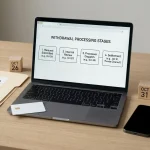
Withdrawal Preparation
- Check the minimum cashout threshold
- Verify account name and address match documents
- Ensure identity documents are readable and current
- Confirm the required documents (passport, utility bill)
People use phrases such as “crash game online casino” or “online casino crash game” to describe the same broad format, but those words tell you nothing about a particular account’s withdrawal rules. A plane-themed crash game does not change the basic distinction: game balance, withdrawal minimum and KYC are separate matters. Check each one on its own.
This is practical information, not a recommendation to open an account or gamble. In Australia, real-money online casino services are prohibited, and offshore sites may be blocked. Anyone gambling must be at least eighteen; gambling can cause serious harm, particularly for vulnerable people. If you are already weighing a cashout against another stake, pause before putting in more money.
Pokies, Progressive Jackpots and the Bet That Qualifies
A progressive jackpot is a prize pool that can rise as people play linked pokies. The key detail is what “linked” means: the prize may build on one machine, or it may draw contributions from a wider group. Those are different setups, even if both display a growing jackpot figure.
A standalone progressive is tied to a local machine. Its pool grows through play on that machine, so the prize is limited to that setup. A networked progressive pools activity across multiple machines or, in an online system, across an operator’s fleet. A larger network can mean a larger pool, but the label alone does not tell you how a particular game funds or awards it.
Real-Money Casino Table Games in Australia
That is where the small print matters. A game can set a minimum bet before a play qualifies for the jackpot. A$1.00 is one example of such a threshold, not a general rule for every progressive. If your bet falls below the qualifying level, the game may still run, but that play may not count toward jackpot eligibility. Check the game’s displayed rules rather than assuming that any stake enters the pool.
I’d look for two things together: the minimum qualifying bet and the contribution rate. The first tells you what stake is needed to be eligible; the second describes how play feeds the progressive pool. A specialist review also recommends checking both, but the terms for a specific game are the place to confirm what applies. A prominent jackpot amount, on its own, answers neither question.
There is a practical distinction between a jackpot growing and your chances of winning it. A rising pool is not a promise that a particular session is more likely to produce a prize. Nor does a higher qualifying stake make the money spent on it a sensible cost of entry. Set a limit you can afford to lose, and do not raise it to try to recover losses. Pokies are gambling, not income.
This is separate from crash-game mechanics. In a crash game, the central feature is a multiplier that rises and can end; a progressive jackpot is a shared or local prize pool that accumulates through qualifying play. The terms “crash slots” or “crash game” can blur those ideas, but they do not make the mechanics interchangeable. A crash-game simulator, where available, would not explain the qualifying rules for a progressive pokie.
Progressive Jackpots
A standalone progressive is tied to one local machine, while a networked progressive pools activity across multiple machines or an operator’s fleet.
If you are comparing how a jackpot works, start with its pool type, then read the minimum-bet and contribution details. Don’t infer eligibility from the display or from a general description of progressives. And gambling is for adults aged 18 or over. Problem gambling can cause serious harm, particularly for people who are vulnerable. A jackpot figure can be eye-catching; the conditions are less theatrical.
Crypto Payments: Fast Is Not the Same as Full
A crypto withdrawal can look straightforward on a payment screen: request the transfer, wait for it to be processed, then receive it in a wallet. But the amount shown before the transfer is not necessarily the amount that arrives. A specialist review reports that crypto withdrawals often clear faster than other methods, while network fees and conversion spreads can eat into the final sum. That speed comes with a cost to check.
A network fee is charged for processing a transaction on the relevant blockchain. The amount can vary with network conditions and the asset being sent. A conversion spread is different: it is the gap between the exchange rate used to convert one currency or asset into another and the rate you might expect from a market quote. Either can leave you with less than the withdrawal figure you first saw.
The useful comparison is not simply “How quickly will it arrive?” It is “How much should reach my wallet after every deduction?” Before submitting a request, look for the displayed fee, the currency in which the withdrawal is settled, and any conversion step between the account balance and the payment. If the platform shows only a gross amount, you may not know the net result until later. That is a poor moment to discover the difference.
Live baccarat online in Australia: legal guide
I would also keep the wallet side of the calculation in view. The destination address and the asset need to match the withdrawal details; a transfer sent using the wrong network may not be recoverable. Read the confirmation screen slowly, even when the process seems familiar. A fast transfer leaves little room to correct a careless click.
This is a payment comparison, not a reason to treat offshore casino access as a routine option in Australia. The legal position on real-money online casino services is separate from the mechanics of a crypto transfer. A payment method being available does not make the underlying service lawful for operators to provide to people in Australia.
There is no useful headline speed figure to rely on without the specific service, network and conditions in front of you. Instead, compare the stated processing time with the expected blockchain confirmation, and check whether the operator’s own conversion rate affects what arrives. If a fee or rate is unclear, pause rather than assuming the displayed balance is the amount you will receive.
Crypto can be quick. The net figure still matters.
Bitcoin Cashouts and What Can Delay Them
A Bitcoin cashout can look straightforward on a screen, but the payment method does not remove the checks attached to an account. If an offshore gambling site offers withdrawals in Bitcoin, a first request may still be held while the operator confirms who you are and where you live. The coin does not make the paperwork disappear.
Attention: A Bitcoin cashout does not remove account checks; your request may still be held for KYC verification of your identity and address.
Expect KYC to be part of that first review. A site may ask for a passport or driver’s licence, along with a utility bill showing your address. Make sure the details on the documents match the account information. If a name or address differs, the withdrawal can be paused until the discrepancy is dealt with. I would check the requirements before depositing, rather than discovering them after asking for money back.
There may also be a minimum withdrawal threshold. Offshore sites commonly set one in the A$75–A$150 range, so a balance below the stated floor may not be eligible for a cashout yet. Read the withdrawal terms for the specific site and payment method: a threshold is a condition, not a promise that a payment will be approved or sent immediately.
That distinction matters if you are looking at Bitcoin crash games, including balloon- or chicken-themed formats. A game’s label tells you nothing about whether the site will accept a withdrawal request, what documents it will ask for, or whether your balance meets its minimum. Check the account and cashier terms separately from the game description. If the site’s conditions are hard to find or do not clearly explain cashouts, treat that as a reason to stop and reassess, not a puzzle to solve after depositing.
Keep copies of the documents you submit and use only the site’s stated process for sending them. Do not send identity documents through an informal message channel just because someone claims it will speed things up. And remember that a displayed balance is not the same as cash in your hands: eligibility, account checks and payment processing all sit between the two.
Live Roulette in Australia with English-Speaking Dealers
Real-money online casino services are prohibited for people in Australia under the Interactive Gambling Act 2001, and ACMA can seek to block prohibited services. Australians are not criminalised for using offshore sites, but that does not make those services locally authorised or remove the practical risks. You must be 18 or older to gamble, and gambling can cause serious harm, particularly for vulnerable people. If you are unsure about a site or a withdrawal, walking away is a sound option.
Trying a Game Without Putting Cash In
A free version can sound like a simple way to see how a crash game works, but “free” can mean different things. A software provider may offer a practice mode, a site may label a promotion as free, or the wording may refer to bonus funds that still come with conditions. None of that establishes that a demo is available for a particular game.
For Australians, there is another distinction: real-money online casino games are prohibited from being offered to people in the country under the Interactive Gambling Act 2001. A no-cash demo and a real-money service are not the same thing, but the label alone does not tell you what is being provided. Don’t treat a “crash casino free” claim as proof that a game or service is lawful or genuinely cash-free.
Bonus Calculation
Step 1: Identify the Bonus
Consider a $100 bonus provided by the operator.
Step 2: Apply Wagering Requirement
Apply a 40x wagering requirement to the bonus amount.
Step 3: Calculate Total Bets
Multiply $100 by 40 to find that $4,000 in qualifying bets are needed before winnings can be withdrawn.
The software can also shape what a practice mode shows. A demo may let you see the game’s interface and how its multiplier changes, but it cannot show what would happen in a real-money session. If you cannot find clear terms explaining whether the mode uses cash, bonus credit or no stake at all, the label is doing too much work.
Bonus credit is not cash. It may be subject to wagering checks, and specialist reviews describe requirements in the range of 30–50 times the bonus amount. That wording is not a universal rule: the actual terms for a particular offer determine what counts, which games contribute and when any winnings can be withdrawn.
One specialist review illustrates the arithmetic with a $100 bonus carrying a 40x wagering requirement. The player would need to place $4,000 in qualifying bets before bonus-derived winnings could be withdrawn. That is a calculation attached to that example, not a promise about every bonus. The figure can be easy to miss when an offer is presented as free.
If you are checking a free crash game, read the terms before activating anything and separate bonus balance from withdrawable cash. You must be 18 or older to gamble, and gambling can cause serious harm, particularly for vulnerable people. If real-money play is involved, it is not simply a free way to try the software. That distinction matters.
Cash-or-Crash Searches and Victoria’s Pokies Reality
People use “cash or crash” to describe more than one kind of gambling product. It can mean a digital game where a rising multiplier may stop suddenly, or a pokies-style game with a similar name. The wording can blur the difference, but the formats are not interchangeable. A crash game is not a venue pokie, and figures about Victorian poker machines do not describe online crash play.
The local pokies picture is substantial. A report by gamble.com.au put Victorian losses on poker machines at $2.6 billion over the year it covered, more than $44.7 million above the figure for 2015. Those are losses by players, not revenue to treat as a measure of typical experience. A large statewide total says little about what any one person will lose, except that the consequences add up across many people.
The same report said the Epping Plaza Hotel in Melbourne’s north generated more than $21 million from 100 machines over the preceding year. That is a venue-level figure, not a promise of what a machine returns to players. The distinction matters: money played through pokies and money lost by players are not a personal earning opportunity. There is no dependable way to turn them into one.
Nick Xenophon and Andrew Wilkie proposed a $1 bet limit on poker machines. It was a proposal, not a description of a rule already in force. Bet-limit debates sit within the physical pokies context; they do not explain how a digital crash game works or establish that such a game is safe.
Pokies vs Crash
- Crash games use a rising multiplier, unlike venue pokies
- High statewide losses do not predict individual outcomes
- Bet limits proposed for physical machines do not apply to digital crash games
- Gambling is for adults 18+ and can cause serious harm
If you are trying to work out what a “cash-or-crash casino” label means, look at the actual product description rather than assuming it is a familiar Australian pokie. The phrase can be used loosely, while the mechanics and setting may differ. And a dramatic name does not change the basic risk: gambling can cause serious harm, particularly for people already vulnerable to it. You need to be at least 18 to gamble, and it is worth stepping back if play is affecting your finances or wellbeing. No income plan.
Crash-Game Strategy Starts With the Terms
I’d start any crash-game strategy with the conditions attached to the money, not with a system for timing a cashout. A bonus balance is not cash: bonus-derived funds can come with wagering requirements before winnings are withdrawable. If you accept an offer, check which bets count, which games are excluded and whether the requirement applies to the bonus, winnings, or both.
A specialist review describes wagering requirements of 30–50x as common in the offers it discusses, but that is not a rule for every operator or promotion. Read the actual terms in front of you. The multiplier alone can hide the important part: a game may contribute only a fraction of each qualifying bet, so progress can be slower than the headline suggests.
The same review reports blackjack contributing only 10% toward wagering requirements in the offer it examined. That figure is not a general rule, and it says nothing by itself about how a crash game will be treated. Find the game-contribution table and confirm whether crash games count at all, and at what rate. If the terms do not spell that out, ask the operator before accepting the bonus. Don’t assume that a bet placed in a game automatically advances wagering.
For a cash stake, keep the check simpler: read the game’s displayed rules, understand how the round works and decide beforehand what amount you are prepared to lose. No staking pattern can turn a random game into a reliable way to make money. A sensible plan is one you can follow without increasing your stake to recover losses.
Video Slots in Australia: Mobile Play and Game Basics
Strategy starts on the terms page. Then comes the choice to walk away.
Playing and Checking Fairness Claims
A “provably fair” label is a claim to examine, not a certificate you can take on trust. Before treating a crash game as fair, look for a plain explanation of how each round’s result is generated and how a player can check it afterwards. If the explanation stops at “the system is transparent”, it has not shown you much.
A more useful description sets out what information is supplied before a round, what changes after it, and how those pieces can be used to reproduce or verify the result. The verification steps should be specific enough that you can follow them without relying on the operator’s word. If there is a verification tool, its instructions should explain what goes into it and what a successful check means.
Keep the limits in view. A check of one recorded round does not establish that every round, game version or operator behaves fairly. Nor does a technical explanation prove that the game has been independently examined. Look for a named, independent audit and a report that identifies what was reviewed; don’t treat a logo or a bare claim of certification as the report itself.
I’d also read the game rules and the operator’s terms separately. Clear explanations of results do not answer every question about account conditions or how a service is run. Those are different checks.
If you cannot find enough detail to understand or repeat the stated verification, call the claim unconfirmed rather than filling in the gaps yourself. That is a sensible standard whether you are assessing a provably fair crash casino claim or any other fairness promise. And in Australia, this is information to assess—not an invitation to play: real-money online casino services are prohibited for people here, and problem gambling can cause serious harm.
Wild Fortune games, providers and live casino

Three-Reel Slots in Australia: Features and RTP
Understand how reel mechanics, bonus features, RTP, demo access and Australian rules shape what to...

Five-Reel Slots in Australia: What to Check
Reel count alone does not determine a game's rules or returns; RNG outcomes are independent,...

7-Reel Slots in Australia: Rules, Odds and Access
A practical look at reel counts, game versions, free-play limits, real-money checks and the odds...

Bonus Buy Slots in Australia: Features and RTP
Bonus buys provide direct entry to a feature, but outcomes remain random and the purchase...

High-Volatility Slots in Australia: How They Work
Volatility describes a broad balance between win frequency and potential size, not a schedule or...

Low-Volatility Slots in Australia: How They Play
Learn how volatility describes win frequency and payout swings, and why a steadier-looking session still...

Pokie Machines in Australia: What to Know Before Playing
A practical guide to game features, odds, free play, payments and the legal limits on...

Progressive Jackpot Slots: How They Work
See how progressive pools are funded and what game triggers, payout terms and bonus conditions...

Best RTP Slots in Australia: Understanding RTP
RTP can help compare long-run game expectations, but versions and short-term results mean the displayed...

Video Slots in Australia: Mobile Play and Game Basics
A practical guide to mobile slot interfaces, free-play modes, Australian access considerations and checking game...

Casino Dice Games in Australia: Rules and Risks
Online dice formats range from craps to screen-based games, but Australian law and the operator’s...

Lightning Link Online Pokies in Australia: What to Know
The guide separates venue machines from online casino claims and explains the Australian rules for...

Live baccarat online in Australia: legal guide
Australia has no officially licensed online casinos, and live-dealer baccarat remains an online casino service...

Live Blackjack Online Casinos in Australia: Legal Context
Understand what live dealer play involves, how to assess a site, and which game, payment...

Live Roulette in Australia with English-Speaking Dealers
Australia’s restrictions on online casino services shape how live roulette, real-money play, dealer language and...

Mines Casino Game in Australia: What to Check
A Mines title’s rules, demo mode, bonus terms and cashout details need checking separately from...

Plinko Casino Australia: Games, Payments and Rules
Plinko titles can use reels, a dropping-ball board or a mix of both, so the...

Pokies Tips and Tricks: What Can They Change?
Understand how random spins shape pokies play, and why practical checks and session boundaries matter...

Real-Money Casino Table Games in Australia
A practical guide to the legal position, online play formats, odds, basic bets and the...